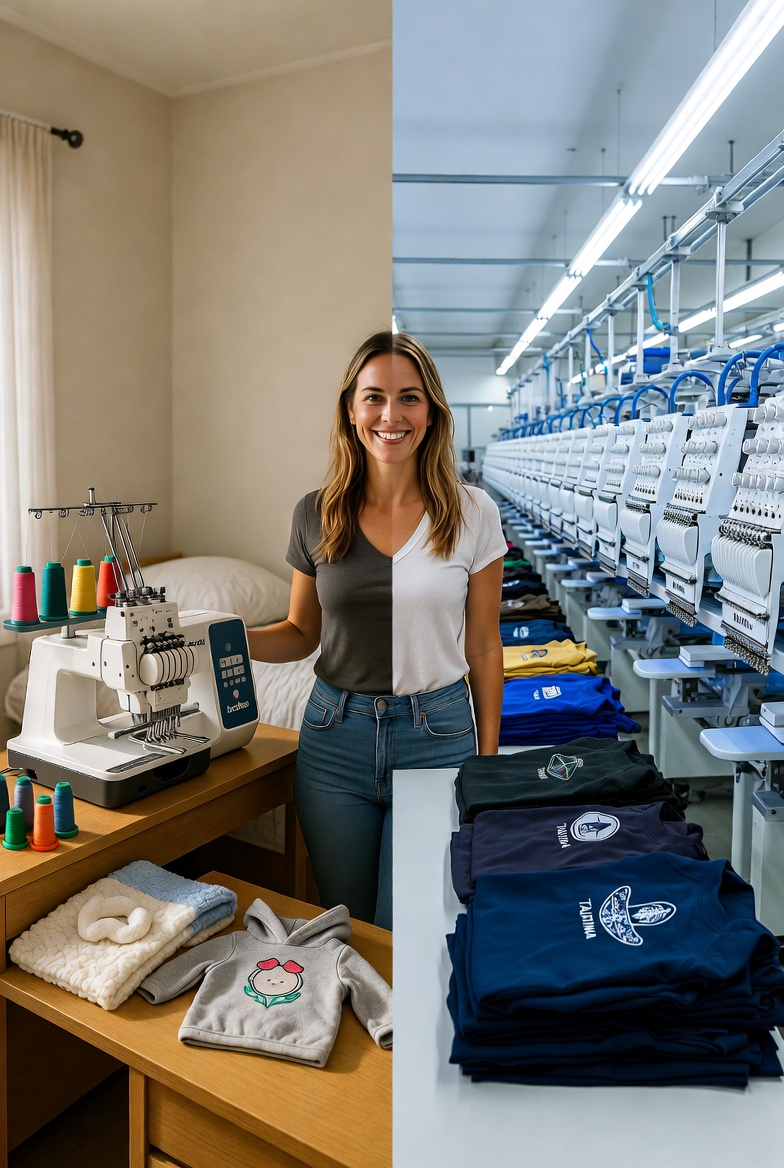
The public image of embroidery — a single person, a single machine, a single garment — bears little resemblance to the reality of modern commercial embroidery production. The factories that produce the embroidered uniforms, team wear, corporate merchandise, and branded textiles used by millions of people operate on an industrial scale: rows of multi-head machines running simultaneously, two or three shifts of operators working around the clock, automated quality control systems, and production planning software that schedules work weeks in advance. At the heart of this industrial operation, the stitch file remains the fundamental unit of production — and AI digitizing is transforming how these files are created, managed, and deployed.
Inside a Commercial Embroidery Factory
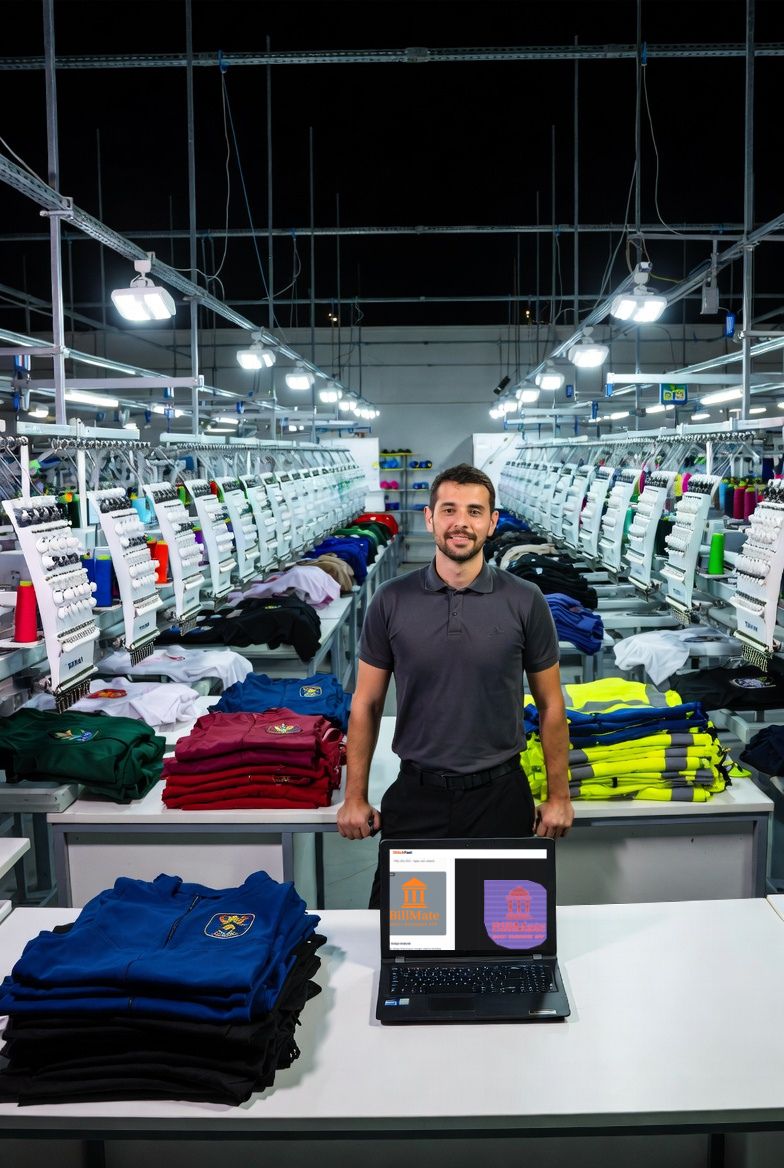
A typical mid-size UK embroidery factory — the kind that serves corporate uniform contracts, school badge orders, and promotional merchandise clients — operates from a 3,000-10,000 square foot industrial unit. The production floor holds four to twelve multi-head embroidery machines, each with four to twelve individual embroidery heads that stitch simultaneously. A six-head Tajima running at 1,000 stitches per minute per head produces six identical embroidered garments simultaneously — the equivalent output of six separate single-head machines, operated by a single person.
The machines run in shifts. The first shift (typically 6am-2pm) handles the majority of production work. The second shift (2pm-10pm) handles overflow, urgent orders, and production runs that require uninterrupted machine time. Some larger factories operate a night shift as well, running machines 24 hours a day during peak periods. Each shift is staffed by one operator per two machines, with a shift supervisor overseeing production quality and scheduling compliance.
The production planning system schedules work in advance based on order deadlines, machine capability, and operator availability. Each production run is assigned to a specific machine based on the number of heads available, the thread colours loaded on that machine, and the hoop size required for the garment type. Production runs are batched by colour similarity where possible — grouping orders that use the same or similar thread colours to minimise colour-change downtime between runs.
The Stitch File Pipeline
Every production run begins with a stitch file. In a factory processing 200-500 unique designs per month across its client base, the volume of stitch files flowing through the system is substantial. New client logos arrive daily, existing clients request modifications, and new garment types require variant files optimised for different fabric weights and hoop sizes. Managing this file pipeline is a full-time administrative function that, before AI digitizing, required either an in-house digitizer or a relationship with an external digitizing bureau.
The traditional model — sending designs to an external bureau at £20-30 per design — created a persistent bottleneck in the factory's production pipeline. New client orders could not begin production until the digitized file was returned, typically 24-48 hours after submission. During peak periods, the queue at the bureau extended to 3-5 days, and the factory's production schedule was hostage to an external dependency over which the factory had no control. Machine capacity was wasted while operators waited for files, and client delivery promises were broken because the digitizing delay was invisible to the client at the point of sale.
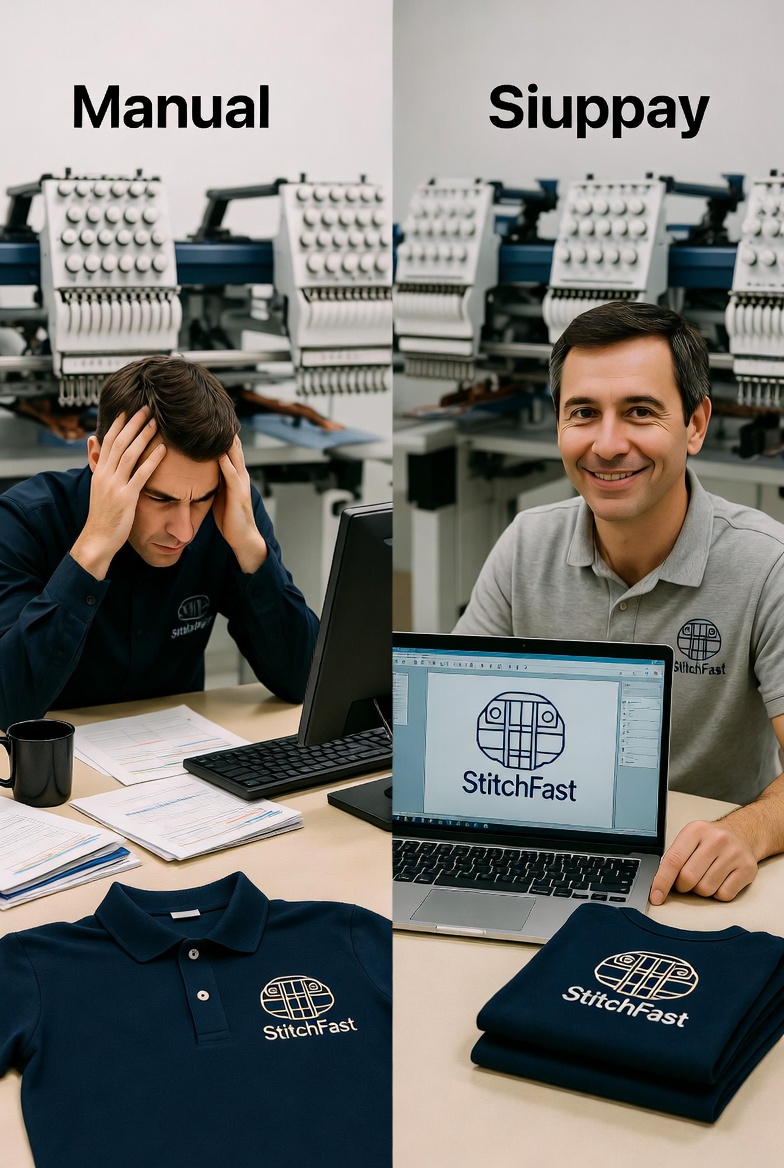
AI digitizing eliminates this bottleneck entirely. When a new client logo arrives at the factory office, it is uploaded to StitchFast immediately. The DST file is downloaded within a minute, verified through the factory's quality check process (dimensional measurement and visual inspection of the stitch preview), and released to the production queue. Total elapsed time from receiving a new logo to having a production-ready file in the queue: typically under fifteen minutes. The 24-48 hour external dependency has been reduced to a fifteen-minute internal process — a transformation that unlocks machine capacity, improves delivery reliability, and accelerates client onboarding.
Quality Control at Scale
Factory-scale quality control for embroidery is a systematic process that goes well beyond the visual inspection that suffices for home-scale production. Commercial quality control typically involves three checkpoints: file verification (before production), first-piece inspection (at the start of each production run), and in-line sampling (periodic checks during the production run).
File verification ensures that the stitch file will produce correct results before any garment is committed to production. The file is opened in verification software (typically Wilcom or a dedicated viewer), and the dimensional measurements, stitch count, colour stop sequence, and maximum stitch length are checked against the specification. StitchFast files consistently pass verification checks — the AI generates files within standard parameter ranges, with no out-of-spec stitch lengths, no missing colour stops, and accurate dimensional output. Factory quality managers report that the verification step for StitchFast files is faster and more routine than for manually digitized files, because the AI's consistency means there are fewer anomalies to investigate.
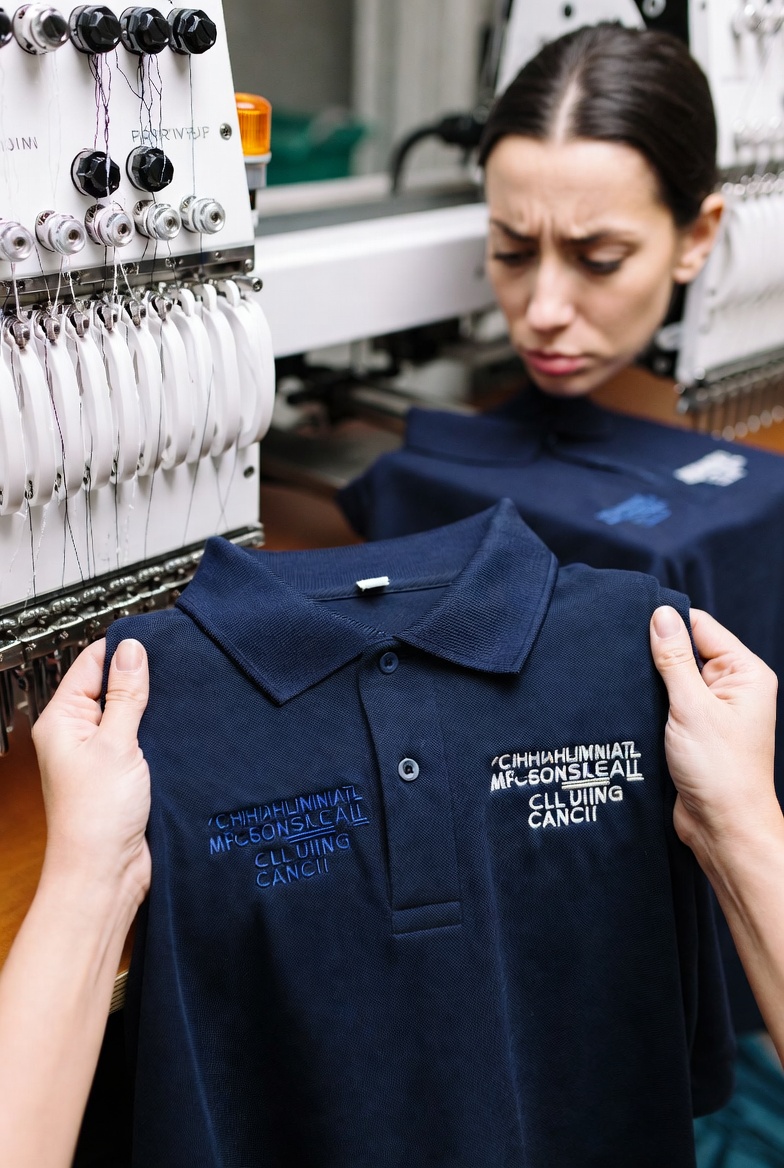
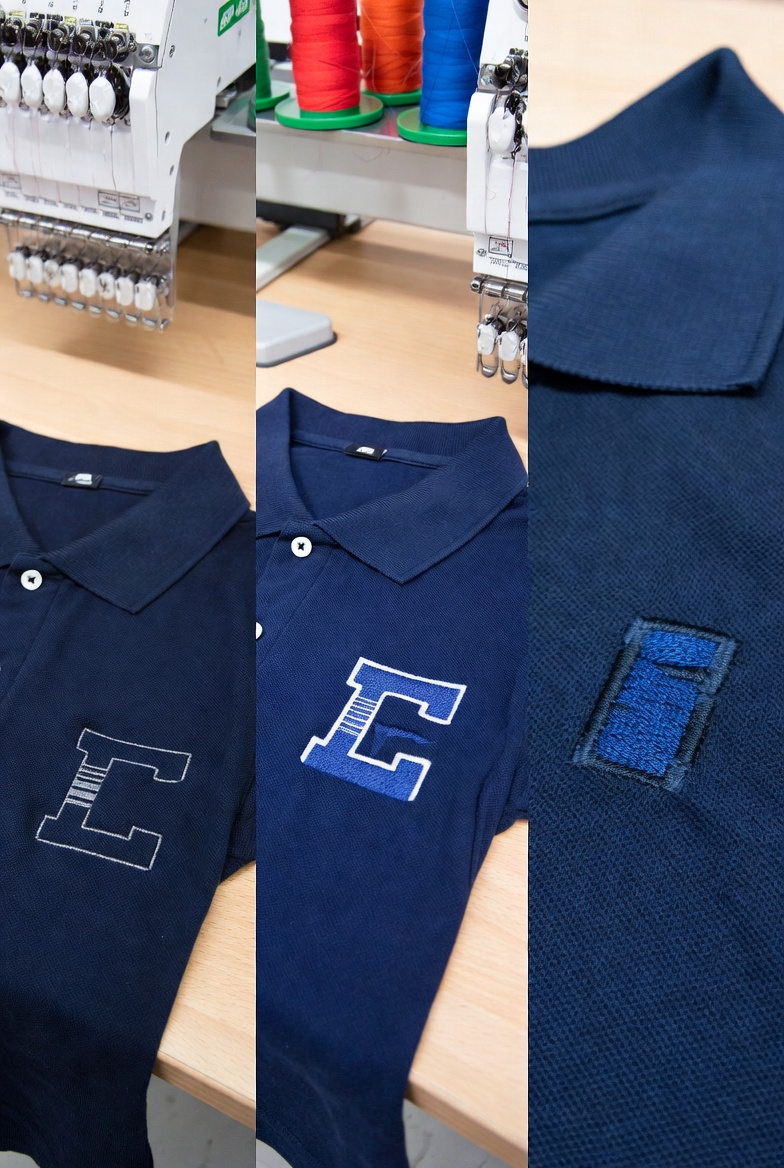
First-piece inspection involves stitching the first garment of a production run, removing it from the machine, and inspecting the embroidery for defects before committing the remaining garments. The inspector checks thread coverage, colour accuracy, registration (alignment of design elements), edge quality, and overall visual appearance against the approved sample or specification. First-piece pass rates with StitchFast files consistently exceed 97 percent across factories reporting data — meaning that fewer than 3 percent of production runs require any adjustment to the stitch file before full production begins.
In-line sampling involves removing every twentieth or fiftieth garment from the production run and inspecting it against the first-piece standard. This catches any drift in quality that might occur during a long production run — thread tension changes, fabric variation within a batch, or machine wear that gradually affects stitch formation. StitchFast files do not contribute to in-line quality variation because the file itself is constant — any variation detected during in-line sampling is attributable to machine or material factors rather than the stitch file.
Multi-Machine File Distribution
In a factory with eight or twelve embroidery machines, distributing the correct stitch file to the correct machine for each production run is a logistical task that benefits from systematic organisation. Most factories use a networked file server where approved stitch files are stored in a structured directory system (organised by client, design name, and version number). Operators access the file server from their machine's control panel and load the specified file for each production run.
StitchFast integrates cleanly into this file distribution system. Generated files are downloaded to the factory's file server, tagged with the client reference and design version, and immediately available to any machine on the network. The flat-file DST format requires no special software or licensing to store, transfer, or load — it is a simple binary file that works with every machine's native file loading capability. This simplicity is one of the reasons DST remains the dominant format in commercial embroidery despite the existence of more feature-rich alternatives.
Cost Impact at Factory Scale
The financial impact of AI digitizing at factory scale is transformative. A mid-size factory processing 300-500 unique designs per month was previously spending £6,000-15,000 per month on outsourced digitizing — an annual cost of £72,000-180,000. StitchFast Unlimited at £29.99 per month replaces this entire expense. The annual saving — £71,640 to £179,640 — is substantial enough to fund equipment purchases, staffing additions, or facility expansion. For some factories, the digitizing cost saving alone exceeds the profit margin on their smallest client accounts, making those accounts profitable for the first time.
The speed saving compounds the cost saving. Every hour of machine time that was previously wasted waiting for digitized files is now productive machine time. A factory with eight machines running at 80 percent utilisation gains approximately 4-6 hours of additional productive machine time per week by eliminating digitizing-related delays — equivalent to roughly 200-300 additional embroidered garments per week. At an average embroidery charge of £3-5 per garment, this recovered capacity represents £600-1,500 per week in additional revenue — without any increase in equipment or staffing costs.
The 24/7 Production Advantage
Factories running night shifts or extended hours benefit disproportionately from AI digitizing's 24/7 availability. Manual digitizing bureaus operate during business hours — typically 9am-5pm, Monday to Friday. A factory running a night shift that receives an urgent order at 8pm cannot get a new design digitized until the following morning at the earliest. With StitchFast available around the clock, the night shift can digitize new designs in real time, begin production immediately, and have finished garments ready for dispatch by morning. This capability is particularly valuable for urgent corporate orders and event-driven merchandise where delivery deadlines are absolute.
The combination of instant availability, zero per-design cost, and consistent quality makes AI digitizing not just a cost reduction tool but a production enabler. Factories that previously declined certain types of work — small-run orders, rush orders, or orders from clients with complex, frequently-changing logos — can now accept this work profitably because the digitizing cost and delay that made it uneconomical have been eliminated. The result is a broader client base, a more diversified revenue stream, and greater resilience against the loss of any single large account.
The modern embroidery factory is a sophisticated production operation where every element of the workflow is optimised for throughput, quality, and cost efficiency. AI digitizing is the latest and arguably most impactful optimisation — transforming the stitch file pipeline from a slow, expensive, externally dependent bottleneck into a fast, affordable, internally controlled process that keeps machines running and clients satisfied around the clock.
Factory Embroidery FAQs
How do commercial embroidery factories use AI digitizing?
Factories use AI digitizing to convert incoming artwork into production-ready stitch files instantly, feeding multi-head machines across multiple shifts. It replaces the slow, externally dependent digitizing bureau step with a fast, internally controlled process that keeps machines running.
Can AI digitizing keep up with 24/7 production?
Yes. Unlike manual digitizing bureaus that work business hours, AI digitizing is available around the clock, so a night shift can digitize new designs in real time, start production immediately, and have finished garments ready by morning.
How does AI digitizing cut costs at factory scale?
It removes the per-design digitizing fee entirely and replaces it with a fixed monthly cost that does not rise with volume. At factory scale, where thousands of designs are processed, eliminating per-file charges has a large impact on margins.
Does AI digitizing let factories take on work they used to decline?
Yes. Small runs, rush orders and clients with complex, frequently changing logos were often uneconomical because of digitizing cost and delay. With those removed, factories can accept this work profitably, broadening their client base and revenue mix.
How are stitch files distributed across multiple machines?
Files are generated once in the required format and distributed to each machine head across the production floor. Consistent output means the same design stitches identically on every head, which is essential for large multi-head, multi-shift orders.