The embroidery industry has a dirty secret that budget digitizing services hope you never discover: the cost of a stitch file is the smallest part of its true economic impact on your business. A poorly digitized file that costs £5 can easily generate £50-100 in downstream costs through thread breaks, wasted garments, machine wear, operator time, and customer complaints. Understanding these hidden costs is essential for any embroidery business that wants to remain profitable and produce work that customers actually want to pay for.
Thread Breaks: The Visible Symptom
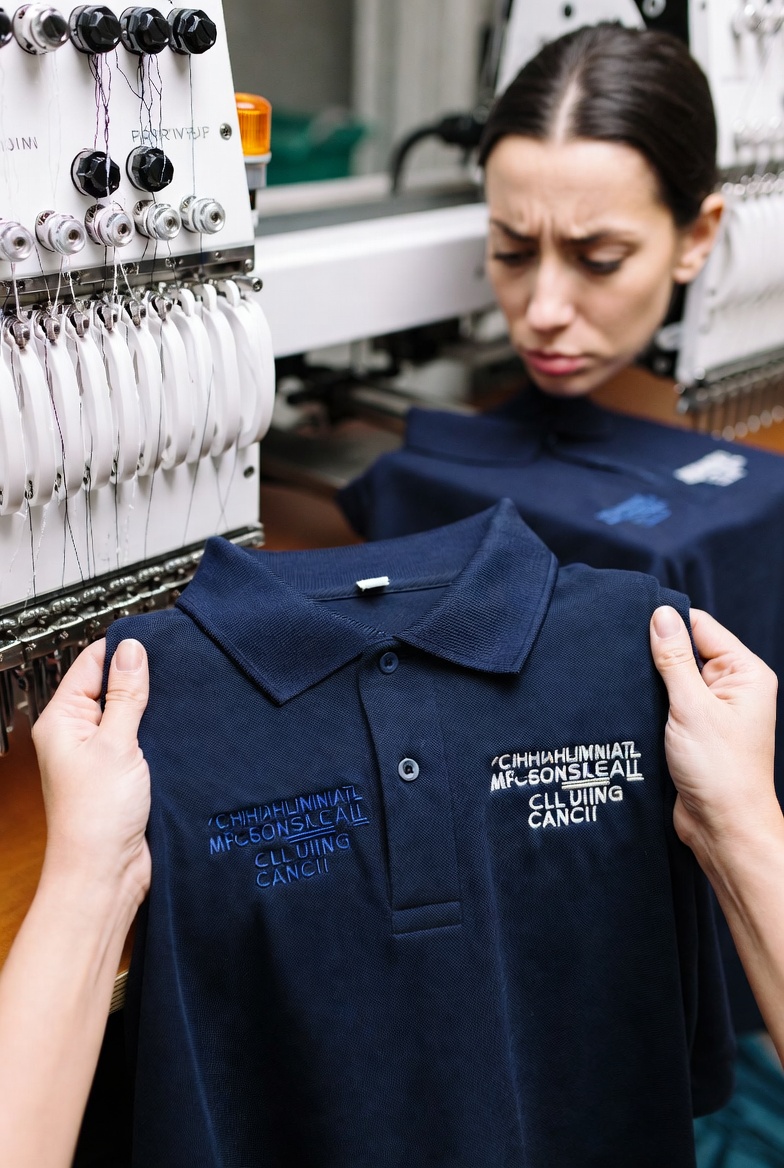
Thread breaks are the most immediately apparent consequence of poor digitizing. When a stitch file contains excessively long stitches, sharp directional changes, or inappropriate stitch density for the thread type, the thread snaps — stopping the machine, requiring the operator to rethread, and leaving a gap in the design that must be repaired or, more commonly, results in a scrapped garment.
A well-digitized file on a properly maintained machine should produce fewer than one thread break per 50,000 stitches. Budget digitizing routinely produces files that break thread every 10,000-15,000 stitches — three to five times the acceptable rate. On a multi-head commercial machine running at 1,000 stitches per minute per head, an excessive thread break rate means the operator is spending more time rethreading and restarting than actually producing garments. The lost production time is the most expensive consequence of thread breaks — far more costly than the thread itself.
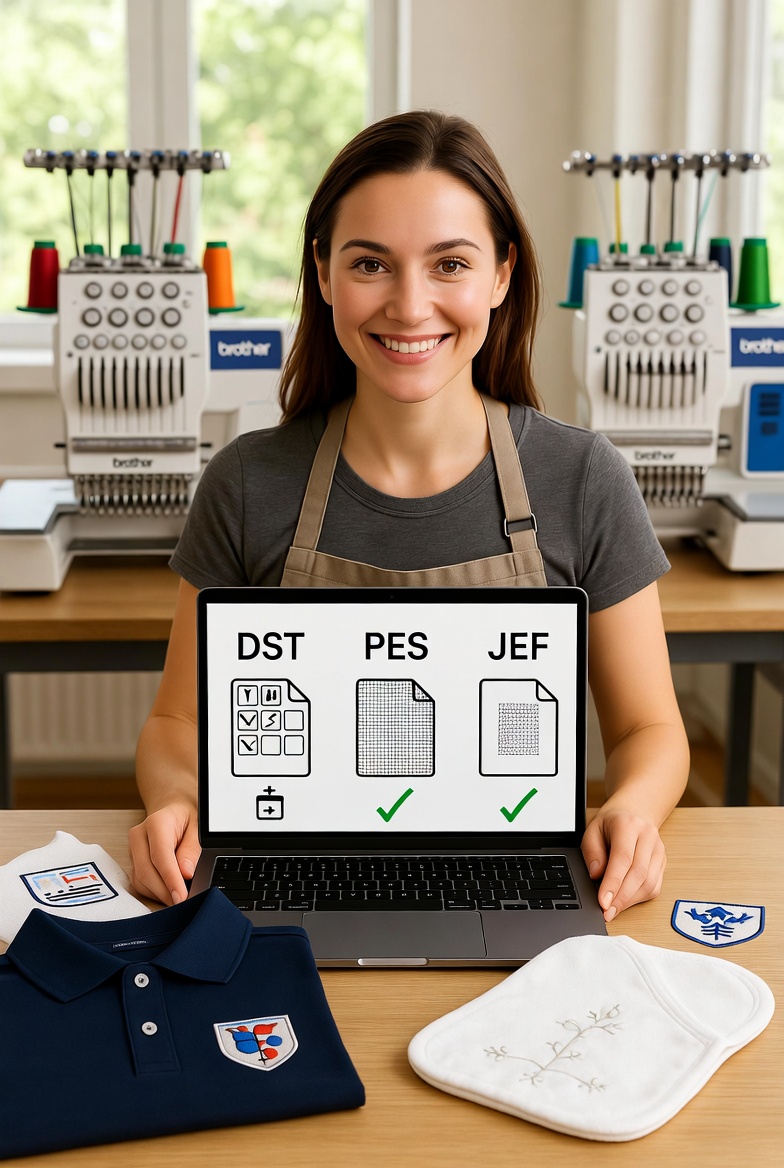
The causes of thread-break-inducing stitch files are well understood. Maximum stitch lengths that exceed the machine's specification (typically 12.1mm for DST format) cause the thread to snap under tension. Jump stitches that travel too far between design elements create unsupported thread runs that catch on machine components. Stitch density that is too high for the fabric type compresses the material excessively, creating resistance that the thread cannot overcome. Sharp directional changes (an abrupt 90-degree turn in a satin stitch column, for example) create stress concentrations where the thread bends and breaks. None of these issues are inevitable — they are all symptoms of careless or incompetent digitizing.
Fabric Waste: The Expensive Consequence
Every garment ruined by a thread break, a registration error, or visible puckering is a direct financial loss. The blank garment cost is lost, the thread consumed before the error is wasted, the stabiliser is wasted, and the operator's time is wasted. For a standard polyester polo shirt costing £5-8 wholesale, each scrapped garment represents a total loss of approximately £7-12 when consumables and operator time are included.
Budget digitizing typically produces garment scrap rates of 5-8 percent — meaning 5-8 garments out of every 100 are scrapped due to embroidery defects attributable to the stitch file. Professional digitizing and AI platforms like StitchFast typically produce scrap rates of 1-2 percent. The difference — 3-6 percentage points — translates directly to profitability. A business producing 1,000 garments per month at a 5 percent scrap rate loses approximately 50 garments per month. At £10 average replacement cost, that is £500 per month in preventable waste — far more than the saving achieved by using £5 budget digitizing instead of professional or AI alternatives.
Pull Compensation Failures
Pull compensation — the deliberate overshooting of design boundaries to account for fabric shrinkage under stitch tension — is the single most common deficiency in cheap digitizing. Proper pull compensation requires understanding the interaction between stitch density, fabric type, and thread tension — knowledge that budget digitizers, particularly offshore services working at high volume and low margins, frequently lack or ignore.
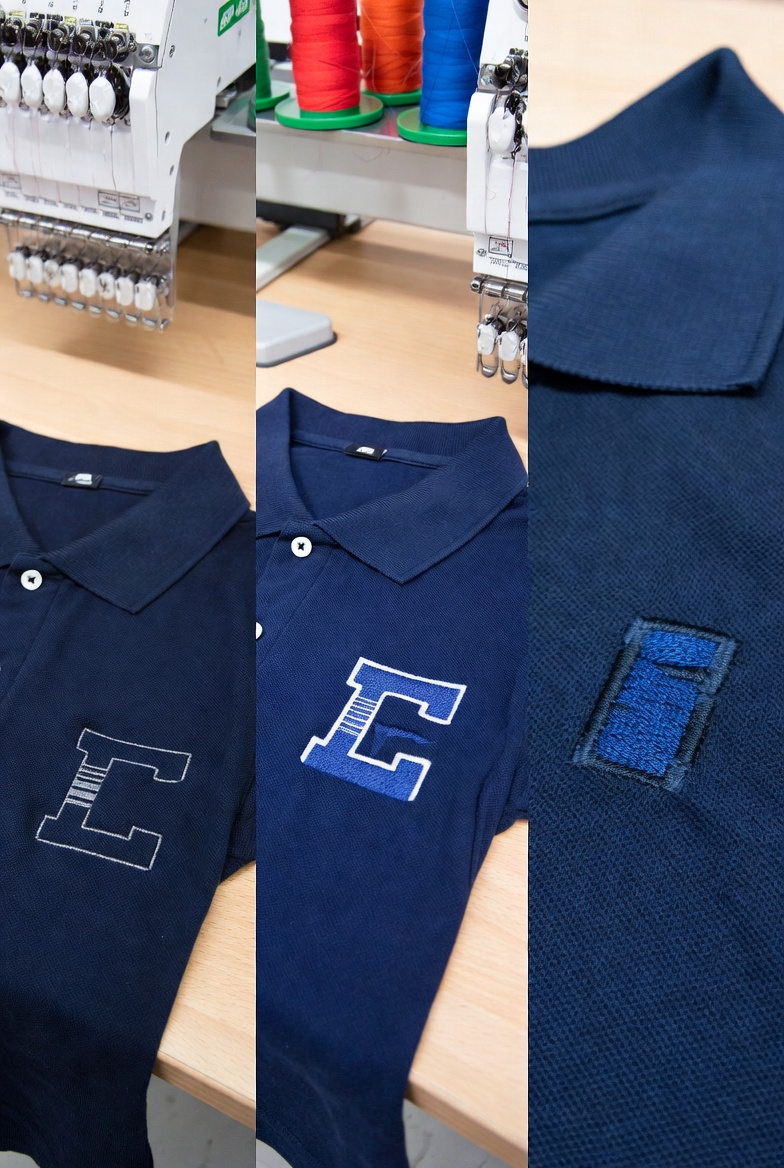
The visible symptom of inadequate pull compensation is a design that looks narrower or shorter than the original artwork. Text appears compressed. Circular elements become oval. Gaps appear between fill areas and their surrounding outlines. The design looks "thin" and insubstantial compared to properly compensated embroidery. To a knowledgeable eye, inadequate pull compensation is the telltale sign of cheap digitizing — and to customers comparing your embroidery against competitors who use better stitch files, it communicates a lower quality standard that affects their perception of your entire business.
StitchFast applies pull compensation automatically based on the design's stitch density and area characteristics. The AI has been trained on thousands of designs and understands the compensation requirements for different design types — aggressive compensation for large fill areas, moderate compensation for standard designs, and minimal compensation for small, dense elements where over-compensation would distort fine detail. This automated application produces consistently correct compensation without requiring the operator to understand or specify compensation values.
Underlay: The Invisible Foundation
Underlay stitching — the foundation layer stitched beneath the visible design — is invisible in the finished product but critically important to its quality and durability. Underlay serves three functions: it stabilises the fabric to prevent shifting during stitching, it flattens the fabric nap (the surface texture of materials like fleece or terry cloth) to create a smooth surface for the top stitching, and it provides a slightly raised base that helps the top stitching sit evenly and catch light consistently.
Budget digitizing services routinely omit or minimise underlay to reduce the stitch count (and therefore the production time) of their files. This makes the files appear cheaper on a per-stitch basis, but the practical consequence is embroidery that puckers, shifts on the fabric surface, and degrades faster through washing and wear. A £5 file with minimal underlay might save two minutes of machine time compared to a properly underlaid file — but the resulting embroidery will look noticeably worse, wear out faster, and generate more customer complaints and returns.
Machine Wear and Long-Term Costs
The impact of poor stitch files on machine longevity is the most underappreciated hidden cost. Embroidery machines are precision mechanical devices with tight tolerances, and repeatedly running files that stress the machine — through excessive density, inappropriate stitch lengths, or poor pathing that causes abrupt direction changes — accelerates wear on needle bars, drive mechanisms, and timing components.
Commercial embroidery machines represent investments of £5,000-50,000, and their maintenance costs are significant. Needle bar assemblies, hook assemblies, and timing mechanisms are wear items that require periodic replacement. Running poorly digitized files that stress these components shortens the replacement interval, increasing maintenance costs and machine downtime over the machine's lifetime. The cost difference is difficult to quantify precisely, but experienced machine technicians consistently report that machines running high-quality stitch files require less frequent maintenance than machines routinely running poor-quality files.
Customer Complaints and Brand Damage
The most insidious hidden cost of cheap digitizing is the damage to your reputation. A customer who receives an embroidered polo shirt with visible puckering, thin lettering, or a design that does not match the approved artwork will not think "the digitizer used cheap software." They will think "this embroidery company produces poor quality work." The complaint lands on your business, not on the digitizer who caused the problem.
In the age of online reviews, a single negative review citing embroidery quality can cost thousands of pounds in lost business. A Google or Etsy rating that drops from 4.8 to 4.5 stars due to quality complaints reduces conversion rates, search ranking, and customer trust. The financial impact of reputation damage far exceeds the few pounds saved by choosing the cheapest available digitizing option.
The Real Cost Comparison
The true cost comparison between cheap digitizing and quality alternatives must account for all downstream costs: thread waste, garment scrap, operator intervention time, machine wear, customer complaints, and reputation damage. When these hidden costs are included, the £5 budget file typically costs £15-25 in total economic impact — making it more expensive than a £20 professionally digitized file that avoids these downstream problems entirely.
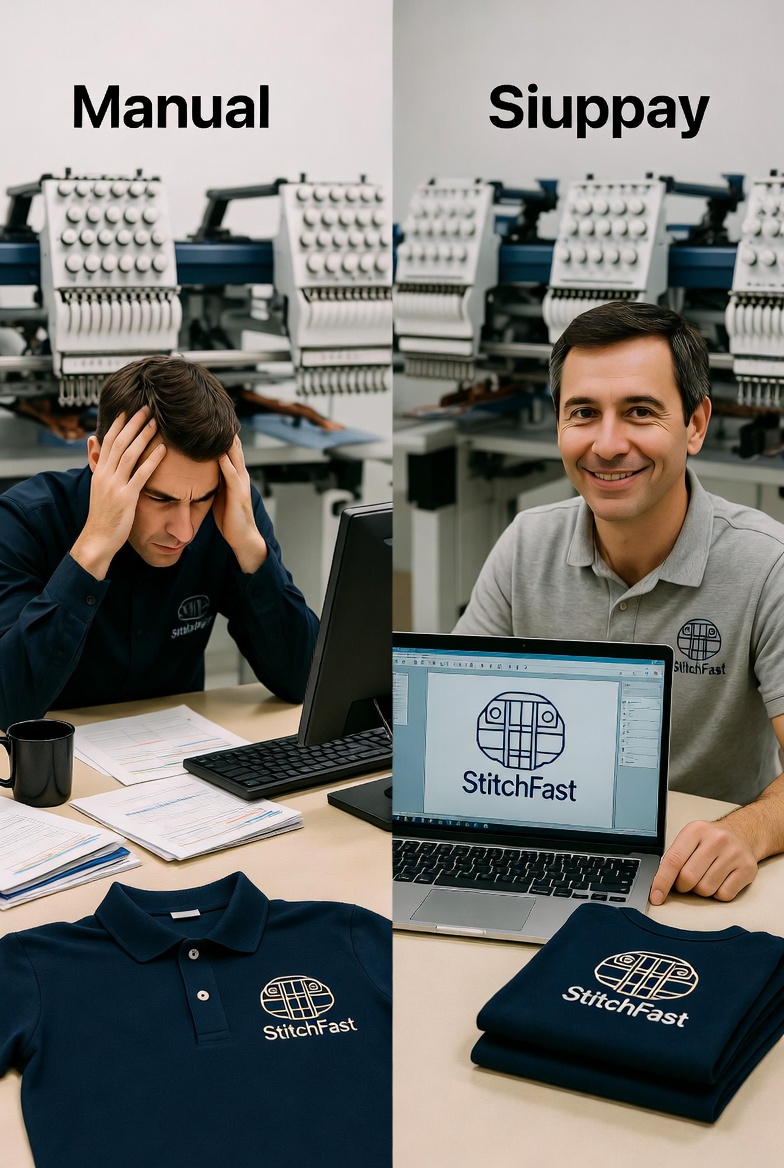
AI digitizing through StitchFast eliminates the hidden costs altogether. The files are technically sound (correct stitch lengths, appropriate density, proper pull compensation, adequate underlay), consistently produced (no variation between files that creates unpredictable quality), and immediately available (no waiting that delays production). The total economic cost of a StitchFast file — the subscription fee divided by the number of designs generated — is typically under £1, with downstream costs approaching zero due to the consistent quality of the output.
The lesson is straightforward: in embroidery digitizing, the cheapest option is almost never the most economical option. The stitch file is the foundation of every embroidered product you produce. When that foundation is sound, everything built upon it — production efficiency, product quality, customer satisfaction, and business reputation — is strong. When the foundation is compromised to save a few pounds on digitizing, everything built upon it suffers. Choose your stitch files wisely, and the rest of your business will follow.
Cheap Digitizing FAQs
Why does cheap embroidery digitizing cost more in the long run?
Cheap digitizing looks cheaper up front but carries hidden downstream costs: thread breaks, fabric scrap, operator time, machine wear and customer complaints. Once those are included, a £5 budget file often works out at £15–25 in total economic impact.
What problems do bad stitch files cause?
Poorly digitized files cause frequent thread breaks, puckered or ruined fabric, failed pull compensation and inadequate underlay. These lead to wasted garments, constant operator intervention and inconsistent finished quality that customers notice.
Can bad digitizing damage my embroidery machine?
Yes. Files with excessive density or poor stitch construction put extra strain on needles, hooks and moving parts, increasing wear and maintenance over time. Well-constructed files run smoothly and are gentler on the machine.
How much should good embroidery digitizing cost?
A professionally digitized file often costs around £20 but avoids the downstream waste that makes cheap files expensive. AI digitizing lowers this further: with StitchFast the effective cost per design is typically under £1, with downstream costs close to zero due to consistent quality.
Is AI digitizing good enough to avoid these hidden costs?
Yes. StitchFast files are technically sound — correct stitch lengths, appropriate density, proper pull compensation and adequate underlay — and consistent from file to file. That consistency is exactly what removes the hidden costs of cheap, variable digitizing.