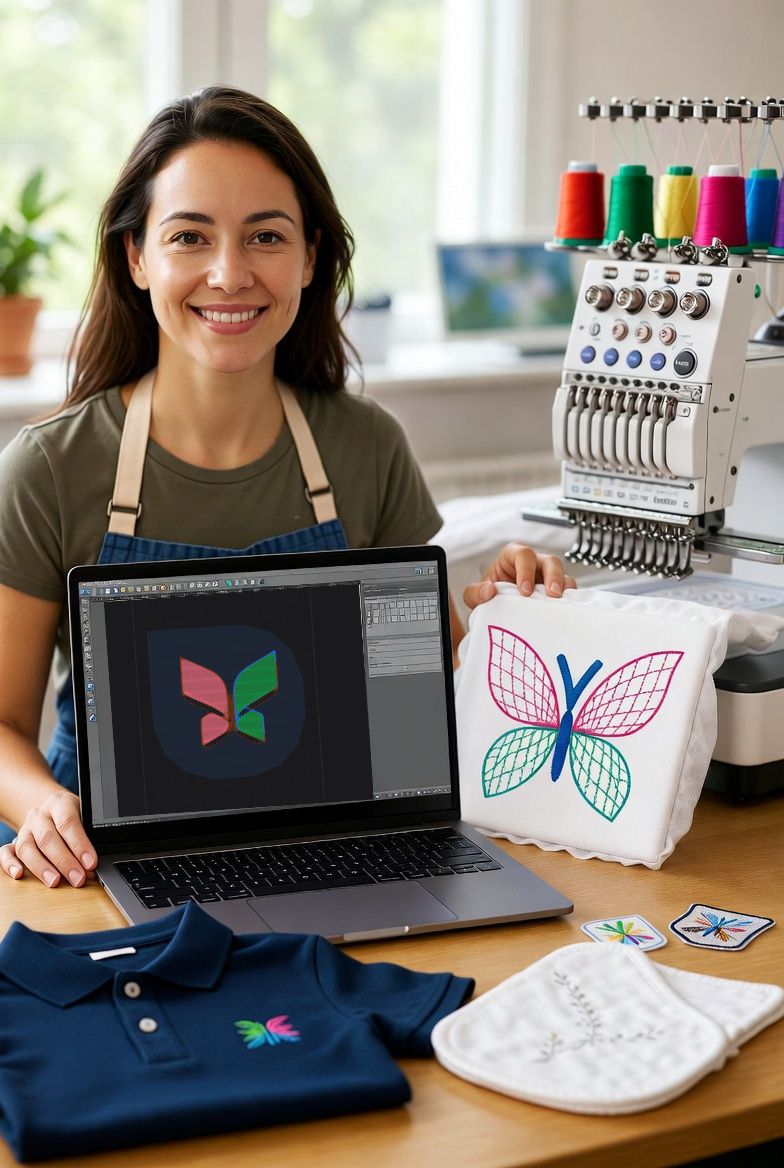
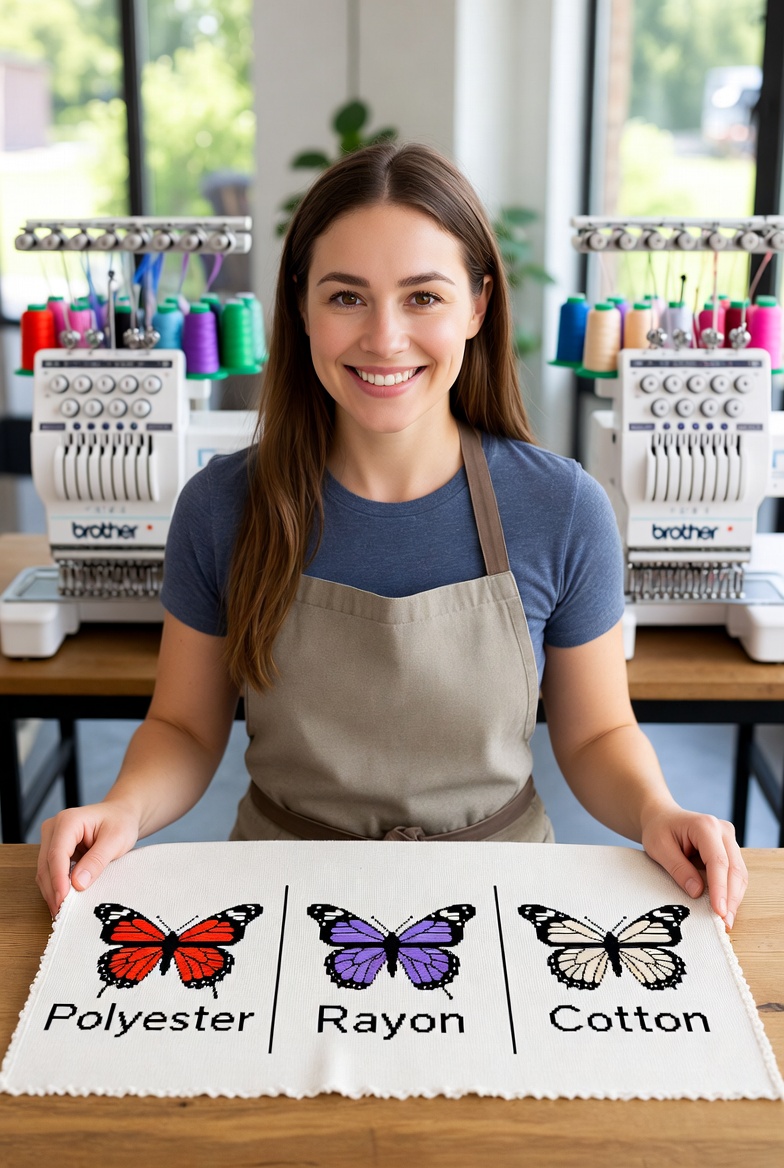
The story of scaling an embroidery business from a home operation to a commercial production facility follows a pattern that is remarkably consistent across the industry. The equipment changes, the hiring decisions, the workflow transformations, and the bottlenecks that emerge at each stage of growth are predictable — yet most embroidery entrepreneurs discover them through painful trial and error rather than planned progression. This guide maps the complete journey, drawn from dozens of real-world scaling stories, to help you navigate each phase with your sanity and your margins intact.
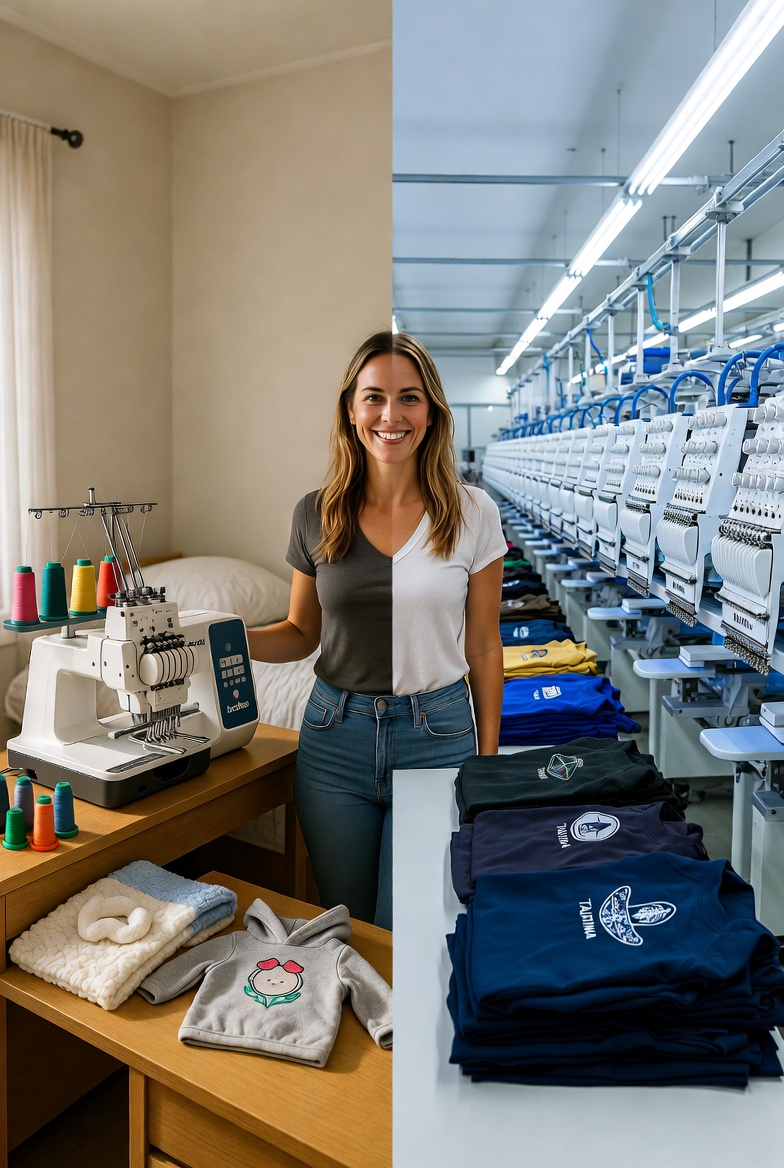
Phase One: The Single-Machine Home Operation (Months 1-3)
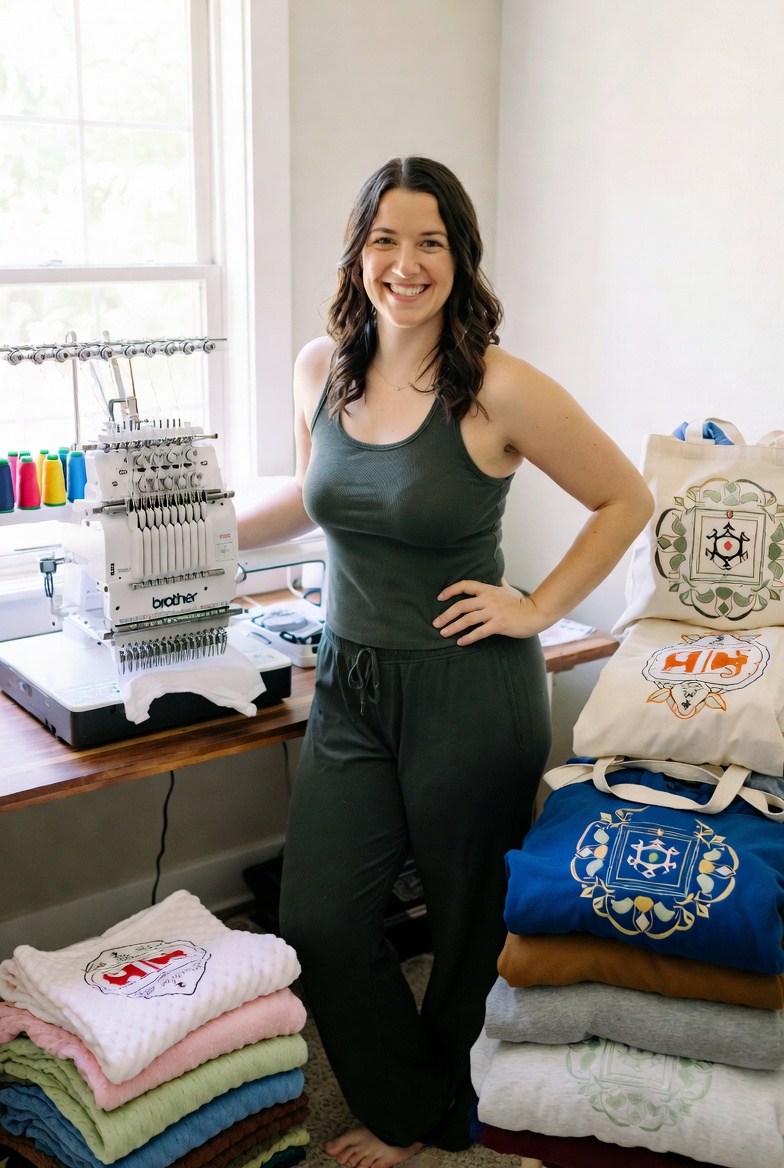
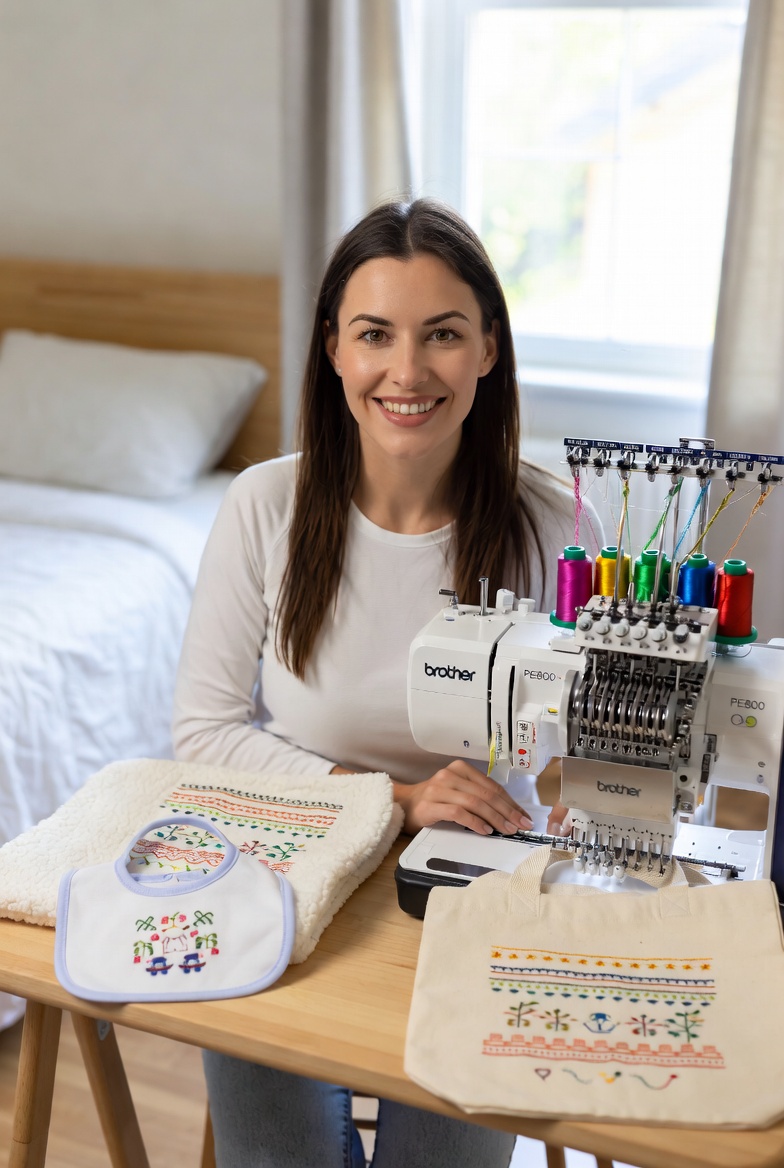
Every commercial embroidery operation begins with a single machine and a person willing to learn. The typical starting equipment is a mid-range home embroidery machine — a Brother PE800, Janome MB-4S, or similar unit costing £400-800. These machines are designed for hobbyists but are capable of producing commercial-quality embroidery at modest volumes. The 5x7 inch hoop limits design size, the single needle requires manual thread changes between colours, and the production speed is measured in hundreds of stitches per minute rather than the thousands that commercial machines achieve. But the quality of the output — the actual stitched result on fabric — can be indistinguishable from machines costing ten times as much.
At this stage, the primary constraint is not machine capability but design capability. Every embroidered product requires a stitch file — a set of instructions that tells the machine exactly where to place each stitch. Creating these files traditionally required either expensive software skills (months of learning curves with tools like Wilcom or Hatch) or outsourced digitizing (£15-30 per design, with 24-72 hour turnaround). For a home operation producing personalised items where every order is unique, outsourced digitizing is financially devastating — it can consume 50-70 percent of the selling price.
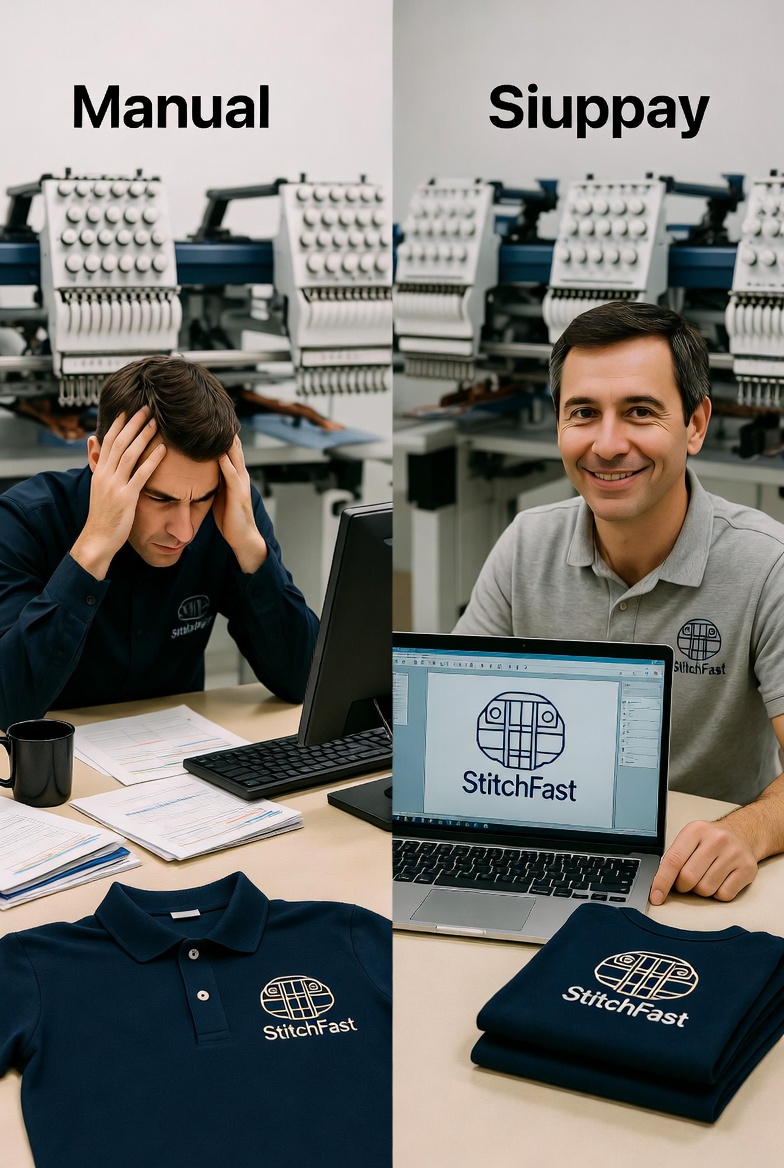
This is where AI digitizing tools like StitchFast transform the equation. With unlimited stitch file generation at a flat monthly rate, the per-design cost drops to near zero, and the turnaround drops from days to seconds. A home embroiderer using StitchFast can produce unique stitch files for every order without any digitizing skills, without any per-design cost, and without any waiting. The bottleneck that historically prevented home embroiderers from scaling past a handful of orders per week simply ceases to exist.
Revenue at this phase typically ranges from £500 to £2,500 per month, depending on product pricing, order volume, and the hours available for production. Profit margins are healthy (40-60 percent after materials and platform fees) because overhead is minimal — no rent, no employees, no equipment payments if the machine was purchased outright. The primary investment is time, and the primary skill being developed is not embroidery (which is largely machine-automated) but business operations: customer service, order management, product photography, listing optimisation, and financial tracking.
Phase Two: The Multi-Machine Home Operation (Months 3-6)
The transition from one machine to two machines is the first significant scaling decision. It typically occurs when the single machine is running at or near capacity during available working hours and unfulfilled demand is visible — a growing order backlog, longer dispatch times, or the need to decline orders during peak periods. The second machine purchase is driven by a simple calculation: if the additional capacity generates enough revenue to pay for itself within three to four months, the investment is justified.
The second machine is usually a step up from the first — a multi-needle unit like the Brother PR1050X or Janome MB-7 that eliminates manual thread changes and offers larger hoop sizes. Multi-needle machines can produce colour-change designs without stopping, dramatically increasing throughput on designs with four or more thread colours. The investment is larger (£1,500-3,000 for a used or refurbished unit) but the productivity gain is substantial — a six-needle machine running autonomously while the operator hoops the next garment on the original machine creates a production flow that doubles or triples hourly output.
Two machines running simultaneously in a spare bedroom creates space and noise challenges that most home embroiderers underestimate. Embroidery machines are not quiet — the rhythmic hammering of the needle bar and the whine of the stepper motors are audible through walls. Two machines running simultaneously can test household relationships and neighbour patience. Many embroiderers at this stage begin investigating dedicated workspace options — a garden shed conversion, a garage conversion, or a small rented unit.
Revenue at this phase typically reaches £3,000 to £6,000 per month. StitchFast's importance increases proportionally with volume — at 15-30 unique designs per day, the time saving alone (compared to manual file creation) frees up hours that are redirected to production stitching. The business is now generating a genuine income rather than supplementing one, and the owner begins thinking seriously about whether this could replace other employment.
Phase Three: The Dedicated Workshop (Months 6-9)
Moving into a dedicated workspace is the transition point from side hustle to serious business. The trigger is usually a combination of space constraints, noise issues, and the realisation that separating work and home life is essential for long-term sustainability. The typical first workshop is a small industrial unit, a converted garage or outbuilding, or a shared workspace — somewhere with 200-500 square feet of floor space, appropriate electrical supply, and enough separation from residential areas to run machines during working hours without disturbing anyone.
The workshop move enables the addition of a third or fourth machine and the first hire — usually a part-time assistant who handles garment preparation (hooping, backing, positioning), machine loading, and finishing (trimming jump stitches, removing stabiliser, pressing). This first hire is psychologically significant: the business owner transitions from doing everything personally to managing someone else's work. The skills required shift from production skills to management skills — training, quality control, workflow design, and delegation.
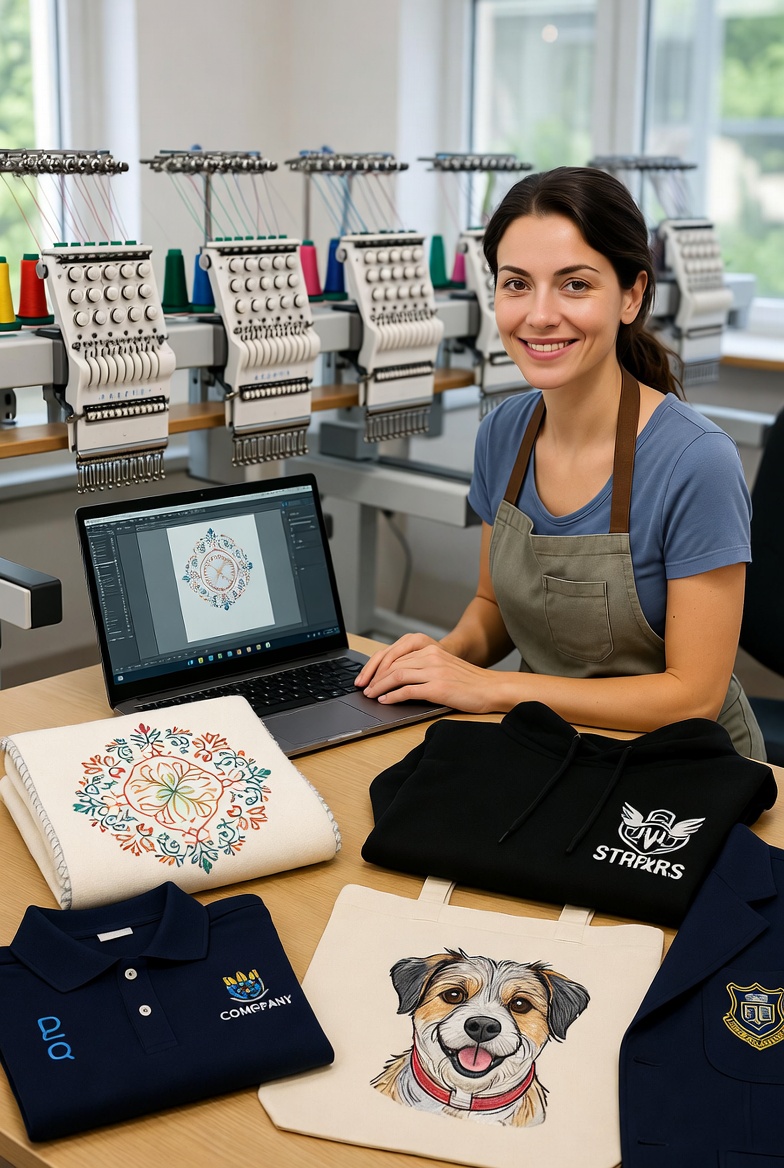
The workshop phase is where production workflow becomes critical. With multiple machines and an assistant, the chaos of the spare-bedroom operation must be replaced by systems: an order processing workflow, a production queue, a quality check procedure, and an inventory management process. StitchFast integrates into this workflow as the design-to-production bridge — orders arrive, designs are created and uploaded to StitchFast within minutes, stitch files are downloaded and queued for production, and the assistant loads machines according to the production schedule. The entire design-to-stitch pipeline operates in minutes rather than the days that outsourced digitizing would require.
Revenue at this phase reaches £6,000 to £12,000 per month. Overhead increases significantly (rent, utilities, assistant wages, insurance) but is offset by the higher production volume and the ability to accept larger orders — corporate accounts, event orders, and wholesale enquiries that would have been impossible to fulfil from a spare bedroom. The business begins transitioning from consumer-only (Etsy, direct sales) to a mixed model that includes business-to-business work.
Phase Four: Commercial Equipment (Months 9-12)
The jump to commercial embroidery equipment is the most capital-intensive decision in the scaling journey. Commercial multi-head machines — Tajima, Barudan, SWF, or Ricoma units with 4, 6, or 8 heads — stitch multiple identical garments simultaneously at speeds of 800-1,200 stitches per minute per head. A four-head commercial machine produces in one hour what a single-head home machine produces in four to six hours. The investment is substantial: used commercial multi-head machines range from £5,000 to £25,000 depending on age, condition, and head count; new machines can exceed £50,000.
The commercial machine decision is justified when the business has consistent order volume that exceeds what home-grade equipment can produce, a customer base that includes repeat corporate or institutional clients, and enough financial reserves or financing to absorb the capital expenditure. Financing options include equipment leasing (spreading the cost over 3-5 years), hire purchase, or business loans. Many embroidery businesses at this stage have enough trading history to qualify for commercial financing.
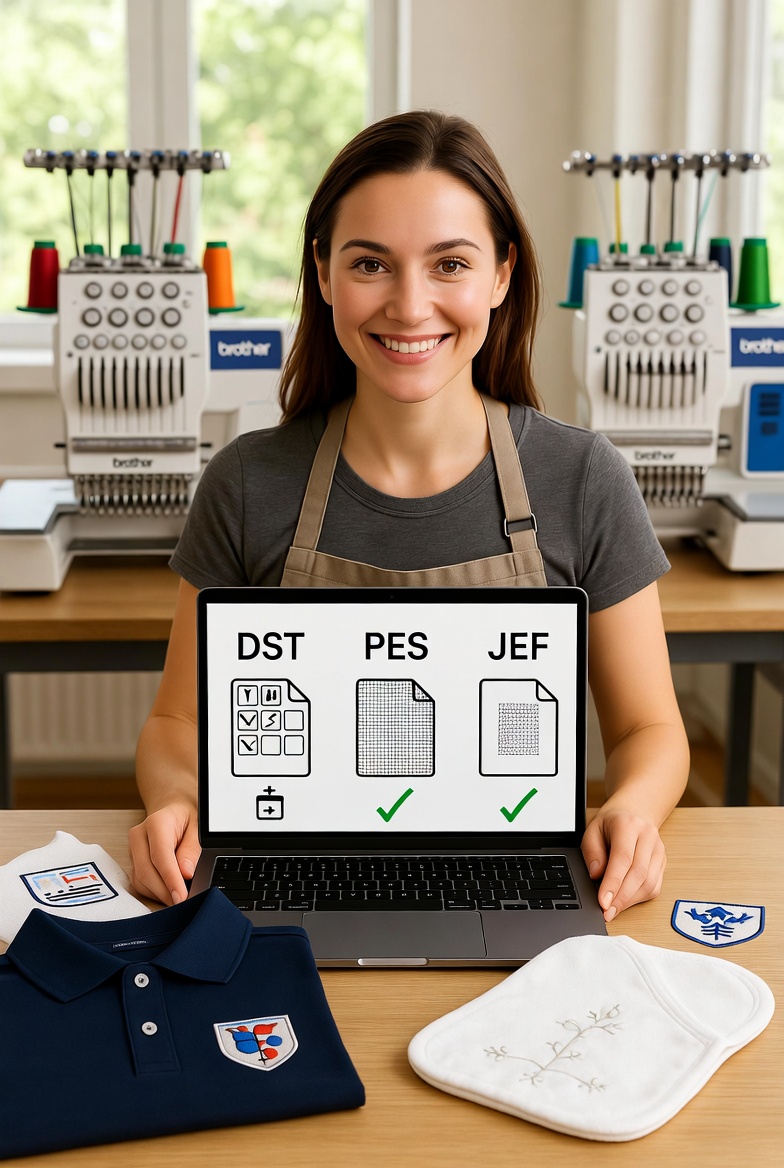
Commercial machines use DST format stitch files almost universally, and StitchFast generates DST files natively. The transition from home machine PES files to commercial DST files is seamless — the same uploaded image produces both formats, and the stitch content is identical. Operators familiar with running StitchFast-generated files on home machines find that the same files run equally well on commercial equipment, eliminating any relearning curve associated with the machine upgrade.
The commercial equipment phase transforms the business economics. A four-head machine running at 80 percent utilisation produces the equivalent output of 16-24 single-head home machines. Labour cost per garment drops dramatically because one operator oversees all four heads simultaneously. Thread consumption per garment decreases slightly due to the higher-speed machines' more efficient tension systems. And the production capacity enables the business to accept large orders — 500 embroidered polo shirts for a corporate client, 1,000 school badges for a uniform supplier — that generate the kind of revenue and margin that fully justify the capital investment.
Phase Five: The Factory Operation (Month 12+)
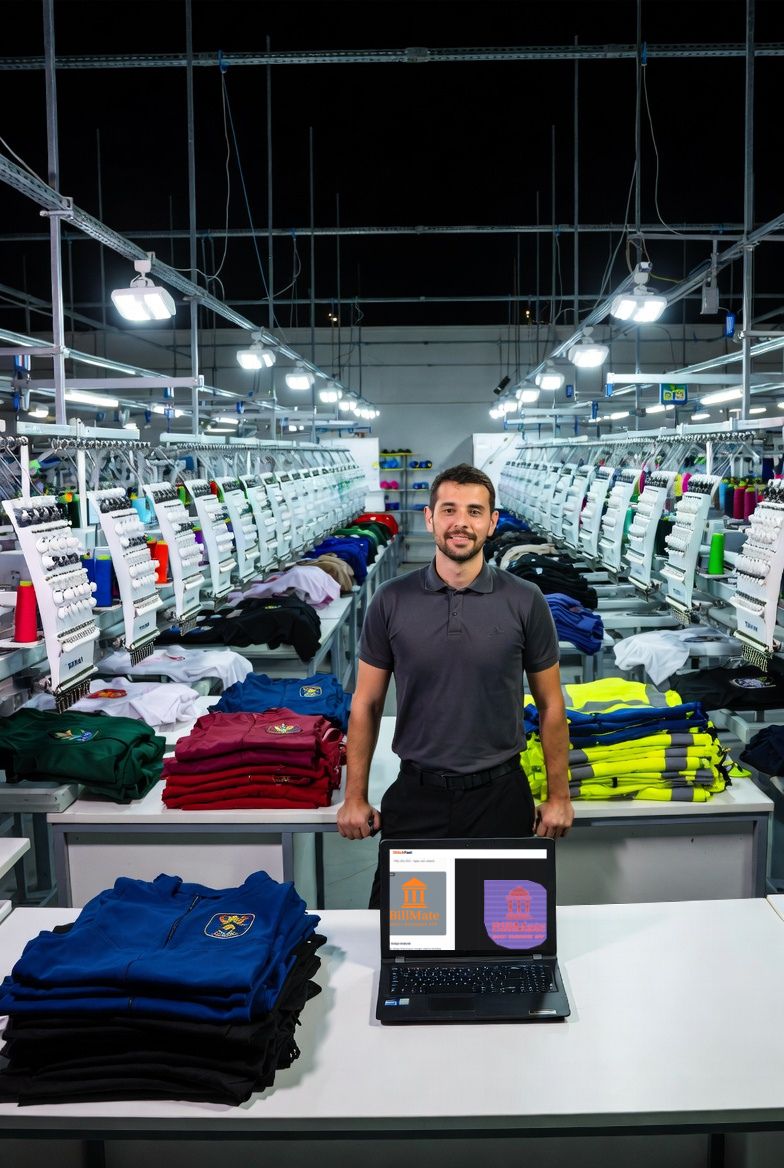
By month twelve, the business that started with a single Brother SE600 in a spare bedroom now occupies a commercial unit, runs one or more multi-head commercial machines alongside the original home machines (repurposed for samples and small orders), employs two to four staff, and generates monthly revenue of £15,000 to £30,000 or more. The operation is recognisably a factory — scheduled production runs, quality control checkpoints, inventory management, and the administrative infrastructure of a real business.
At factory scale, StitchFast's value compounds. The volume of unique designs processed weekly may reach 50-100 or more, and the instant turnaround means no order waits for digitizing regardless of how busy the production schedule is. The flat-rate pricing means digitizing cost remains fixed at £360 per year regardless of whether the business processes 500 or 5,000 unique designs annually. For a factory operation where digitizing was previously a £10,000-30,000 annual expense, this cost reduction flows directly to the bottom line.
The factory phase also introduces new business development opportunities. With commercial production capacity and the ability to generate stitch files instantly, the business can offer services that were impossible at smaller scale: same-day embroidery for urgent corporate orders, custom sample production for trade shows and sales presentations, and white-label embroidery services for other businesses that lack their own production capability. Each of these service lines generates incremental revenue with minimal additional overhead, accelerating the return on the capital invested in commercial equipment.
The Common Mistakes
The most common mistake in scaling an embroidery business is upgrading equipment before upgrading systems. A multi-head commercial machine in a business with chaotic order management, poor inventory tracking, and no quality control process simply produces chaos at a higher volume. The systems — order processing, production scheduling, quality control, inventory management — must be in place before the equipment arrives, not retrofitted afterward.
The second most common mistake is underestimating the importance of sales and marketing during scaling. Production capacity is necessary but not sufficient for growth — someone needs to sell the capacity. Many technically skilled embroiderers are uncomfortable with sales and marketing, preferring to rely on inbound demand from Etsy or word-of-mouth. This works at hobby scale but limits growth at commercial scale. The businesses that scale most successfully are those that invest in outbound sales (visiting potential corporate clients, attending trade shows, building referral partnerships) alongside production capability.
The third mistake is maintaining outsourced digitizing during the scaling process. Every pound spent on per-design digitizing is a pound not invested in equipment, marketing, or staff. StitchFast's unlimited plan eliminates this ongoing cost entirely, freeing capital for the investments that actually drive growth. The businesses that adopt AI digitizing earliest in their scaling journey have a structural cost advantage over those that continue paying per-design fees throughout their growth.
The Twelve-Month Transformation
The journey from spare bedroom to factory floor in twelve months is ambitious but achievable. It requires clear financial planning, disciplined reinvestment of profits, willingness to learn management skills alongside production skills, and the recognition that every growth phase introduces new challenges that the previous phase did not prepare you for. The equipment gets bigger, the orders get larger, the team grows, and the complexity increases at every stage.
What remains constant throughout the journey is the need for reliable, affordable, instant stitch file generation. From the first personalised baby bib to the thousandth corporate polo shirt, every embroidered product begins with a stitch file. StitchFast provides that file in seconds, at a fixed cost, at every stage of growth — making it the one tool that scales seamlessly from the spare bedroom to the factory floor without modification, upgrade, or renegotiation. In an industry where every other element of the business changes as you grow, that consistency is invaluable.
Scaling an Embroidery Business FAQs
Can you scale an embroidery business from home to a factory?
Yes. Scaling from a spare bedroom to a factory floor in around twelve months is ambitious but achievable. It takes clear financial planning, disciplined reinvestment of profits, and a willingness to learn management skills alongside production as each growth phase brings new challenges.
What are the stages of growing an embroidery business?
A common path runs through five phases: a single-machine home operation, a multi-machine home operation, a dedicated workshop, commercial equipment, and finally a factory operation. Each stage increases equipment size, order volume, team size and complexity.
How do you fund embroidery business growth?
The most sustainable route is disciplined reinvestment of profits, upgrading equipment and capacity as demand justifies it rather than over-committing early. Careful financial planning at each phase keeps growth affordable and avoids taking on capacity before the orders exist to fill it.
What are the common mistakes when scaling an embroidery business?
Typical mistakes include buying commercial equipment before demand supports it, neglecting management and workflow systems as the team grows, and underestimating how much each growth phase differs from the last. Growing in deliberate stages avoids most of them.
How does digitizing cost affect a scaling embroidery business?
Every embroidered product starts with a stitch file, so per-design digitizing fees scale directly with volume and can throttle growth. Fixed-cost AI digitizing like StitchFast keeps that cost flat from the first product to the thousandth, so it scales with you without renegotiation or upgrade.