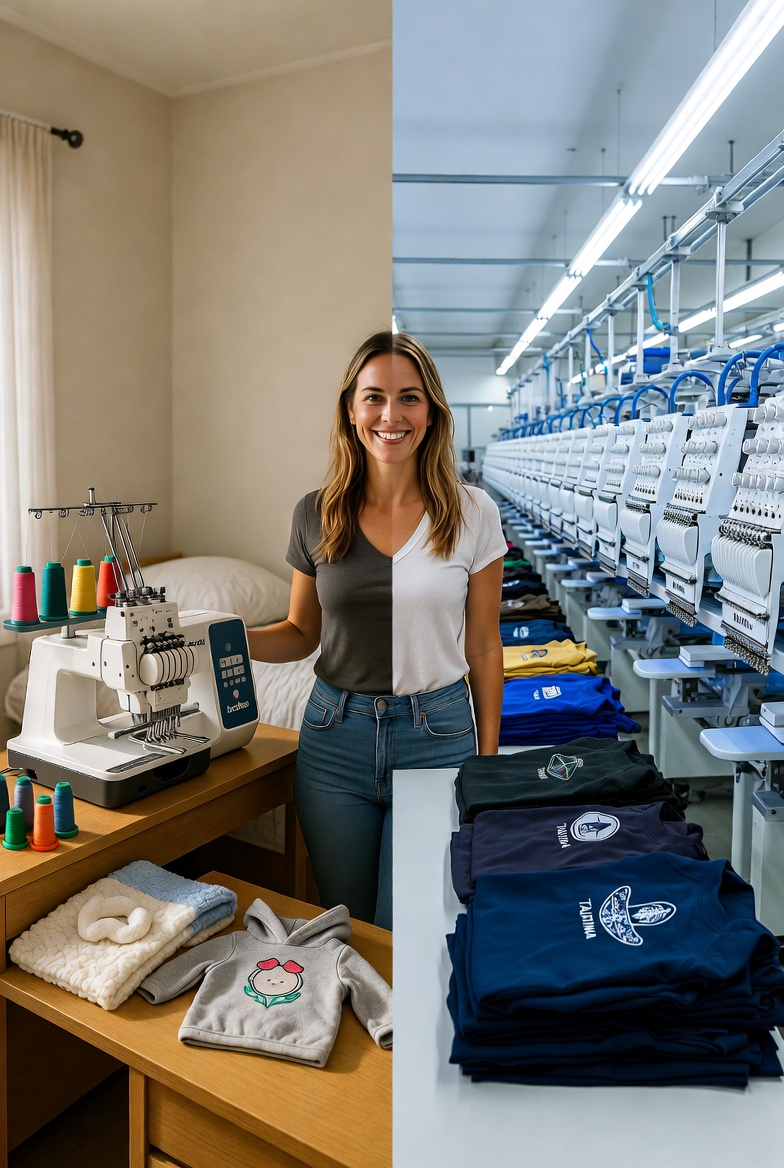
There is a moment every creative hobbyist recognises — the moment you realise your side project is generating more satisfaction, more creative energy, and potentially more income per hour than your day job. For Jess Hartley, a 34-year-old former HR administrator from Exeter, that moment arrived in November 2024 when she calculated that her evening and weekend embroidery work was earning £14.80 per hour after all costs, compared to the £13.20 per hour her full-time office job paid after tax and commuting expenses. The embroidery was more enjoyable, more flexible, and more lucrative. The only question was whether it could scale to replace a full-time salary.
The Side Hustle Phase
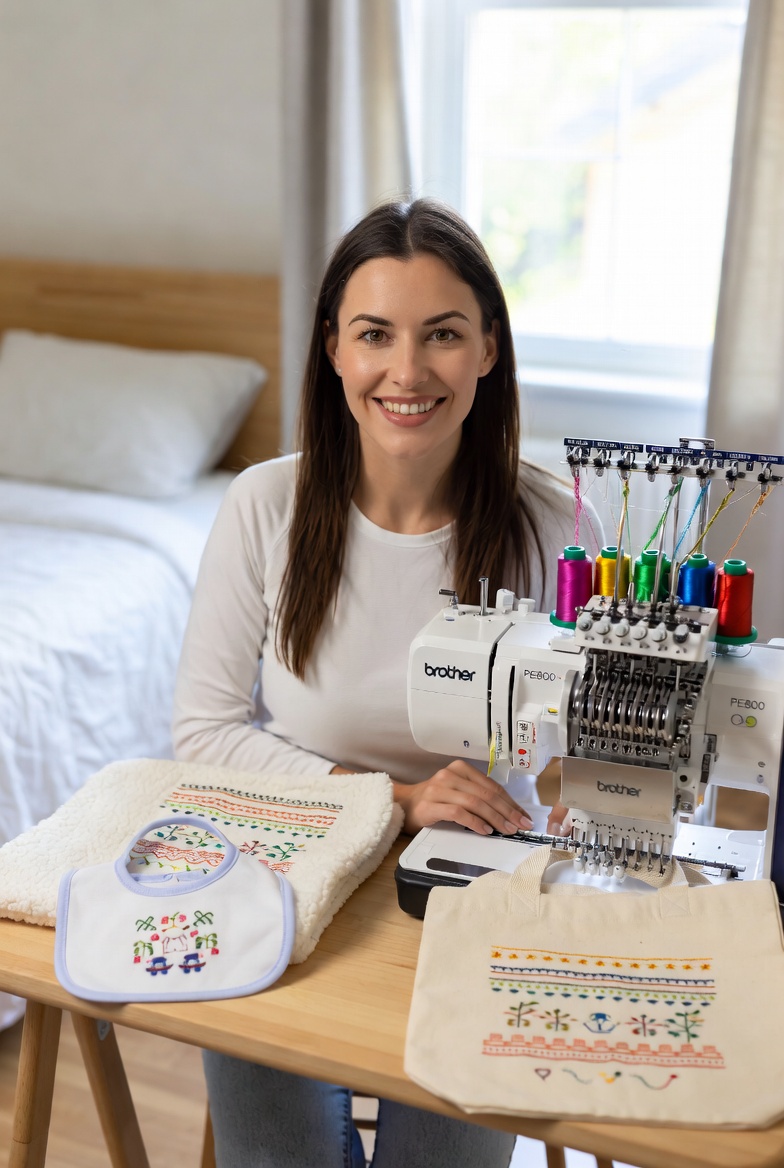
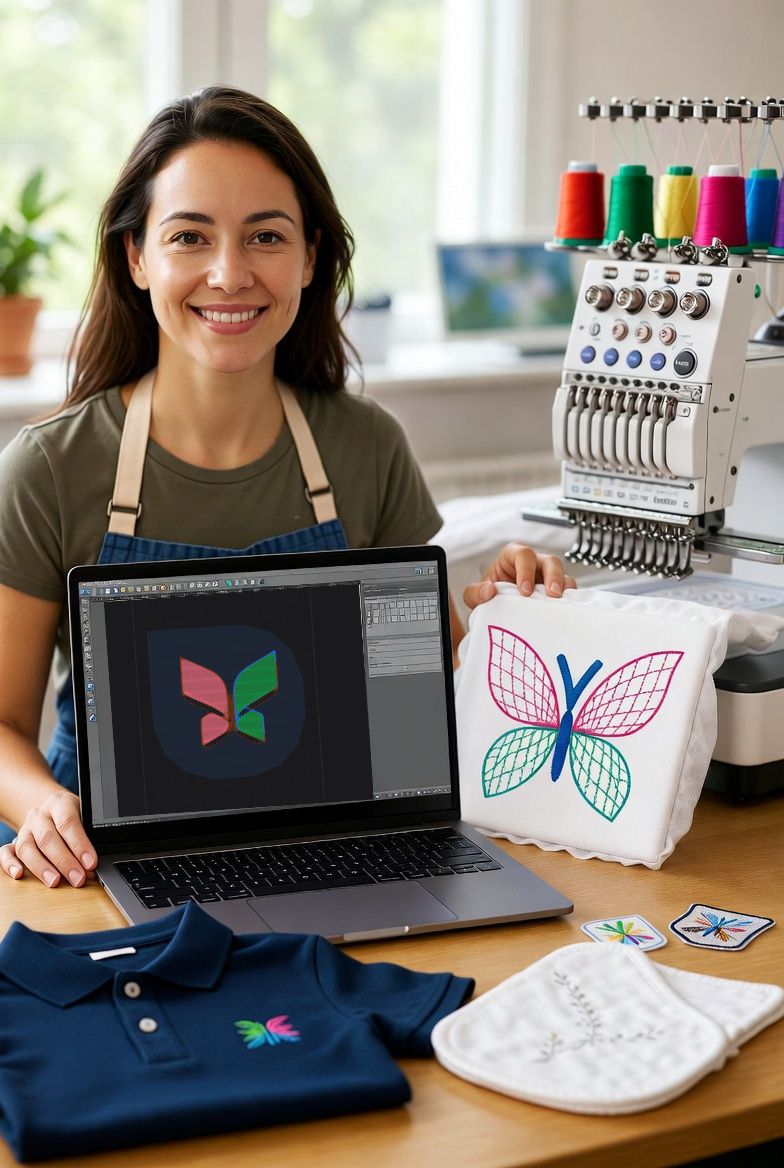
Jess started machine embroidery in 2022 with a Brother SE600 — an entry-level combination sewing and embroidery machine that she bought refurbished for £280 from a Facebook marketplace listing. Her initial projects were gifts for friends and family: embroidered baby bibs, personalised tote bags, and monogrammed handkerchiefs. The quality was rough at first — thread tension issues, fabric puckering, and the universal beginner's frustration of watching a design that looked beautiful on screen turn into a tangled mess of thread on fabric.
By mid-2023, Jess had developed enough skill to start selling. She opened an Etsy shop offering personalised baby gifts and quickly discovered that demand existed far beyond her immediate social circle. Orders trickled in — five in the first month, twelve in the second, twenty by the fourth month. The products were well-received, reviews were positive, and the work was deeply satisfying in a way that processing HR paperwork had never been.
The constraint was digitizing. Every personalised order required a unique stitch file, and Jess lacked the skills to create them in embroidery software. She outsourced to a freelance digitizer at £15 per design, which consumed most of the profit on her £22-28 products. A baby bib selling for £22 cost £6 for the blank, £2 for thread and stabiliser, £15 for digitizing, and £2.50 in Etsy fees — leaving £3.50 gross profit before her time was counted. She was essentially working for free, subsidised by the enjoyment of the craft.
The StitchFast Discovery
Jess discovered StitchFast in January 2025 through a recommendation in a Facebook embroidery group. The promise — upload any image, download a production-ready stitch file in under a minute, unlimited designs for £29.99 per month — seemed almost too good to believe. She signed up for the Unlimited plan with healthy scepticism and ran her first test: a personalised baby name design that she had previously paid £15 to have digitized.
The result was, in Jess's words, a revelation. The stitch file generated in 47 seconds. She loaded it into her Brother SE600, stitched a sample on a test bib, and the result was indistinguishable from the version her freelance digitizer had produced. The lettering was clean, the satin stitch columns were even, the pull compensation prevented the edge distortion that had plagued some of her earlier outsourced files. And the entire process — from opening StitchFast to holding a finished sample — took under fifteen minutes.
The immediate financial impact was transformative. The same £22 baby bib now cost £6 for the blank, £2 for consumables, £2.50 in Etsy fees, and approximately £0.15 for StitchFast (the £29.99 monthly fee divided across 200+ monthly designs). Gross profit per bib jumped from £3.50 to £11.35 — a 224 percent increase from a single operational change. More importantly, the per-order digitizing cost dropped from the single largest expense to the single smallest, fundamentally altering the economics of personalised embroidery.
Running the Numbers
Jess is methodical about financial tracking — her HR background trained her to think in spreadsheets. Before making the leap to full-time embroidery, she ran a three-month trial period (February through April 2025) where she tracked every metric: orders per day, average order value, material costs per order, time per order, Etsy fees, shipping costs, and net profit per hour worked. The numbers needed to demonstrate that full-time embroidery could match or exceed her £26,400 annual salary (before tax) from the HR role.
During the three-month trial, working evenings and weekends only, Jess averaged 6.2 orders per day with an average order value of £31.40. Monthly revenue averaged £5,840. After all costs — materials, StitchFast subscription, Etsy fees, shipping, packaging, electricity — monthly net profit averaged £3,180. Annualised, this projected to £38,160 — significantly more than her salary, and achieved while working approximately 25 hours per week compared to the 42.5 hours (including commute) her office job consumed.
The calculation was clear, but the emotional leap was harder. A salary provides security, pension contributions, sick pay, and the social infrastructure of a workplace. Self-employment provides none of these, and the income is variable rather than guaranteed. Jess gave herself a decision deadline of May 1st, 2025, with the condition that she needed three consecutive months of net profit exceeding £2,500 to justify the transition. The trial period delivered £3,180, £3,240, and £2,980 respectively. On April 28th, she submitted her resignation.
Month One: The Full-Time Reality
The first month of full-time embroidery was exhilarating and terrifying in equal measure. Without the constraint of office hours, Jess could process orders throughout the day, respond to customer enquiries immediately, and schedule production efficiently rather than cramming everything into evenings when she was already tired from a day at a desk. Productivity increased immediately — daily order capacity jumped from 6-7 per day (constrained by available evening hours) to 12-15 per day.
Revenue in the first full-time month hit £8,200 — a 40 percent increase over the best month during the trial period. The additional capacity was absorbed almost immediately by the market; Etsy's algorithm rewards fast dispatch times, and Jess's ability to ship same-day rather than next-day boosted her search rankings, which drove more traffic, which generated more orders. The virtuous cycle that she had theorised about in her spreadsheets manifested in reality within the first two weeks.
StitchFast's role in this scaling was fundamental. At 12-15 orders per day, Jess was generating 12-15 unique stitch files per day. Under the old outsourced model, this would have required £180-225 per day in digitizing fees — more than her daily revenue in many cases. With StitchFast Unlimited, the digitizing cost remained fixed at approximately £1 per day regardless of volume. The marginal cost of each additional order was materials and time only, with no digitizing overhead to erode the profit on incremental sales.
Expanding the Product Range
With digitizing costs effectively eliminated, Jess experimented aggressively with new product lines. The zero marginal cost of generating stitch files meant that testing a new product required only the cost of blank materials for sample photographs — typically £5-10 per new listing. If a product sold well, she kept it; if it did not, the only loss was the sample cost. This low-risk experimentation model allowed Jess to rapidly identify profitable niches within the personalised embroidery market.
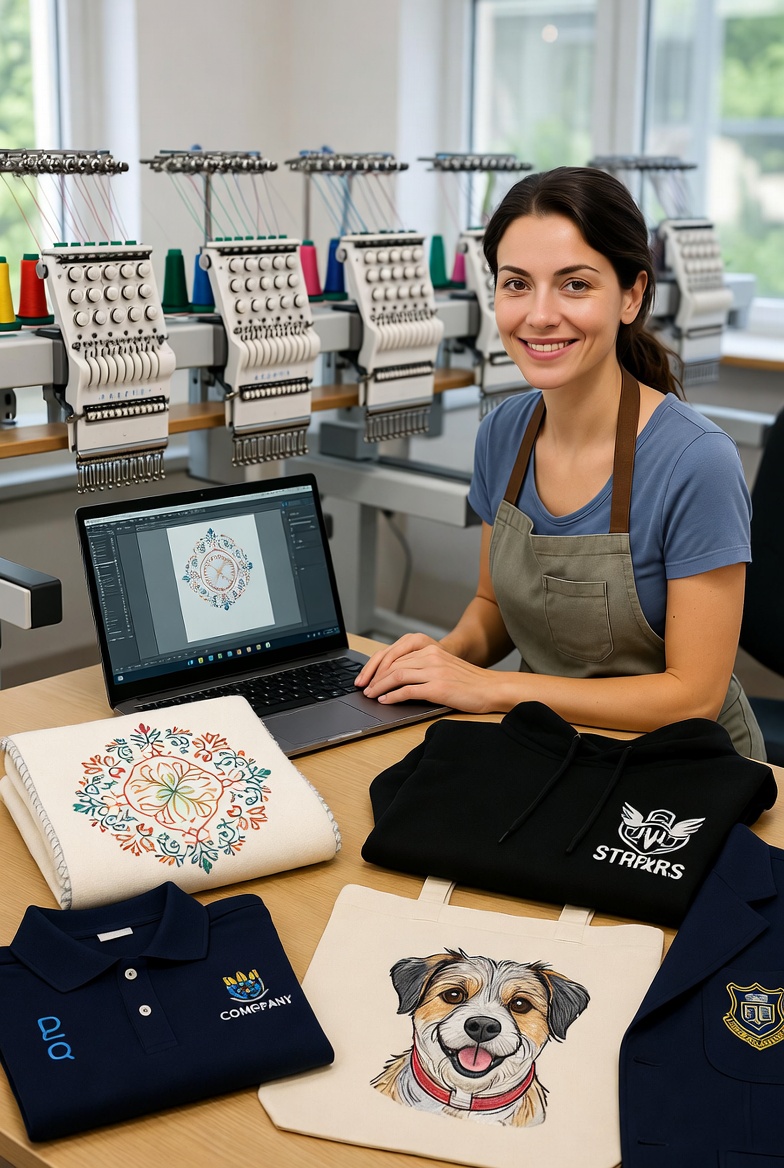
Her product range expanded from the original five listings (baby bibs, tote bags, handkerchiefs, baby blankets, and cushion covers) to over forty listings spanning baby gifts, wedding gifts, Christmas decorations, pet-themed products, new home gifts, teacher appreciation items, and milestone birthday keepsakes. Each new product line required multiple stitch file variants for different sizes and garment types, and StitchFast generated all of them without adding a penny to the monthly overhead.
The standout product line was personalised Christmas stockings, launched in September 2025 in anticipation of the holiday season. Priced at £34, the stockings sold 480 units in November and December — generating approximately £16,300 in revenue from a single seasonal product. The entire stocking line (family name versions, individual name versions, pet name versions, and baby's first Christmas versions) required approximately 30 unique stitch file variants, all generated through StitchFast in a single afternoon.
The Six-Month Financial Picture
Six months into full-time embroidery, Jess's financial position had exceeded her most optimistic projections. Monthly revenue averaged £7,600 across the first six months (boosted by the Christmas peak in months five and six). Monthly net profit averaged £4,320 after all expenses. Annualised, this projected to £51,840 in net profit — nearly double her previous salary. She had purchased a second embroidery machine (a Brother PE800, £420 refurbished), set up a dedicated workspace in her spare bedroom, and begun contributing to a private pension at a higher rate than her employer had matched.
The StitchFast subscription at £29.99 per month remained the single most impactful investment in the business. Over six months, Jess had generated over 1,200 unique stitch files through the platform — a volume that would have cost over £18,000 at her previous outsourced rate. The £180 she spent on StitchFast in the same period represented a 99 percent cost reduction on the single largest operational expense that had previously capped her profitability and constrained her growth.
What I Wish I Had Known
Looking back, Jess identifies several lessons that she wishes she had understood before making the transition. First, the importance of financial buffer — she recommends having at least three months of living expenses saved before going full-time, because the first month involves setup time that reduces productive capacity. Second, the value of batch processing — she now batches similar orders together, stitching all baby bibs in one session and all tote bags in another, which reduces machine setup time and improves throughput by approximately 20 percent.
Third, and most importantly, she wishes she had discovered StitchFast earlier. The eighteen months she spent paying £15 per design to an outsourced digitizer consumed approximately £4,500 that could have been reinvested in equipment, materials, or savings. The financial viability of full-time embroidery existed from the moment StitchFast made unlimited digitizing affordable — she simply did not discover the tool until later than she might have.
Her advice to anyone considering the same leap: run the numbers honestly, build a financial buffer, invest in a StitchFast Unlimited subscription from day one, and recognise that the scariest part of going full-time is not the work — it is the psychological adjustment from the security of employment to the freedom and uncertainty of self-employment. The embroidery itself is the easy part. The business decisions are where the real growth happens.
One Year On
As of April 2026, Jess operates a thriving full-time embroidery business from her home in Exeter. Annual revenue for the first twelve months exceeded £94,000, with net profit of approximately £52,000 after all expenses including two machine purchases, a workspace renovation, and professional accounting fees. She employs a part-time assistant three days per week to handle packaging and shipping, and is evaluating whether to invest in a multi-needle machine to further increase capacity.
The Etsy shop maintains a 4.9-star rating across over 1,800 reviews. Customer satisfaction is consistently high, driven by fast dispatch (same-day for orders placed before 11am), consistent embroidery quality (powered by StitchFast's reliable stitch files), and the personal touches — handwritten thank-you cards, tissue paper wrapping, and occasional surprise extras for repeat customers — that distinguish a one-person craft business from a faceless fulfilment operation.
Jess no longer thinks of herself as someone who quit her job. She thinks of herself as someone who started a business — one that happens to involve beautiful thread, satisfying machines, and the daily privilege of creating personalised objects that make people smile. StitchFast did not create that business. Jess's skill, determination, and willingness to take a calculated risk created it. But StitchFast removed the financial barrier that would have made it impossible, and for that, she considers the £29.99 monthly subscription the best investment she has ever made.
Going Full-Time FAQs
Can you make a full-time living from embroidery?
Yes. In this case study the business reached over £94,000 in first-year revenue and around £52,000 net profit from home. Results vary, but a consistent operator with good products and service can build embroidery into a full-time income.
Should I quit my job to start an embroidery business?
The safest route is to build it as a side hustle first, prove the demand and the numbers, then go full time once the income is reliable. That is exactly the path in this story, where the jump was made only after the side income and the maths supported it.
How did AI digitizing make going full-time possible?
Per-design digitizing fees and delays make many custom orders uneconomical. A fixed-cost tool like StitchFast removes that barrier by generating stitch files instantly for a flat monthly fee, so every order is profitable and nothing is turned away over digitizing cost.
How long does it take to go full-time with embroidery?
It varies, but a common pattern is a few months of side-hustle trading to build reviews and steady orders, then a transition to full time once monthly income covers living costs. In this case the full picture came together within the first year.
What drives repeat business for a home embroidery shop?
Fast dispatch, consistent embroidery quality and personal touches like handwritten thank-you cards and thoughtful packaging. Together these earn strong reviews, and the reviews drive the search visibility and trust that bring repeat and new customers.