The embroidery digitizing industry — the sector responsible for converting images into the stitch files that embroidery machines need to operate — has been remarkably resistant to technological disruption. While almost every other creative industry has been transformed by software automation, embroidery digitizing remained a fundamentally manual craft well into the 2020s. Skilled digitizers used sophisticated software tools, but the creative and technical decisions — stitch type selection, density calibration, angle optimisation, pull compensation, underlay design — were made by humans, one design at a time. That era is now ending.
The Economics of Manual Digitizing
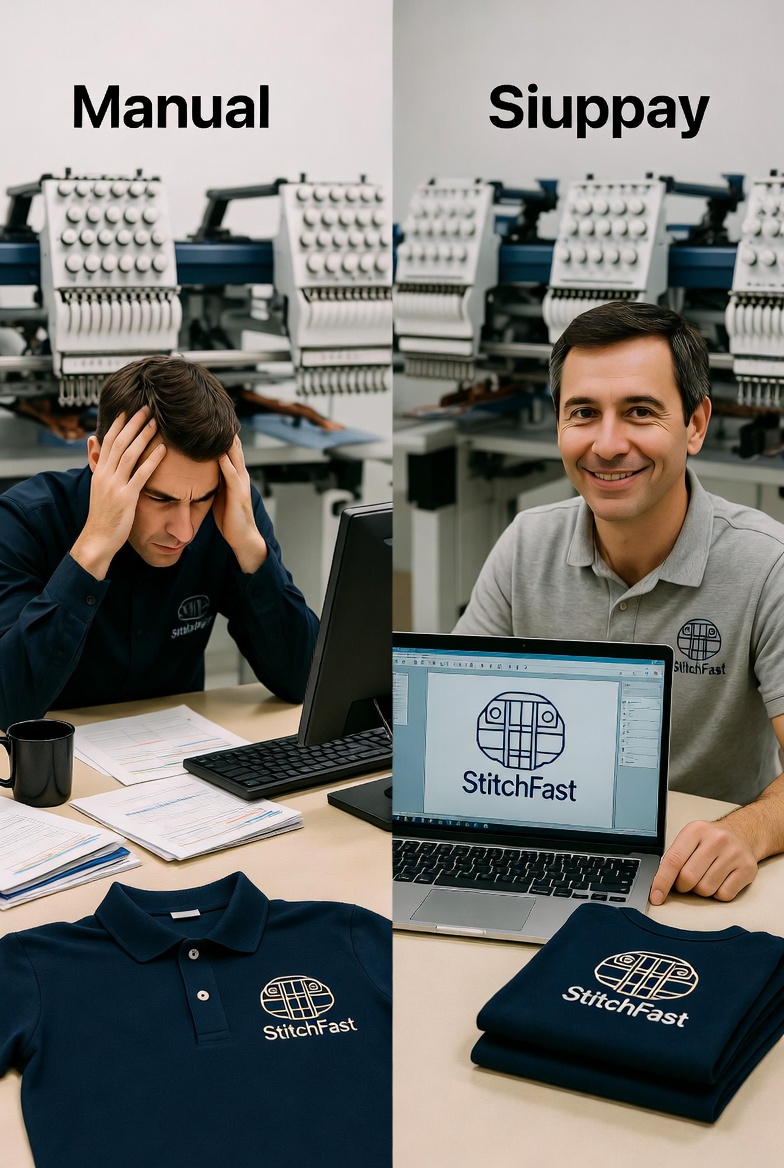
Understanding why AI is replacing manual digitizing requires understanding the economics of the manual model. A typical digitizing service charges £15-30 per standard logo design, with complex designs commanding £40-60 or more. A single skilled digitizer can produce approximately 8-12 designs per working day, depending on complexity. This means a full-time digitizer generates revenue of approximately £120-360 per day for their employer — a productive but not exceptional output for a skilled professional.
The cost structure of a digitizing business includes the digitizer's salary (£25,000-40,000 per year for experienced professionals in the UK), software licensing (Wilcom or similar professional software at £2,000-5,000 per year), office overhead, and management costs. These costs are ultimately passed through to the embroidery businesses that commission stitch files, creating the £15-30 per design price point that has been standard across the industry for over a decade.
For embroidery businesses, this per-design cost creates a structural overhead that scales linearly with production volume. A company processing 50 unique designs per month spends £750-1,500 on digitizing. A company processing 500 unique designs per month spends £7,500-15,000. The cost never decreases with volume (unlike most business costs that benefit from economies of scale), and the turnaround time (typically 24-72 hours) creates production scheduling constraints that limit overall throughput.
What AI Digitizing Actually Does
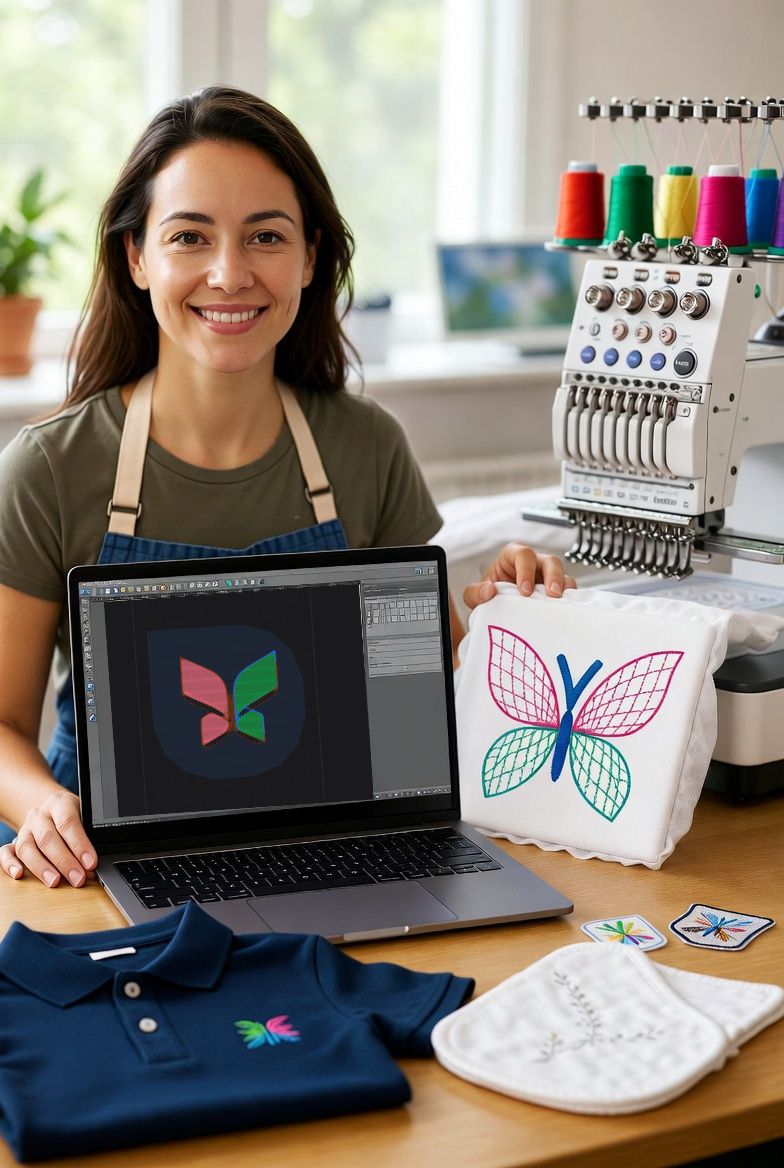
AI embroidery digitizing replaces the human digitizer's decision-making process with trained algorithms that analyse uploaded images and generate stitch files automatically. The AI performs the same fundamental tasks as a human digitizer — identifying distinct colour regions, determining appropriate stitch types, calculating density and angles, applying pull compensation, generating underlay stitching, and sequencing colour changes — but does so in seconds rather than minutes or hours, and at a cost that is negligible per design rather than substantial.
The AI is not making random or simplistic decisions. Modern AI digitizing systems like StitchFast have been trained on thousands of embroidery designs and production outcomes, learning the relationships between image characteristics, stitch parameters, and stitched results. The AI understands that a narrow text element should receive satin stitching while a broad fill area should receive tatami fill. It understands that lightweight fabrics need lighter density than heavyweight fabrics. It understands that metallic thread regions benefit from longer stitch lengths. These are the same decisions a human digitizer makes — the AI has simply learned to make them faster and more consistently.
Why Businesses Are Switching
The migration from manual to AI digitizing is driven by three factors, in order of importance: speed, cost, and consistency.
Speed is the primary driver. In an industry where production deadlines are tight and customer expectations for rapid delivery are increasing, the 24-72 hour turnaround of manual digitizing is a competitive disadvantage. AI digitizing delivers files in under a minute. This speed advantage cascades through the entire business — faster quoting, faster sampling, faster production start, faster delivery. Embroidery businesses using AI digitizing can offer same-day turnaround on new designs, a service level that is physically impossible with manual digitizing regardless of how many digitizers are employed.
Cost is the second driver. StitchFast's Unlimited plan at £29.99 per month provides unlimited stitch file generation — whether a business processes 10 designs or 1,000 designs per month, the cost is identical. For any business processing more than two designs per month, AI digitizing is cheaper than manual alternatives. For businesses processing hundreds of designs monthly, the cost saving runs into tens of thousands of pounds annually. This is not a marginal saving — it is a structural cost elimination that changes the fundamental economics of the embroidery business.
Consistency is the third driver, and it is underappreciated. Human digitizers, however skilled, introduce variation between files. A digitizer working on Monday morning produces slightly different results than the same digitizer working on Friday afternoon. Different digitizers within the same bureau produce noticeably different results on identical designs. This variation manifests as inconsistency in the finished embroidery — a logo that stitches slightly differently each time it is digitized, with subtle variations in density, stitch angles, and coverage. AI digitizing eliminates this variation entirely. Upload the same image twice, receive the same file twice. Upload the same image on Monday or Friday, in January or July — identical output every time.
What AI Cannot Do (Yet)
Intellectual honesty requires acknowledging the current limitations of AI digitizing. There are categories of embroidery work where experienced human digitizers still produce superior results, and businesses operating exclusively in these categories may find that manual digitizing remains the better choice for their specific needs.
Highly artistic, interpretive digitizing — where the digitizer makes creative decisions about how to translate an image into thread in ways that go beyond technical accuracy — remains a human strength. A human digitizer might choose to render a sunset using unconventional stitch angles that create a shimmer effect, or might use deliberate density variation to create depth and shadow in a portrait. These artistic choices reflect personal judgment and creativity that AI systems cannot currently replicate.
Extremely complex, multi-layer designs with three-dimensional elements — raised satin, trapunto-style padding, or bullion wire incorporation — require digitizing techniques that are specific to the physical construction process and are not well-served by current AI systems. These represent a small but prestigious niche within the embroidery industry.
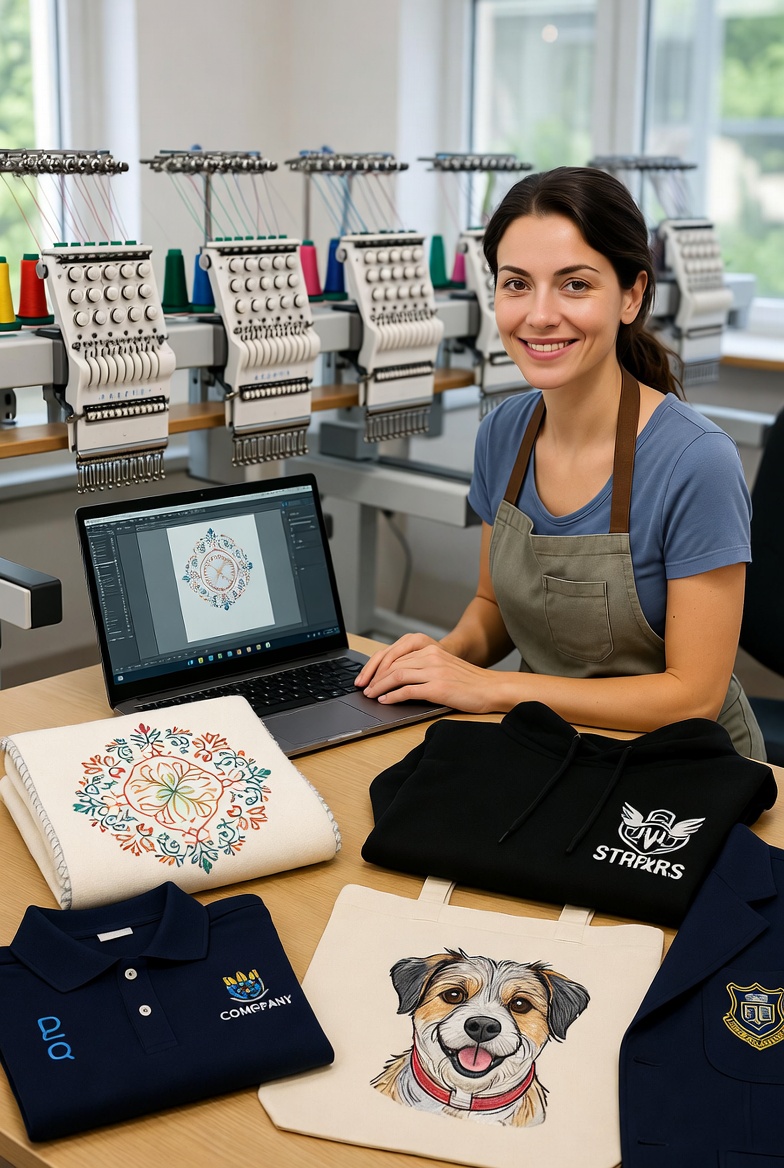
That said, these limitations affect a small minority of embroidery work. The vast majority of commercial embroidery — corporate logos, text, standard illustrations, badges, patches, and personalised items — falls well within AI digitizing's capability. For 90-95 percent of what the industry produces, AI digitizing delivers equivalent or superior quality to manual alternatives, at a fraction of the cost and turnaround time.
The Impact on Digitizing Professionals
The rise of AI digitizing inevitably raises questions about the future of human digitizing professionals. The answer is nuanced. Routine production digitizing — the bread-and-butter work of converting standard logos and text into stitch files — is being automated. This work represented the majority of most digitizing bureaus' revenue, and its automation will significantly reduce the number of full-time digitizing positions available in the industry.
However, the demand for high-end, specialist digitizing skills is likely to increase rather than decrease. As AI handles routine work, human digitizers who can offer genuinely superior creative and technical output on complex projects will command premium rates. The analogy is photography: digital cameras and smartphone cameras eliminated the demand for routine studio photography, but the market for skilled artistic photographers has never been stronger. Similarly, AI digitizing will eliminate routine digitizing work while potentially increasing the value of exceptional human digitizing craft.
The most successful digitizing professionals are already adapting — positioning themselves as specialists for complex, high-value projects rather than competing with AI on routine work. Some are learning to use AI tools as a starting point, generating initial stitch files through AI and then applying manual refinement for client-specific requirements. This hybrid approach combines the speed and consistency of AI with the creative judgment of human expertise, producing results that exceed what either approach achieves independently.
The Future of the Industry
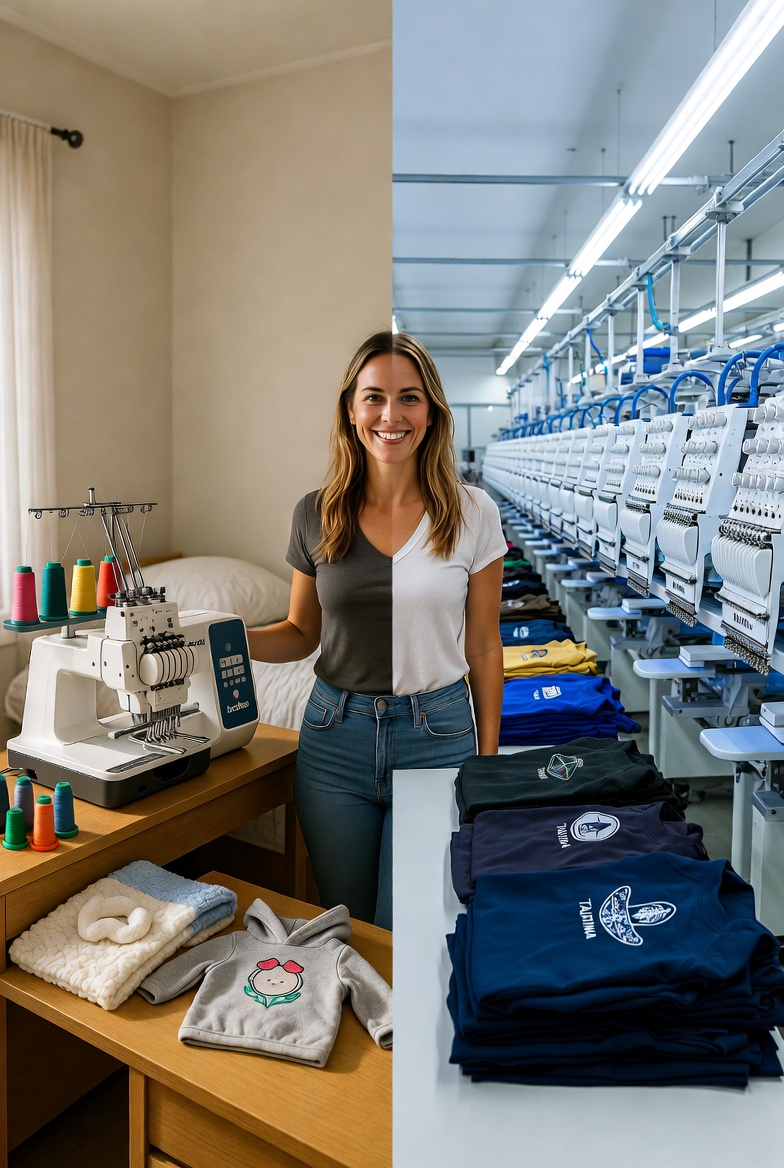
The trajectory is clear. AI digitizing adoption is accelerating across every segment of the embroidery industry — from home hobbyists to multi-million-pound commercial operations. The businesses that adopt earliest gain structural advantages in cost, speed, and consistency that compound over time. Late adopters find themselves competing against rivals who can produce faster, quote lower, and deliver more reliably — not because they have better machines or more skilled operators, but because they have eliminated an unnecessary cost and delay from their production process.
For any embroidery business evaluating AI digitizing for the first time, the recommendation is straightforward: try it. Upload your most common designs, compare the output to your current digitizing source, and let the quality speak for itself. The economics are already compelling — unlimited designs for less than the cost of two manually digitized logos. The quality, for the vast majority of commercial applications, is production-ready. And the speed — instant files rather than days of waiting — transforms what your business can offer and how fast it can grow.
The AI revolution in embroidery digitizing is not coming. It is here. The only question is how quickly each business adapts to the new reality.
AI Digitizing FAQs
Is AI embroidery digitizing better than manual digitizing?
For the vast majority of commercial designs, AI digitizing produces production-ready results instantly and at a fraction of the cost of manual digitizing. Manual digitizers still hold an edge on unusual, highly artistic or complex custom work, but for everyday logos and text AI is now the practical choice.
Why are businesses switching from manual digitizers to AI?
The main drivers are cost, speed and consistency. AI removes per-design fees and the wait for a digitizer to turn work around, replacing both with instant files at a fixed cost, which lets businesses quote lower, deliver faster and produce more predictably.
How much does AI digitizing cost compared to manual digitizing?
Manual digitizing is typically charged per design, often £10–25 each. AI platforms like StitchFast use a flat monthly subscription that covers unlimited designs, so the cost per file falls sharply the more you produce.
What can AI digitizing not do yet?
AI handles the majority of commercial work well but can still need a human for very complex artwork, unusual fabrics or specialist artistic effects. In those edge cases a skilled digitizer or manual adjustment still adds value on top of the AI output.
Will AI replace embroidery digitizers entirely?
It is unlikely to replace them entirely in the near term. AI is absorbing routine, high-volume digitizing, while skilled professionals move toward complex, high-value and creative work that still benefits from human judgement.