Emergency Services Embroidery
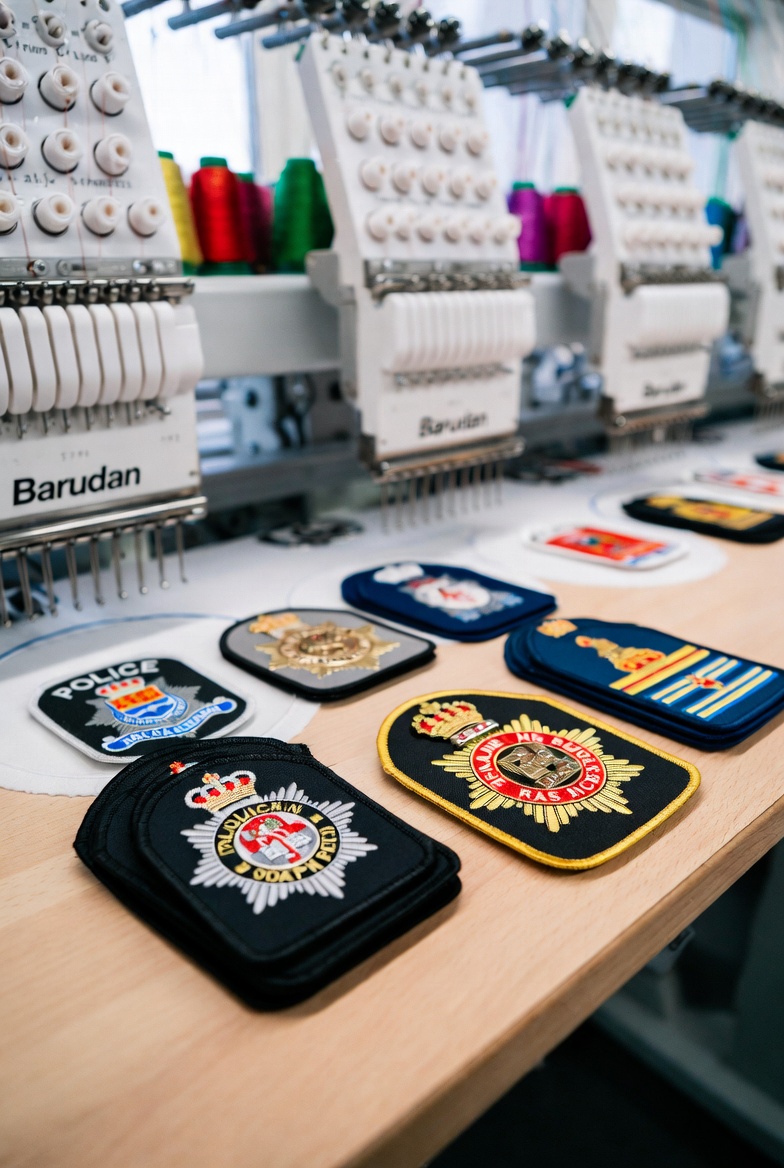
Frontline Patches is one of a small number of UK manufacturers specialising in embroidered insignia for the emergency services sector. Based in Coventry, the company produces embroidered shoulder patches, breast badges, name strips, qualification badges, and rank insignia for police forces, fire and rescue services, and ambulance trusts across England and Wales. The business was established in 2011 and has built a reputation for exacting quality, reliable delivery, and the ability to handle the complex procurement requirements of public sector contracts.
Emergency services embroidery operates under quality standards that exceed those of almost any other embroidery segment. Police badges must be dimensionally precise — a badge that is 2mm too wide or too tall will not fit correctly in the Velcro panel on a police vest, and an ill-fitting badge is both unprofessional and potentially a safety hazard in physical confrontations. Colour accuracy must be exact — the specific shade of blue varies between forces, and an incorrect blue on a badge could technically constitute impersonation of a different force's officers. Durability must be exceptional — badges are subjected to repeated industrial laundering, exposure to weather, physical abrasion, and the chemical contamination that emergency responders routinely encounter.
The badge variant catalogue is large and complex. A single police force might require twenty or more distinct badge variants: constable rank insignia, sergeant chevrons, inspector pips, detective branch badges, specialist unit patches (armed response, roads policing, neighbourhood teams), name strips in specific fonts, qualification badges for advanced training, and ceremonial badges for formal occasions. Across the forty-three territorial police forces in England and Wales, plus the British Transport Police, Civil Nuclear Constabulary, and Ministry of Defence Police, the total catalogue runs to thousands of individual badge specifications.
The Digitizing Demand
Frontline Patches manages an active catalogue of over 200 badge variants that are regularly produced and stocked. Each variant exists as a precisely calibrated stitch file that specifies every stitch, colour change, and trim command. The files must be created to exact dimensional specifications (badges are typically produced to plus or minus 0.5mm tolerance), with specific thread colour codes (Madeira or Isacord, depending on the contract specification), and optimised for the Merrow-edge or heat-cut finishing process that each badge type requires.
New badge variants are added regularly as forces restructure, create new specialist units, or update their visual identity guidelines. The typical annual demand is approximately 35-50 completely new badge designs plus 20-30 modifications to existing designs (usually colour adjustments or text changes reflecting renamed units or updated force branding). Each new design or modification previously required engagement with a specialist digitizer who understood the dimensional and quality requirements of emergency services badges.
The specialist digitizer Frontline Patches used charged £35-50 per badge design, reflecting the precision required. At 50-80 new and modified designs per year, the annual digitizing spend was approximately £2,500-3,500. The cost was manageable, but the turnaround — typically 3-5 working days for new designs — created scheduling constraints during periods of high demand, particularly when forces placed urgent orders for new unit badges following organisational restructuring.
Evaluating StitchFast for Precision Work
Frontline Patches' quality control manager, Rebecca Walsh, approached StitchFast with the highest degree of scepticism in this collection of case studies. The tolerance requirements for emergency services badges are tighter than for any commercial embroidery application, and Rebecca fully expected the AI to fail on dimensional precision even if it handled the artistic elements adequately.
The evaluation was conducted as a formal quality assessment, following the same process Frontline Patches uses to qualify any new supplier or process change. Rebecca selected fifteen badge designs spanning the full complexity range: simple text name strips (8mm height, single colour), medium-complexity rank badges (crown and pip designs with metallic thread), and full-colour force crests with heraldic details, scrollwork text, and up to eight colour changes. Each design was specified with exact dimensions, thread colour codes, and finishing requirements.
StitchFast generated the DST files within minutes. Rebecca then measured the stitch field dimensions of each file using Wilcom verification software before any physical production. Twelve of fifteen files were within the 0.5mm tolerance on both axes. The three outside tolerance required dimensional adjustment — but the adjustment was minor (0.3-0.8mm) and was accomplished in under two minutes each using the scaling function in the production software. This adjustment rate was comparable to the specialist digitizer's output, where approximately 15-20 percent of files needed minor dimensional tweaks.
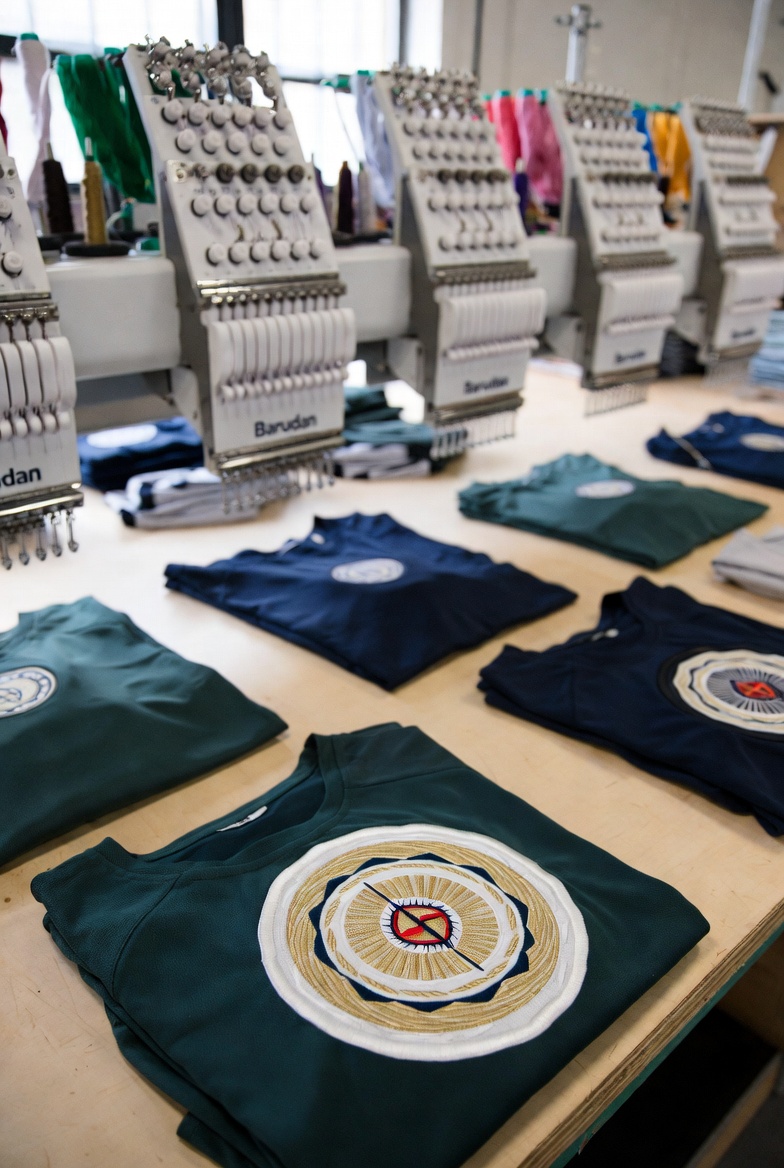
Physical production testing confirmed the digital measurements. All fifteen badges stitched cleanly on Frontline's Barudan machines at production speed, with no thread breaks, no registration issues, and correct colour stop sequencing. Satin stitch borders were clean and consistent. Fill areas showed even density without light spots or heavy patches. Metallic thread sections (a common failure point for poorly digitized files) ran smoothly with correct tension. Rebecca approved StitchFast for production use with the caveat that dimensional verification would remain a mandatory quality control step — a requirement that applies to files from any source, not just AI-generated ones.
Production Integration
Frontline Patches now uses StitchFast as their primary digitizing tool for all new badge designs and modifications. The workflow integrates seamlessly with their existing quality control process: badge artwork is received from the commissioning force, uploaded to StitchFast, the DST file is downloaded and immediately measured in Wilcom for dimensional verification, any necessary adjustments are made, and the file is cleared for production. Total time from artwork receipt to production-ready file: typically under fifteen minutes, compared to the previous 3-5 working days.
The speed improvement has been particularly valuable for urgent restructuring orders. When a major police force reorganised its neighbourhood policing teams in 2025 — creating eight new unit designations that each required new shoulder patches — Frontline Patches had all eight badge files digitized, verified, and in production within a single day. Under the previous process, this order would have taken two to three weeks for digitizing alone, potentially delaying the force's restructuring timeline.
Quality at Scale
Over twelve months of production use, Frontline Patches has processed over 60 new and modified badge designs through StitchFast. The quality control pass rate — the percentage of badges that pass final inspection on the first production run — is 99.1 percent, compared to 98.6 percent with the previous specialist digitizer. The improvement is modest but notable, and Rebecca attributes it to StitchFast's more consistent pull compensation and underlay application, which reduces the minor edge distortion that occasionally caused badges to fail dimensional inspection.
Thread consumption per badge has decreased by approximately 5 percent, attributed to more efficient stitch pathing that reduces travel stitches between colour regions. On a production volume of approximately 50,000 individual badges per year, a 5 percent thread saving represents a meaningful reduction in consumable costs.
The most significant quality improvement has been in colour consistency between production batches. Because StitchFast generates identical stitch files every time (unlike human digitizers who may inadvertently vary density or pathing between sessions), badges produced in March are thread-for-thread identical to badges produced in September. This batch consistency is critical for emergency services clients who maintain uniform standards requiring visual uniformity across all officers regardless of when their badges were manufactured.
Compliance and Procurement
Rebecca notes an important consideration for other manufacturers serving regulated sectors: the digitizing process itself is not typically specified in procurement contracts. What is specified is the finished badge — its dimensions, colours, thread type, backing, and finishing. How the stitch file is generated is a production method choice, and provided the finished product meets specification, the commissioning body is indifferent to whether the file was created by a human digitizer or an AI platform. Frontline Patches has not encountered any procurement objection to StitchFast's use, and several commissioning officers have expressed positive interest in the technology when informed of it during routine supplier reviews.
For manufacturers serving the emergency services sector, Rebecca's advice is straightforward: evaluate StitchFast rigorously against your quality standards, implement dimensional verification as a standard quality control step, and expect to find that the AI's consistency and speed are genuine advantages in a sector where precision and reliability are non-negotiable.
Working with Metallic and Specialty Threads
Emergency services badges frequently incorporate metallic thread elements — gold or silver details on crown motifs, rank insignia pips, and decorative border highlights. Metallic embroidery thread is notoriously difficult to work with: it is stiffer than standard polyester or rayon thread, more prone to breakage under tension, and less tolerant of sharp direction changes and high stitch density. A stitch file that runs perfectly with standard thread may cause persistent thread breaks when metallic thread is substituted for specific colour stops.
StitchFast's handling of metallic thread regions has been one of the pleasant surprises of Frontline Patches' adoption. While the AI does not specifically know which thread type will be used for each colour stop, its stitch generation parameters happen to be compatible with metallic thread usage. Stitch lengths in areas that Frontline designates for metallic thread are within the range that metallic thread tolerates (3-5mm, avoiding the very short stitches that cause metallic thread to bunch and break). Direction changes are gradual rather than sharp, reducing the stress on the stiffer thread. And the density in metallic areas is appropriate — heavy enough for complete coverage but not so dense that the concentrated metallic thread creates excessive bulk.
Rebecca estimates that metallic thread breakage incidents have decreased by approximately 20 percent since switching to StitchFast files, compared to the specialist digitizer's output. While the previous digitizer was skilled, their files occasionally included stitch parameters in metallic regions that were optimised for standard thread performance rather than metallic-specific constraints. StitchFast's more conservative default parameters happen to be closer to the sweet spot for metallic thread, producing a measurable improvement in production efficiency for badges that incorporate metallic elements.
Inventory Management for Emergency Preparedness
Emergency services have unique supply chain requirements driven by the need for rapid deployment and uniform consistency. A police force ordering new shoulder patches needs them within days, not weeks — officers cannot attend incidents without proper insignia, and a new unit cannot begin operations without properly badged personnel. This urgency means that Frontline Patches maintains buffer stock for their highest-volume badges and must be able to replenish stock rapidly when demand surges unpredictably.
StitchFast's instant digitizing capability has improved Frontline's ability to respond to surge demand. When a force restructuring creates sudden demand for a new badge variant, the file is digitized and in production within hours rather than the days that outsourced digitizing would require. Frontline can now commit to 72-hour order-to-dispatch times for any badge in their active catalogue — a service level that no competitor with outsourced digitizing can match for new or recently modified designs.
The rapid response capability has been tested in real-world scenarios. When a fire and rescue service completed a merger in 2025, combining two previously separate services under a new identity, Frontline Patches received the new badge artwork on a Monday morning and had the first production batch of 500 shoulder patches dispatched by Wednesday afternoon. The merged service's officers wore the new badges at their first joint briefing on Thursday morning. Under the previous digitizing model, the stitch file alone would not have been returned until Wednesday at the earliest, making the Thursday deadline impossible without manual digitizing — a time-consuming process that Rebecca would have undertaken personally, working through the night.
Documentation and Audit Trail
Public sector procurement in the UK requires robust documentation and audit trails for all production processes. Frontline Patches maintains comprehensive records of every badge produced, including the specification provided by the commissioning force, the stitch file used in production, the quality control measurements taken before and after production, and the batch details (production date, machine used, operator, thread lot numbers). This documentation supports the traceability requirements of public sector contracts and provides evidence of quality compliance during periodic supplier audits.
StitchFast integrates cleanly into this documentation process. Each generated stitch file is saved with a unique reference number that links to the corresponding specification and quality control record. The file generation is timestamped, providing a clear audit trail showing when the digitizing occurred and which version of the artwork was used. Rebecca has found that the consistency of StitchFast's output actually simplifies the documentation process — because the files are generated by algorithm rather than by individual human judgment, the variation between files is minimal and the documentation of deviations from specification is rarely needed.
During the most recent supplier audit by a major police force, the auditor specifically asked about the digitizing process and the use of AI-generated stitch files. After reviewing the quality control data — which showed a 99.1 percent first-run pass rate and no dimensional failures beyond the specified tolerance — the auditor expressed satisfaction that the AI-generated files met the force's quality requirements and noted positively that the consistency of the digital process reduced the risk of human error in the digitizing step. This endorsement from a procurement professional in one of the most quality-conscious sectors provides strong validation of StitchFast's suitability for precision embroidery applications.
Scale and Logistics: Serving Multiple Forces Simultaneously
Frontline Patches currently holds active contracts with eighteen police forces, seven fire and rescue services, and four ambulance trusts across England and Wales. Managing this portfolio requires the ability to produce different badge designs for different forces simultaneously, often to overlapping delivery deadlines. A typical production week might involve producing constable shoulder patches for one force, detective badges for another, and fire service breast badges for a third — each to different dimensional specifications, different colour requirements, and different finishing standards.
StitchFast's instant digitizing has transformed how Frontline manages this multi-client production schedule. When a new badge design or modification is required for any force, the file is generated and quality-checked within minutes, eliminating the scheduling dependency that previously required designs to be queued for the outsourced digitizer. Production planning is now driven entirely by machine capacity and raw material availability — the two variables that the production team can directly control — rather than by the unpredictable turnaround of an external service.
The logistical improvement is particularly evident during periods when multiple forces place concurrent urgent orders. In spring 2026, three police forces simultaneously requested new unit badges following coordinated restructuring announcements. Under the previous digitizing model, these three concurrent commissions would have generated a queue at the specialist digitizer, with the second and third forces waiting behind the first. With StitchFast, all three sets of badge files were generated on the same morning, production for all three forces began simultaneously, and all three orders shipped within the 72-hour target. The ability to parallelise digitizing — processing multiple forces' requirements concurrently rather than sequentially — is a structural advantage that scales with the size of Frontline's client portfolio.
The Specialist Digitizer Relationship
Rebecca maintains a professional relationship with the specialist digitizer who previously handled all of Frontline's work. The digitizer now handles a small number of exceptional projects per year — typically badge designs with unusual construction requirements such as three-dimensional raised elements, bullion wire effects, or custom Merrow edge colourways that fall outside StitchFast's standard generation parameters. These projects represent fewer than five percent of Frontline's annual digitizing volume but require genuine craft expertise that AI cannot currently replicate.
The relationship has evolved from a primary supplier arrangement to a specialist consultancy engagement. The digitizer appreciates the change — the routine badge digitizing work that dominated her previous workload was well-paid but repetitive, and she now focuses exclusively on the challenging, creatively interesting projects that showcase her skills. The arrangement works well for both parties: Frontline retains access to specialist craft skills for edge cases, and the digitizer concentrates on high-value work that commands premium fees without the volume pressure of routine production digitizing.
This hybrid model — AI for routine production, human specialist for exceptional projects — represents what Rebecca believes is the optimal approach for quality-critical embroidery applications. The AI handles the ninety-five percent of work that requires consistency, speed, and cost-effectiveness. The human specialist handles the five percent that requires creative judgment, craft expertise, and the ability to work with non-standard materials and techniques. Neither could efficiently handle the other's workload, and the combination delivers better outcomes than either alone.