The Brand
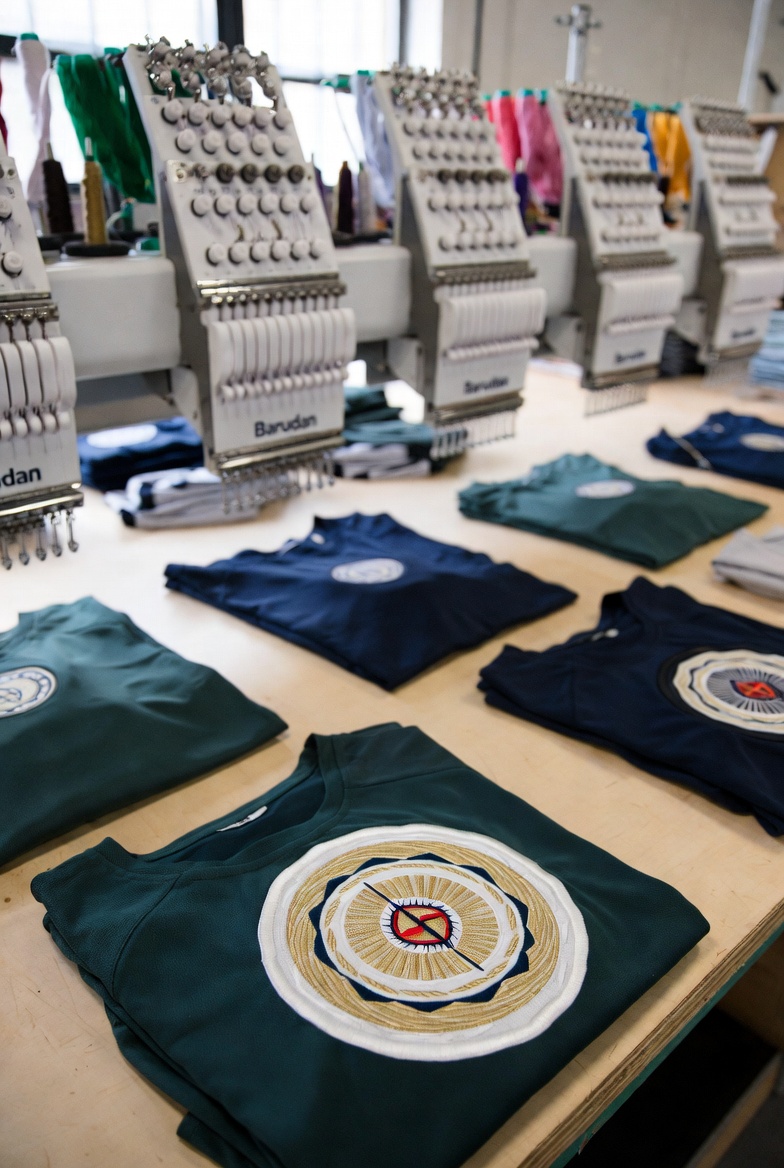
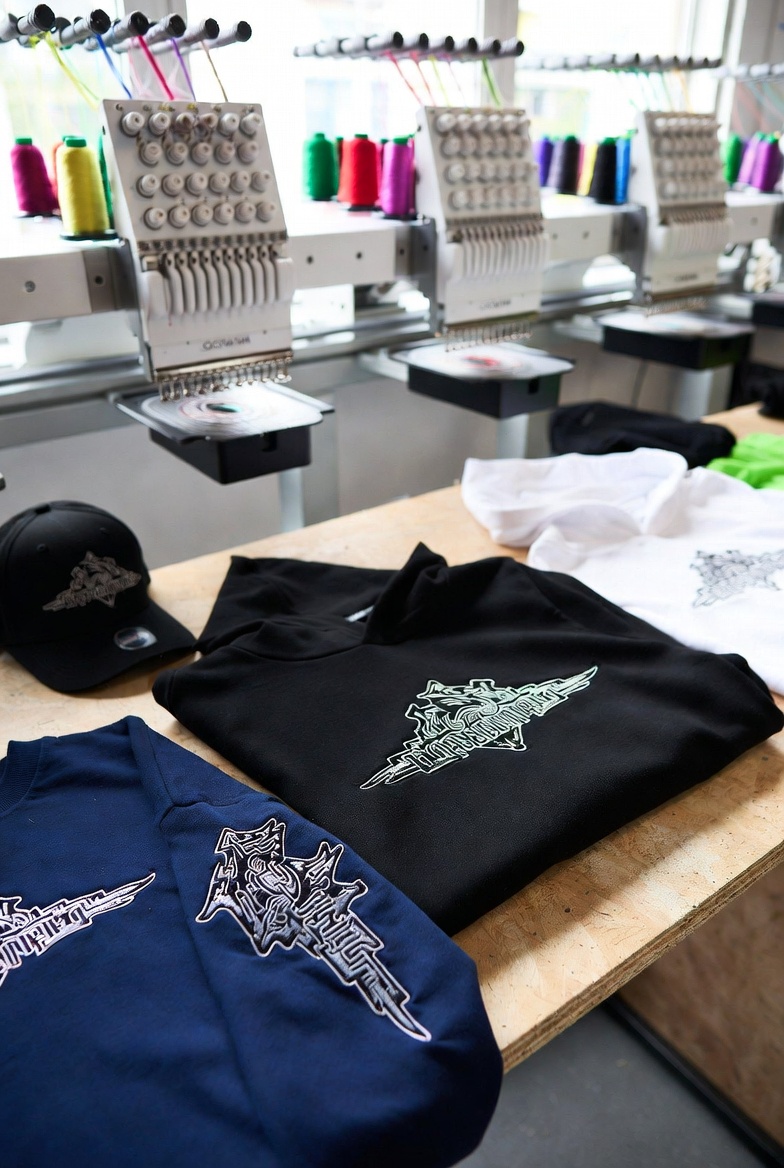
Urban Stitch is an independent streetwear label founded in 2023 by designer Kai Okonkwo, operating from a shared studio space in Hackney, East London. The brand's aesthetic is built entirely around embroidery — every piece features hand-quality embroidered graphics rather than screen printing or DTG (direct-to-garment) printing. In a streetwear market saturated with printed graphics that fade after a dozen washes, Urban Stitch's embroidered pieces stand out for their texture, durability, and perceived craftsmanship. The tagline — "Stitched, Not Printed" — has become a recognisable identity in London's independent fashion community.
The business model follows the streetwear industry's drop culture: limited-edition releases launched weekly or fortnightly, typically in runs of 20-50 pieces per design. Each drop features a unique embroidered graphic — sometimes bold oversized chest logos, sometimes subtle small motifs on sleeves or collars, sometimes full back-panel designs that push the boundaries of what embroidery machines can produce. The limited availability creates urgency among buyers, drives social media engagement, and maintains premium pricing — most pieces retail between £55 and £120.
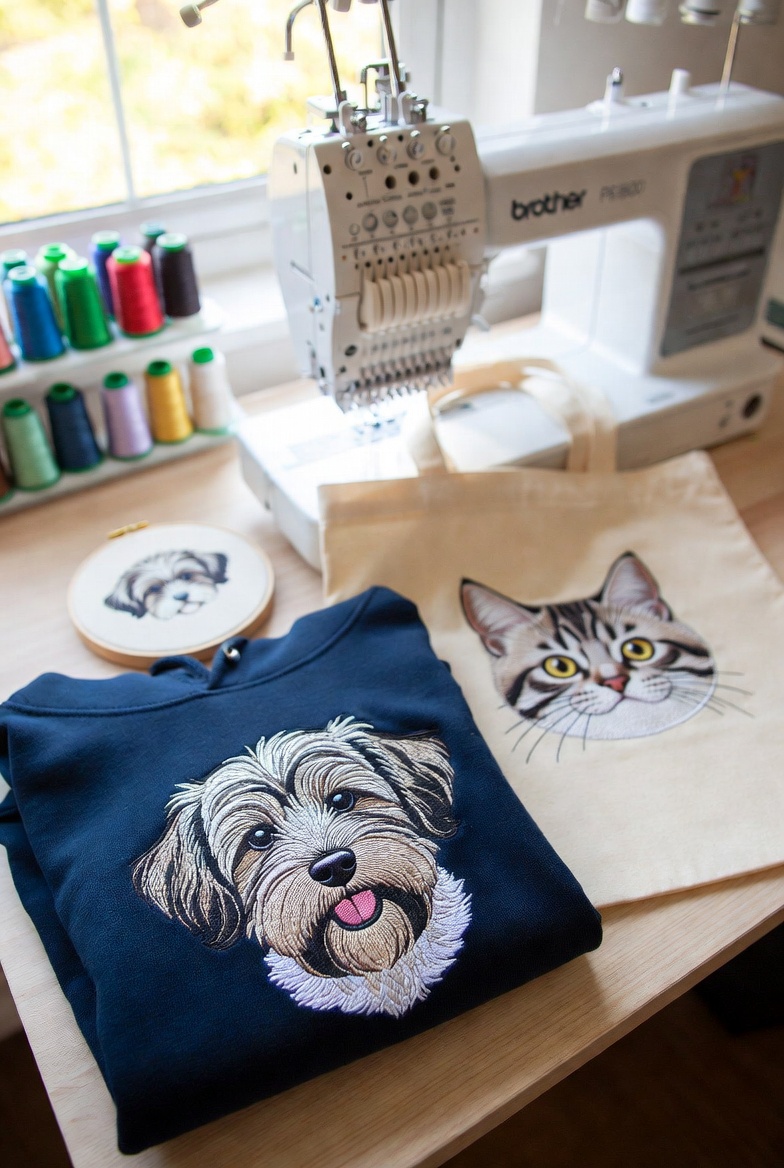
Kai handles all design work himself, creating original artwork digitally and then overseeing embroidery production on a pair of single-head machines (a Brother PR1050X and a Janome MB-7) in the studio. The machines run continuously during production weeks, and Kai has become an accomplished machine operator through thousands of hours of hands-on experience. The creative process — from initial sketch to finished embroidered garment — is entirely in-house, which gives Urban Stitch an authenticity that resonates with its customer base.
The Design Velocity Problem
The streetwear drop model demands relentless creative output. A weekly drop means 52 unique embroidered designs per year, each requiring a production-ready stitch file that translates the artistic vision into actual needle movements. Before StitchFast, Kai outsourced digitizing to a freelance digitizer who charged £25 per design. At 52 designs per year, the annual digitizing cost was £1,300 — a significant overhead for a bootstrapped independent label where every pound affects viability.
More critically than cost, the turnaround constraint killed the creative workflow that streetwear demands. Kai's design process is fluid and reactive — he might create a design on Tuesday, refine it on Wednesday, and want to stitch a sample on Thursday for a Friday social media teaser. The 48-72 hour digitizing turnaround inserted a hard delay into every creative cycle, forcing Kai to either plan designs further in advance (destroying the spontaneity that drives his best work) or compress production timelines to uncomfortable levels.
The revision loop compounded the problem. Embroidered graphics frequently need adjustment after the first test stitch — a colour that looks right on screen might not translate correctly in thread, a fill area might be too dense for the chosen fabric, or stitch angles might not create the visual texture Kai envisioned. Each revision meant another round with the digitizer, another day or two of waiting, and another step further from the original creative impulse. By the time a design was finalised, the excitement that drove its creation had often dissipated.
StitchFast as a Creative Tool
Kai discovered StitchFast through a fellow London-based embroidery artist who had started using it for commission work. His initial interest was purely financial — eliminating the £25-per-design cost. What he discovered was that the speed of AI digitizing transformed not just the economics but the entire creative process.
With StitchFast generating stitch files in under a minute, Kai could now iterate in real time. Design on screen, upload to StitchFast, download the PES file, load it into the Brother PR1050X, stitch a sample, evaluate the result, modify the original artwork, re-upload, re-stitch — all within a single design session lasting an hour or two. Revisions that previously required days of back-and-forth with a digitizer now happened in minutes. The feedback loop between digital design and physical embroidery collapsed from days to minutes, and the quality of Kai's designs improved dramatically as a result.
The ability to experiment freely changed the nature of the designs themselves. Previously, Kai designed conservatively to minimise the risk of needing costly revisions — simple shapes, limited colours, safe stitch types. With unlimited free digitizing attempts, he began pushing boundaries: complex overlapping fill areas, mixed stitch types within single designs, experimental colour combinations, and unusual placements (collar embroidery, cuff details, internal label graphics) that each required a unique stitch file. The design vocabulary expanded because the cost of experimentation dropped to zero.
Weekly Drop Production
Urban Stitch now maintains a consistent weekly drop schedule, releasing a new design every Friday at midday on their website and Instagram. The production cycle for each drop follows a predictable rhythm: Kai finalises the design on Monday or Tuesday, generates and iterates the stitch file through StitchFast on Tuesday or Wednesday, runs production stitching on Wednesday and Thursday, and ships orders on Friday and Saturday.
The StitchFast Unlimited plan at £29.99 per month supports this cadence with zero per-design cost. Over the course of a year, Kai generates well over 100 stitch files (the 52 final production files plus numerous iterations, tests, and experimental designs that may or may not reach production). At the previous £25 per design, this volume of digitizing would have cost well over £2,500 annually — an amount that would represent a material percentage of an independent label's annual profit.
The financial breathing room has allowed Kai to invest in better materials. He has moved from standard 180gsm cotton blanks to premium 300gsm heavyweight cotton hoodies and 240gsm organic cotton tees — garments that retail at higher price points, attract more discerning customers, and provide a better canvas for embroidery. The premium fabric combined with the embroidered-not-printed positioning supports price points of £75-120 per piece, generating healthy margins on runs of 20-50 pieces.
Community and Brand Building
The weekly cadence made possible by StitchFast has been central to Urban Stitch's brand growth. Streetwear audiences expect regular fresh content, and a brand that drops weekly maintains a constant presence in followers' feeds and a perpetual sense of anticipation. Urban Stitch's Instagram following has grown from 2,000 to over 14,000 in twelve months, driven primarily by the regular cadence of new embroidered designs shared through Reels and Stories showing the stitching process.
Kai frequently shares behind-the-scenes content of the StitchFast-to-stitch workflow — uploading a design, watching the preview, loading the file into the machine, and watching the embroidery head bring the design to life. This content performs exceptionally well on social media because it demonstrates real craftsmanship (the actual embroidery machine running) while feeling modern and efficient (the AI-powered digitizing step). The combination of technology and traditional craft resonates with Urban Stitch's audience, who value authenticity and innovation equally.
Looking Forward
Kai is planning to scale Urban Stitch's production to support wholesale accounts with independent boutiques across London and the UK. The wholesale model requires larger production runs (100-200 pieces per design rather than 20-50), more SKU variety per season, and the ability to quickly produce buyer-requested samples. StitchFast's unlimited, instant digitizing makes all of this feasible without adding headcount or cost. The same tool that enabled a one-person streetwear operation to maintain weekly drops will now support the next phase of growth into a multi-channel fashion brand.
For Kai, StitchFast is not just a digitizing tool — it is a creative instrument that has fundamentally changed how he approaches embroidery design. The removal of the time-and-cost barrier between a design idea and a stitched sample has made experimentation free and iteration instant. In an industry where creative velocity is currency, that capability is transformative.
The Creative Iteration Process
To understand how StitchFast changed Kai's creative process, it helps to walk through a typical design session before and after adoption. Previously, Kai would spend two to three hours creating a design digitally in Adobe Illustrator, refining colours, shapes, and composition. He would then send the design to his digitizer and wait two to three days for the stitch file. When the file arrived, he would stitch a test sample and evaluate the result. In approximately 40 percent of cases, the first iteration needed adjustment — a colour that did not translate well to thread, a fill area that was too dense on the hoodie fabric, or stitch angles that did not create the intended visual texture. Each adjustment required another communication with the digitizer and another day or two of waiting. Total elapsed time from initial design concept to finalised, production-ready stitch file: typically 5-8 working days.
Now the process is compressed into a single afternoon. Kai creates the design in Illustrator, exports a PNG, uploads it to StitchFast, and has a stitch file in under a minute. He loads the file into the Brother PR1050X, stitches a test sample on the actual production fabric, and evaluates the result while the design intent is still fresh in his mind. If the first iteration needs adjustment — which happens perhaps 30 percent of the time — he modifies the original Illustrator file, re-exports the PNG, re-uploads to StitchFast, and has a revised stitch file in another minute. He stitches the revised version immediately and makes a final assessment. Total elapsed time from concept to production-ready file: 2-4 hours.
The compression of this feedback loop has measurably improved the quality and boldness of Kai's designs. When iteration is fast and free, the creative risk of trying something ambitious drops to near zero. A design idea that might have been abandoned because it seemed too complex or uncertain to justify a £25 digitizing fee and a three-day wait can now be tested in minutes at zero marginal cost. Kai estimates that approximately 20 percent of his best-selling designs are ideas that he would not have pursued under the previous workflow because the cost-risk ratio of experimentation was too unfavourable.
Grey bars show the figure before StitchFast; green bars show after.
Fabric and Thread as Medium
Embroidered streetwear occupies a distinctive position in the fashion market because it offers tactile qualities that no printing technology can replicate. A screen-printed graphic is flat — it sits on the surface of the fabric as a two-dimensional image. An embroidered graphic has physical depth, texture, and dimensionality. Thread catches light differently at different angles, creating a subtle sheen that changes as the wearer moves. Dense fill areas have a raised, sculptural quality that invites touch. Satin stitch borders create precise, almost calligraphic edges that read with clarity at any scale.
Kai exploits these tactile qualities deliberately in his design language. He designs for the medium rather than treating embroidery as a substitute for print. His fill areas use varying stitch angles to create directional texture — parallel lines that shimmer like brushed metal in some designs, concentric patterns that radiate outward like ripples in others. He layers different stitch types within single designs, using satin stitch for defined graphic elements, fill stitch for background areas, and running stitch for fine detail lines. The resulting pieces have a complexity and craftsmanship that printed graphics cannot approach.
StitchFast handles Kai's multi-stitch-type designs effectively because the AI analyses each region of the uploaded image independently and assigns stitch types based on the visual characteristics of that region. Solid blocks of colour receive fill stitching. Narrow lines and borders receive satin stitching. Fine details receive appropriate density-reduced stitching that prevents the tiny areas from becoming over-dense blobs of thread. This per-region analysis produces stitch files that honour the design intent rather than applying a one-size-fits-all approach to the entire image.
Building a Sustainable Independent Brand
The economics of independent streetwear are challenging. Without the volume purchasing power of major brands, blank garment costs are higher per unit. Without established distribution, customer acquisition relies on social media and organic discovery. Without external investment, every pound of operational cost reduces the capital available for growth. StitchFast's contribution to Urban Stitch's sustainability extends beyond the direct digitizing cost saving — it enables a lean operational model where the only significant variable cost per garment is the blank itself and the thread consumed in stitching it.
Kai's monthly operating costs (excluding garment blanks) are remarkably low: studio rent (shared space, £450), StitchFast Unlimited (£29.99), electricity for machines (approximately £60), thread and consumables (approximately £80), and website hosting (£15). Total fixed monthly overhead: approximately £635. At an average retail price of £85 and an average blank cost of £18, each garment generates approximately £67 in gross contribution. Kai needs to sell just ten garments per month to cover overheads — a threshold he exceeds by a large margin.
This lean cost structure provides resilience against the volatility inherent in fashion. A slow sales week does not create a financial crisis. A design that does not sell well has a minimal impact on overall profitability because the digitizing cost was zero and the blank garment inventory can be redeployed for a future design. The financial flexibility afforded by StitchFast's flat-rate pricing model is as valuable to Urban Stitch's long-term sustainability as the creative velocity it enables.
Sustainability and Waste Reduction
The streetwear industry faces increasing pressure around sustainability, and Urban Stitch's embroidered-not-printed positioning carries inherent sustainability advantages. Screen printing requires chemical inks, screen preparation chemicals, water for screen cleaning, and produces ink waste and contaminated water. DTG printing uses specialised inks that are energy-intensive to cure and produce garments whose prints degrade and flake over time, potentially contributing to microplastic pollution. Embroidery, by contrast, uses thread (polyester or rayon, both recyclable) and produces no liquid waste, no chemical effluent, and no microplastic shedding.
StitchFast contributes to Urban Stitch's sustainability through waste reduction. The instant iteration capability means that Kai can test designs digitally (through the stitch simulation preview) before committing to physical samples, reducing the number of test garments stitched and discarded. When physical samples are necessary, the fast iteration cycle minimises the number of samples needed — typically one or two rather than the three or four that were common when each iteration required a multi-day digitizing turnaround. Over a year of weekly drops, the cumulative reduction in sample waste is significant.
Thread waste per garment has also decreased. StitchFast's optimised pathing reduces unnecessary jump stitches and travel threads, which translates to less thread consumed per design and fewer thread tails to trim. Kai estimates approximately 10 percent less thread waste per garment compared to the files produced by his previous digitizer — a saving that accumulates meaningfully across hundreds of garments per month and aligns with Urban Stitch's commitment to responsible production practices.
Collaborations and Custom Commissions
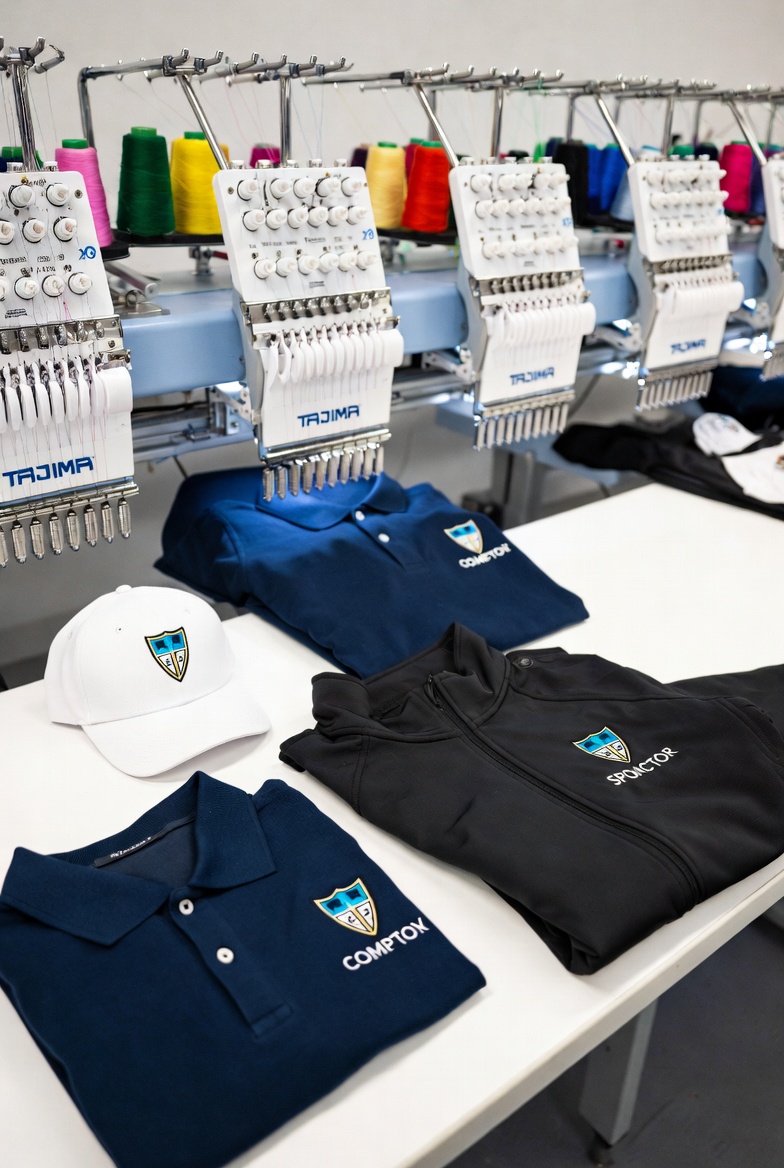
Urban Stitch has begun accepting custom embroidery commissions from other London creatives — musicians wanting embroidered merchandise for tours, small café owners wanting staff uniforms with embroidered logos, and fellow fashion designers wanting embroidered elements incorporated into their collections. These commissions represent a growing revenue stream that diversifies the business beyond direct-to-consumer streetwear sales.
StitchFast makes these collaborations logistically feasible for a one-person operation. Each commission involves a unique design that requires a unique stitch file, and the instant turnaround means Kai can iterate with the collaborator in real time — uploading design variations, generating files, and showing stitch previews during a single meeting or video call. The previous multi-day digitizing turnaround made this kind of real-time creative collaboration impossible, and most potential collaborators would have moved on rather than waiting days between each design iteration.
The commission work also serves as marketing. When a musician performs on stage wearing an Urban Stitch embroidered jacket, the brand reaches an audience that might never encounter it through Instagram or the website. When a café displays its Urban Stitch embroidered menu boards, local customers see the craftsmanship and ask who made them. These organic touchpoints create brand awareness in precisely the creative, design-conscious communities that Urban Stitch's core customer base inhabits — and every one of them was made possible by the instant digitizing capability that StitchFast provides.