Upload Your Design
Drag and drop any PNG, JPG, or SVG. Logos, text, artwork, badges.
Embroidery digitizing for businesses and embroiderers in Dundee. Upload any logo, design, or artwork and get production-ready stitch files in under 60 seconds. AI analyses your image, assigns stitch types per region, applies pull compensation, and matches every colour to a Madeira Rayon thread code. No manual digitizer needed. No 24-hour wait. No software to install.
Embroidery in Dundee
Dundee's diverse economy creates substantial demand for embroidered workwear and branded textiles across multiple sectors. The city's thriving life sciences cluster, anchored by companies like Thermo Fisher Scientific and the presence of the University of Dundee's world-renowned medical research facilities, requires corporate polo shirts and laboratory uniforms. The digital entertainment industry, featuring major employers such as Outright Games and 4J Studios, drives demand for branded merchandise and casual corporate wear. Meanwhile, Dundee's expanding tourism sector, boosted by attractions like the V&A Dundee and the RRS Discovery, creates opportunities for hospitality uniforms and promotional textiles.
As a regional centre serving Angus, Fife, and Perth and Kinross, Dundee supports embroidery requirements for schools, sports clubs, and businesses across this wider catchment area. The city's position as a university hub generates consistent demand for academic gowns, sports kit embroidery, and society badges. Local healthcare providers, including NHS Tayside, require embroidered scrubs and identification badges, while the Port of Dundee and associated logistics companies need hi-vis workwear with company branding. The city's retail sector and numerous small businesses also contribute to steady demand for embroidered uniforms and promotional merchandise.
How It Works
No software to install. No embroidery experience needed. Works on any device.
Drag and drop any PNG, JPG, or SVG. Logos, text, artwork, badges.
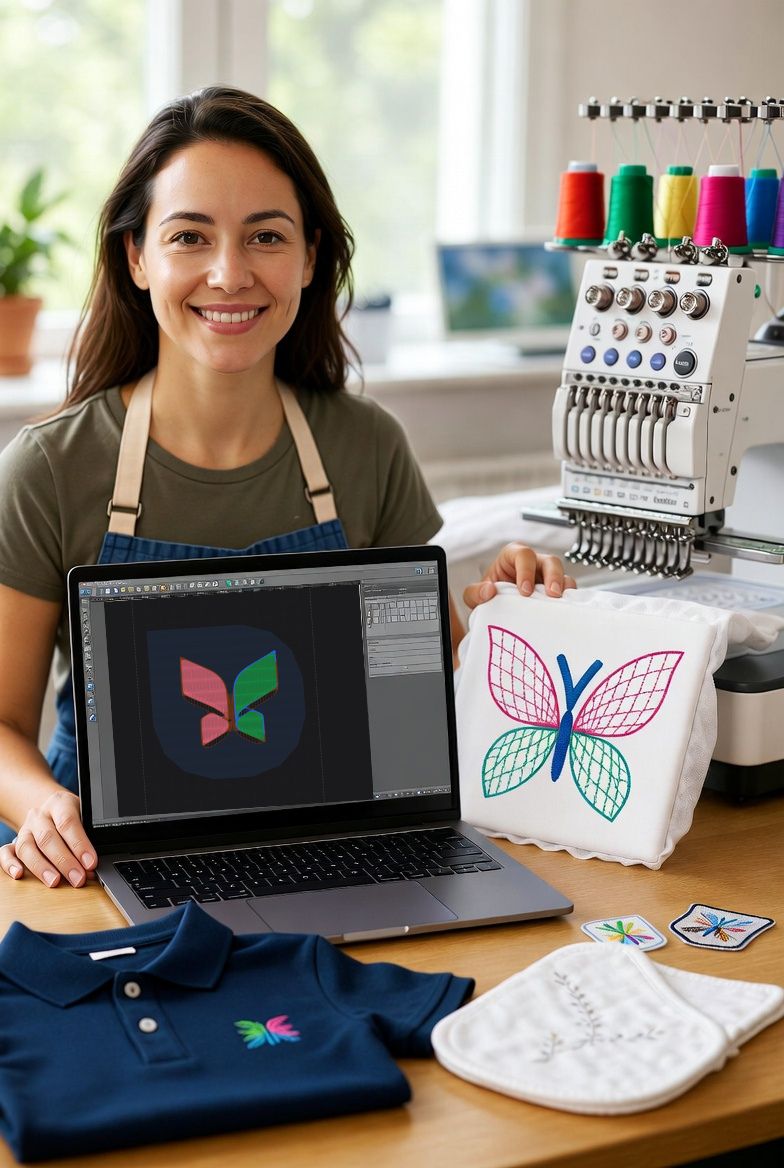
AI assigns stitch types, calculates density, applies pull compensation, matches Madeira thread codes.
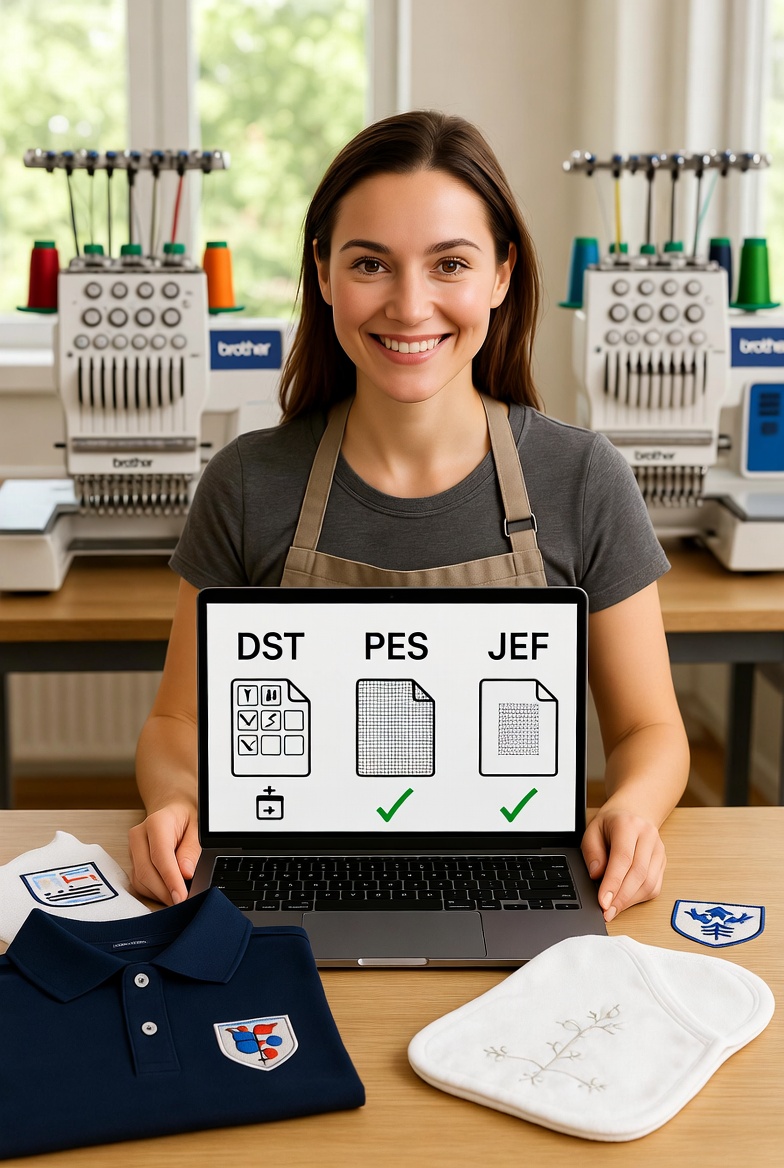
Get DST, PES, JEF, EXP, VP3, HUS, XXX. Preview stitches. Load into your machine and stitch.
Understanding Digitizing
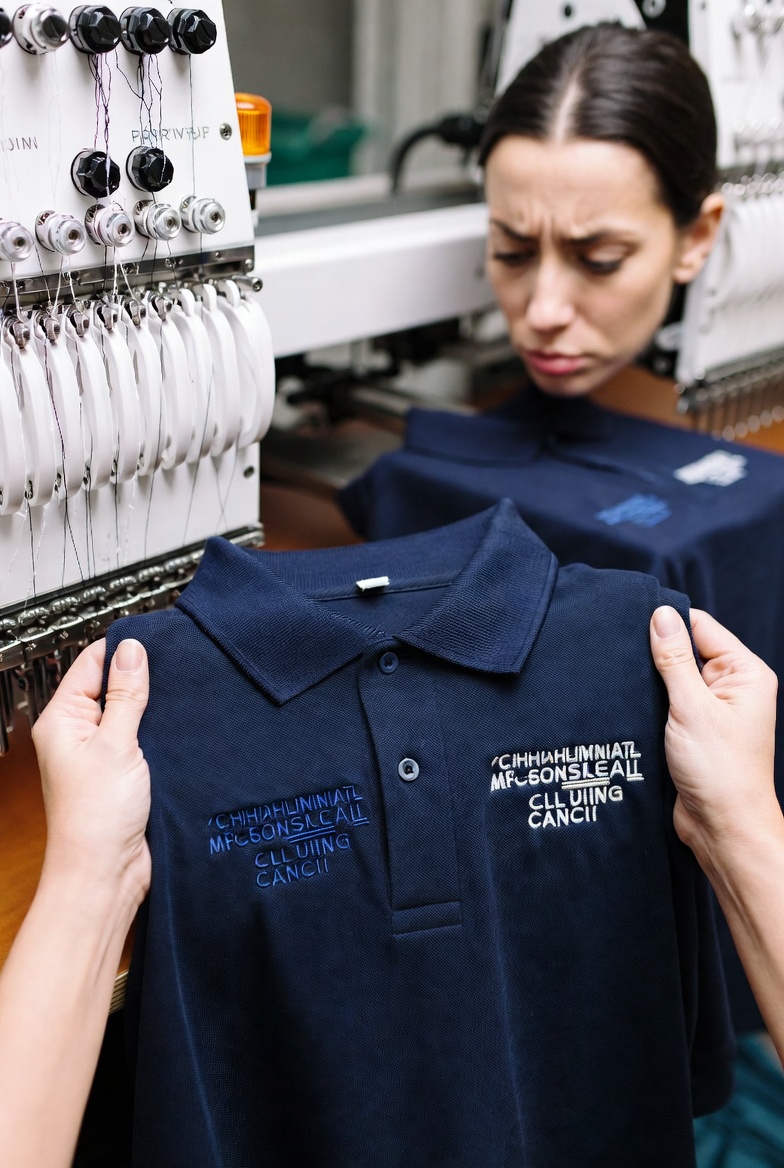
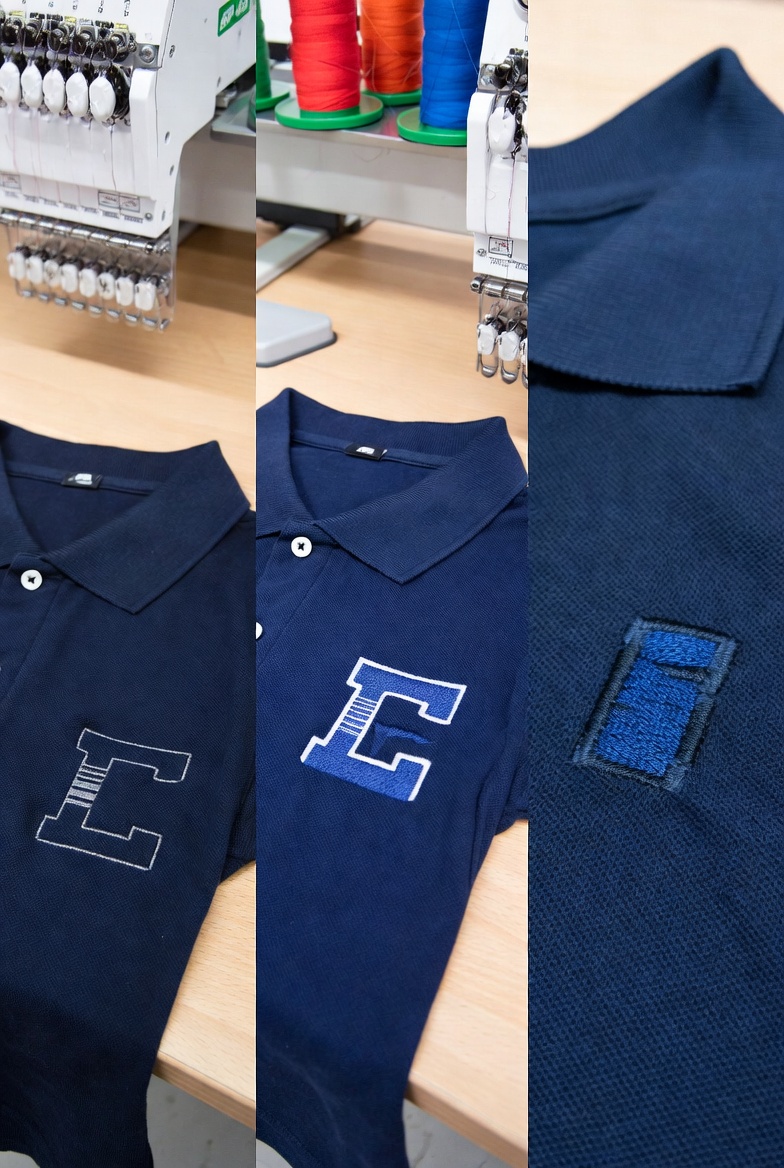
Understanding the difference between good and bad digitizing is essential for anyone running an embroidery business in Dundee. Good digitizing produces a file where fill areas have consistent coverage without gaps, edges are crisp, shapes maintain their proportions after stitching, jump stitches are minimised, and the stitch sequence is optimised so the machine moves efficiently between areas. Bad digitizing produces files with visible gaps, distorted shapes, excessive jump threads, and fabric puckering.
The factors that separate good from bad include underlay (foundation stitches that grip the fabric and prevent shifting), pull compensation (edge overshoot that counteracts thread tension), density calibration (lines per millimetre matched to the design size and fabric), stitch angle (the direction of fill rows, which affects coverage and light reflection), and pathing (the order in which regions are stitched, which affects jump stitch count). StitchFast handles all of these automatically.
Why StitchFast
Pull compensation is the technical detail that separates professional digitizing from amateur output. When a machine stitches a fill area, thread tension pulls the fabric inward. Without compensation, a circle becomes an oval, a square becomes a rectangle with rounded corners, and text characters become narrower than designed. Most cheap online converters skip pull compensation entirely because implementing it properly requires understanding how much overshoot to apply based on stitch direction, fill density, and design size.
StitchFast applies pull compensation automatically to every fill region, calibrated to the density and stitch parameters you set. The result: designs stitch out at the correct dimensions, matching the original image. This is the kind of detail that matters to embroiderers in Dundee who need production-ready files, not files that need manual adjustment before they can be used.
Use Cases
Workwear embroidery is a major market across Scotland. Hi-vis vests, work jackets, overalls, hard hat stickers, and safety clothing all need company branding. StitchFast handles these well because workwear logos tend to be simple, bold designs optimised for visibility. The adjustable pull compensation is particularly useful for heavy workwear fabrics where thread tension is higher than on standard cotton polos.
Promotional merchandise companies in Dundee handle trade shows, corporate events, product launches, and branded giveaways. When a client sends their logo at the last minute expecting embroidered caps and tote bags by Thursday, the digitizing needs to happen instantly. StitchFast means the bottleneck moves from digitizing (which now takes 60 seconds) to production (which is where it should be).
What You Get
No tiers. No feature gates. Every feature on every design.
Fill, satin, and running stitches assigned per region. Angles optimised for thread coverage.
Automatic edge overshoot so fill areas maintain correct dimensions on fabric. Technical guide →
Every colour matched to a real Madeira Rayon thread number for exact spool selection. Thread guide →
Preview the design stitching out in real time, colour by colour, before downloading.
DST, PES, JEF, EXP, VP3, HUS, XXX from every upload. No extra charges. Format guide →
Adjust hoop size, density, stitch length, underlay, pull comp, and max colours.
Best Practices
Underlay selection matters more than most people realise. Underlay stitches go down first, before the visible fill and satin stitches, and they serve two purposes: gripping the fabric to prevent shifting during stitching, and providing a foundation that the top stitches sit on for a smoother finish. StitchFast offers three underlay options — none, light, and full.
For lightweight fabrics like cotton t-shirts, light underlay is usually sufficient. For heavier fabrics like denim, canvas, and fleece, full underlay provides better stability. For very stretchy fabrics like performance sportswear, full underlay helps prevent the fabric from distorting during stitching. If in doubt, light underlay is the safest default for most applications in Dundee.
Comparison
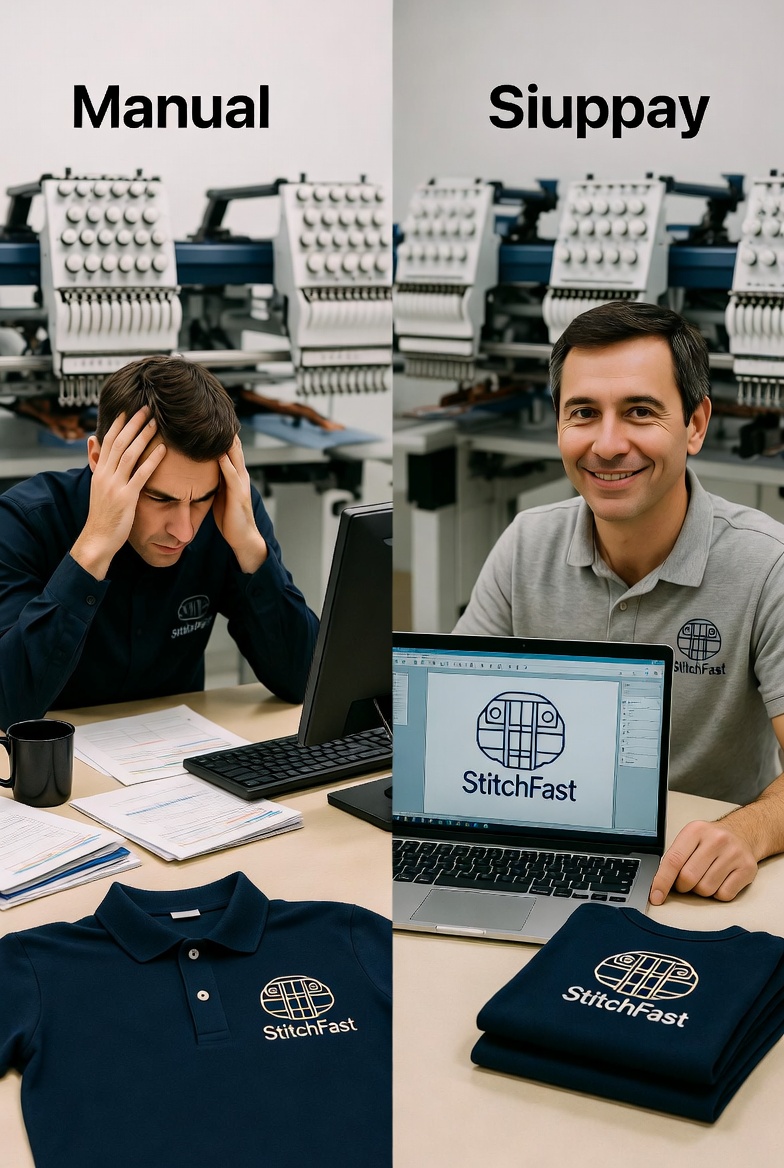
Most digitizers charge £5–£15 per design and take 24–48 hours. See the hidden cost of cheap digitizing.
| StitchFast | Manual Digitizer | |
|---|---|---|
| Cost per design | From £3.50 | £5–£15 |
| Turnaround | <60 seconds | 24–48 hours |
| Revisions | Unlimited | Extra charge |
| Pull compensation | Automatic | Manual |
| Thread codes | Madeira | Sometimes |
| Output formats | 7 formats | 1–2 formats |
| Stitch preview | Live simulation | Static image |
| Availability | 24/7 | Business hours |
| 10 designs / month | £29.99 unlimited | £50–£150 |
Pricing
Buy credits or go unlimited. Credits never expire.
Compatibility
Husqvarna Viking and Pfaff machine owners in Scotland should download VP3 files. VP3 is the native format for these machines and includes stitch data, colour information, and design metadata. HUS files are also generated for older Husqvarna machines that use the legacy format.
Before & After
Drag the slider to see the transformation. Your image goes in — a production-ready embroidery file comes out.

Reviews
Rated 4.8 out of 5 from 312 users.
FAQ
Common questions about embroidery digitizing in Dundee and Scotland.
Yes. StitchFast runs entirely in your browser — no software to install. It works on desktop, laptop, tablet, or phone. Any device with internet access in Dundee or anywhere else in the world.
Auto-tracing simply traces the outline of an image and fills it with uniform stitches, ignoring underlay, pull compensation, stitch angle optimisation, and density calibration. Real digitizing — which StitchFast performs — analyses each region individually, assigns appropriate stitch types, and generates proper stitch data. The difference is clearly visible in the finished embroidery.
PNG, JPG, and SVG. PNG with a transparent background produces the cleanest results because the AI can clearly identify region boundaries. SVG vector files convert with the highest accuracy. JPG files work well for logos with solid colours and defined edges.
4x4 inches (100x100mm), 5x7 inches (130x180mm), 8x8 inches (200x200mm), 8x12 inches (200x300mm), and 14x14 inches (360x360mm). Set the hoop to match the hoop frame you will use on your embroidery machine.
No. StitchFast credits never expire. Buy them when you need them and use them whenever you are ready. There is no time limit and no use-by date.
Yes. StitchFast is a UK-based service operated by DadLink Technologies Limited in Macclesfield, Cheshire. It is used by embroiderers across the UK and worldwide.
Single designs cost £4.99. Credit packs reduce the cost to as low as £3.50 per design. An unlimited plan is available at £29.99/month with no per-design charges. Credits never expire. Most manual digitizers in Scotland charge £5-£15 per design with a 24-48 hour wait.
Every conversion includes all 7 formats: DST (Tajima), PES (Brother/Babylock), JEF (Janome/Elna), EXP (Melco), VP3 (Husqvarna Viking/Pfaff), HUS (Husqvarna), and XXX (Singer). All included at no extra cost.
Clean logos, text, and artwork with solid colours and defined edges produce the best results. These are the most common designs in commercial embroidery. PNG files with transparent backgrounds give the cleanest output. Complex photographs with gradients will work but may need more colours.
Yes. Set any hoop size from 4x4 inches (100x100mm) to 14x14 inches (360x360mm). Small cap logos, standard left chest logos, and large jacket back logos are all supported. Adjust fill density and pull compensation to suit the specific fabric and application.
Case Studies
See how embroidery businesses cut costs and scale with AI digitizing.
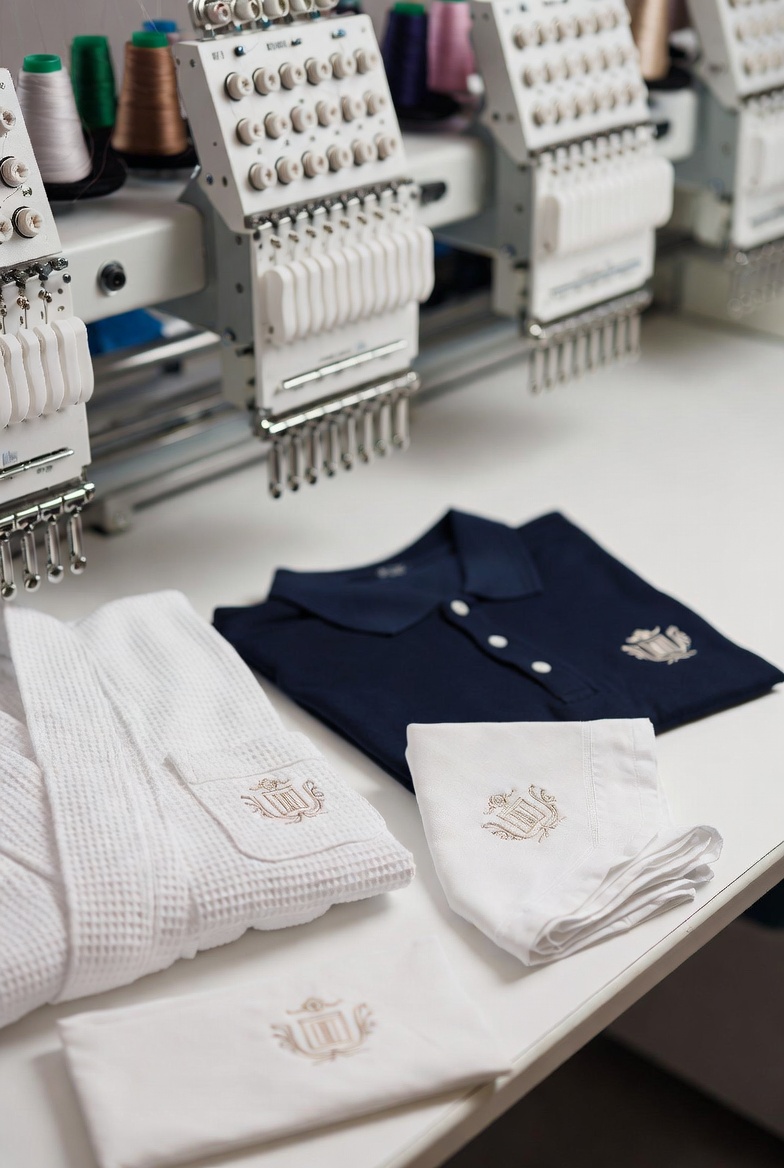
A Scottish hotel group standardised embroidered branding across 12 properties using StitchFast — achieving 100% logo consistency on staff uniforms, bathrobes, and table linens while cutting per-property costs.
Read Case Study →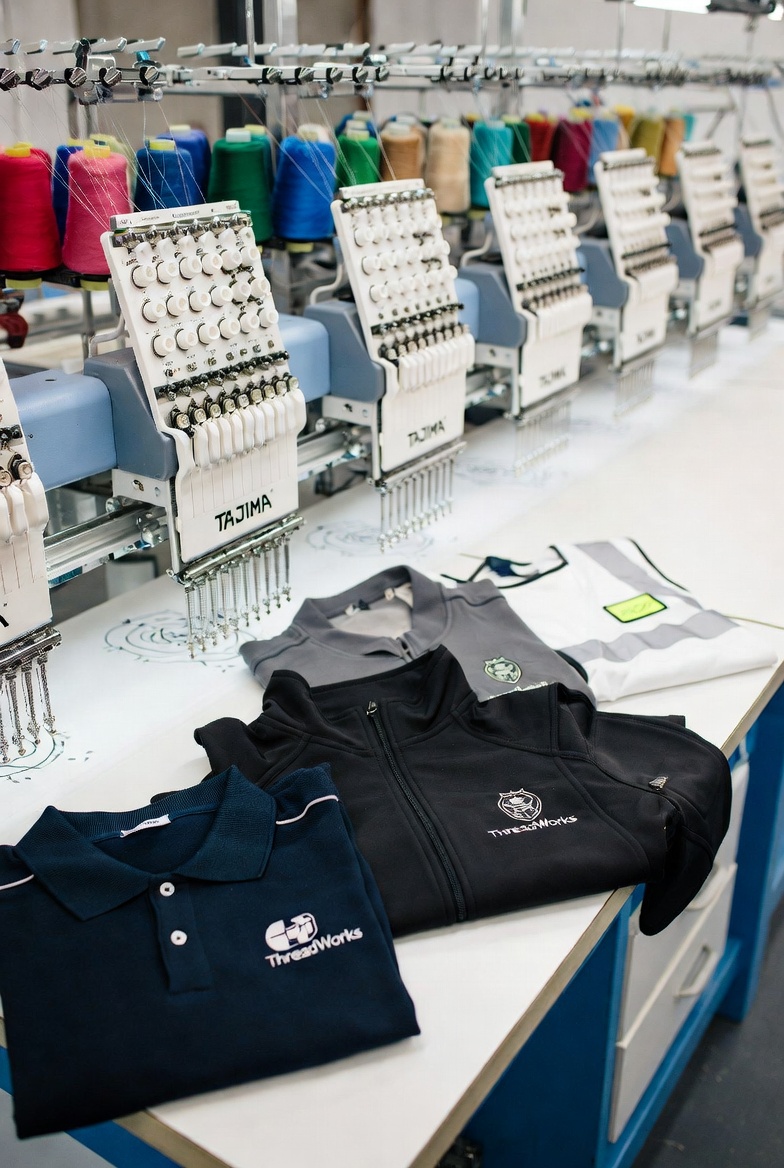
A Birmingham-based uniform supplier processing 800+ corporate logos per year slashed digitizing costs from £25 per design to £3.50 using StitchFast — and cut turnaround from 48 hours to under 60 seconds.
Read Case Study →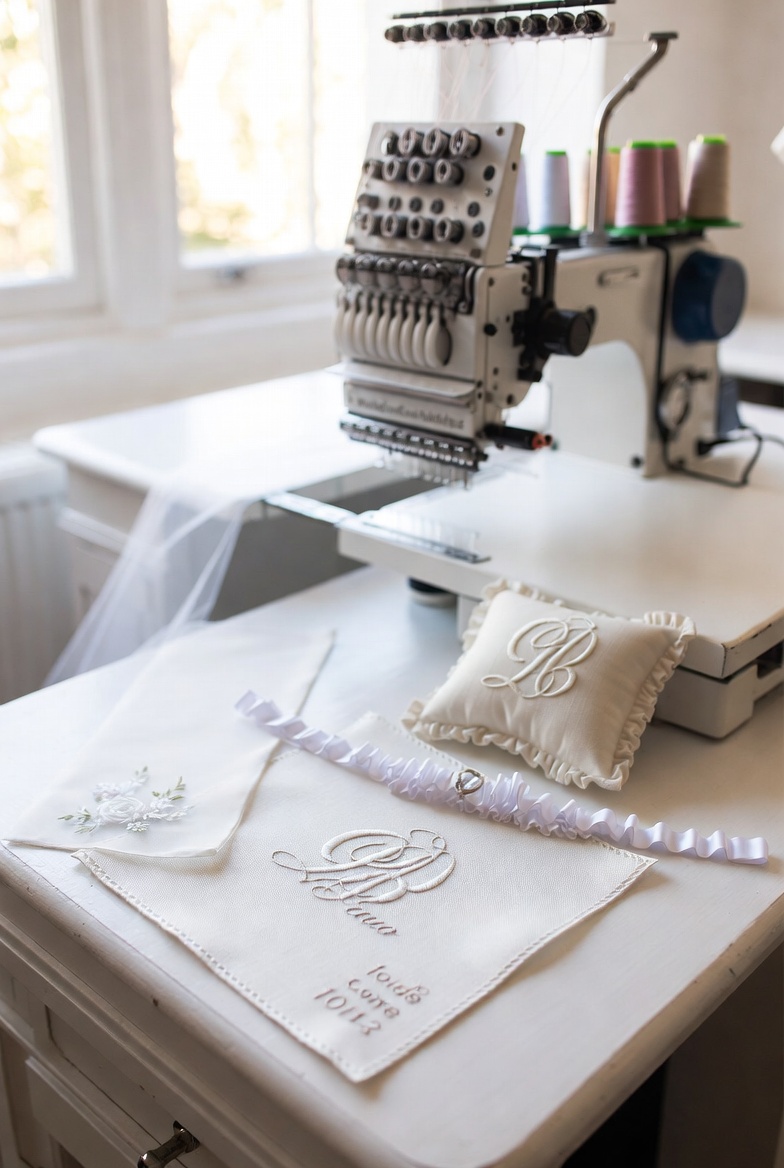
A luxury bridal embroiderer in Bath uses StitchFast to offer same-day bespoke monograms, wedding date stitching, and personalised veil embellishments — a service that previously required a 2-week lead time.
Read Case Study →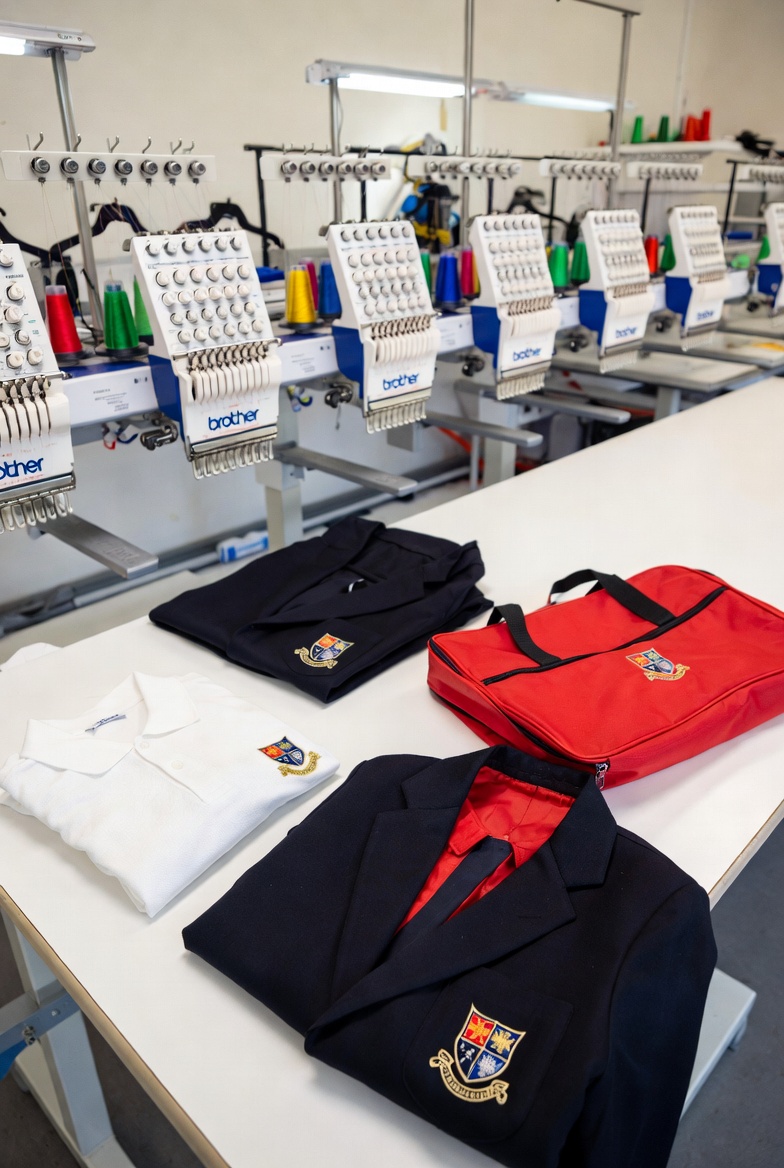
A Nottingham school uniform supplier digitized their entire catalogue of 165 school badges in a single week using StitchFast — a task that previously took three months of outsourced digitizing.
Read Case Study →Blog
From £3.50 per design. 7 formats. Under 60 seconds.
Open StitchFast