Industrial Workwear Embroidery
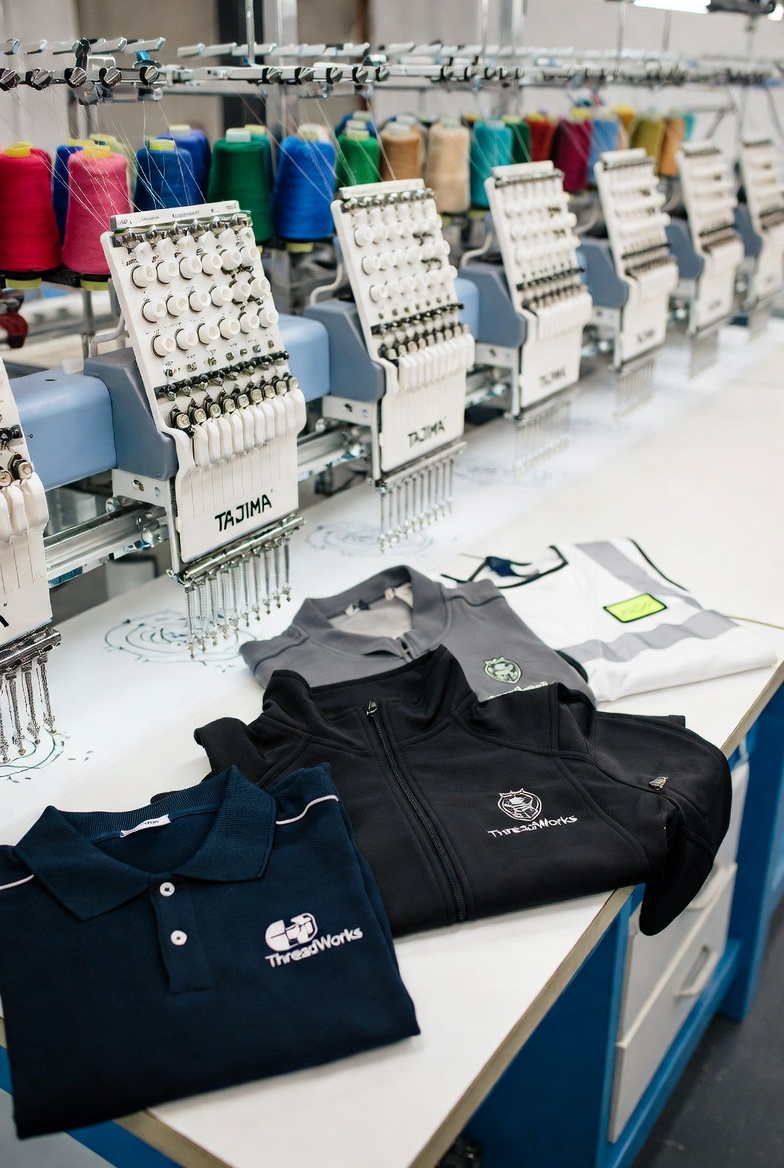
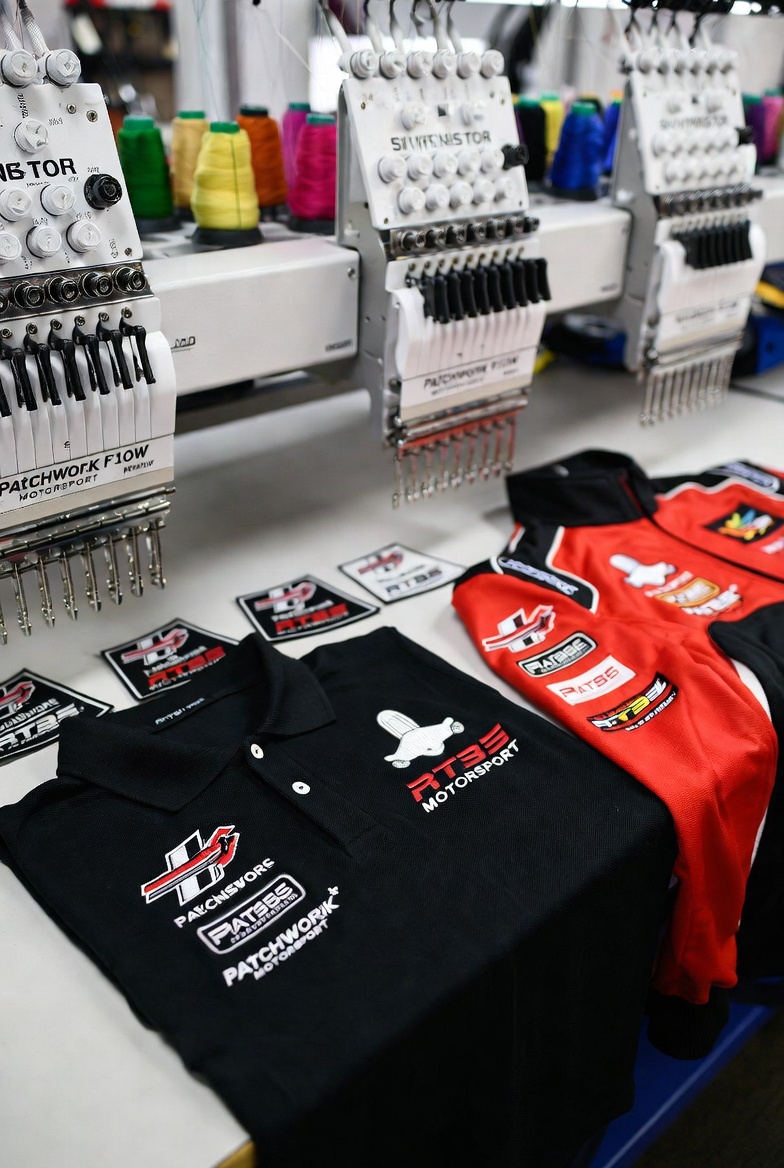
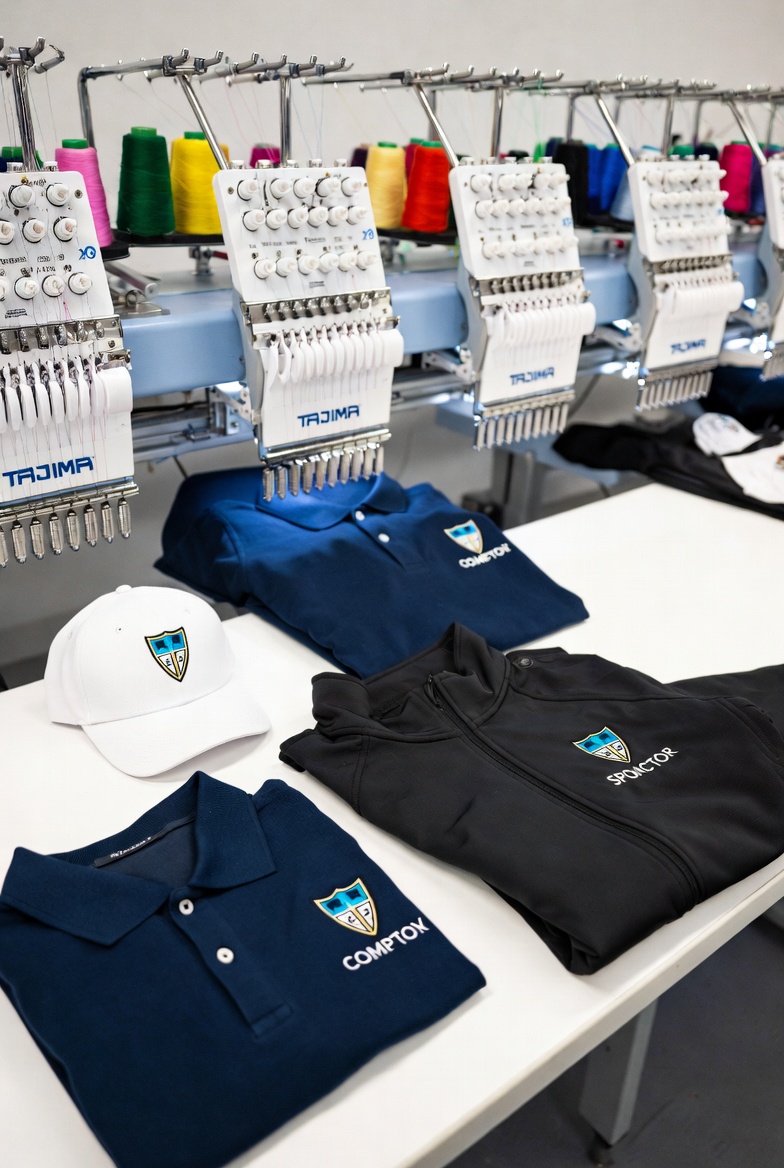
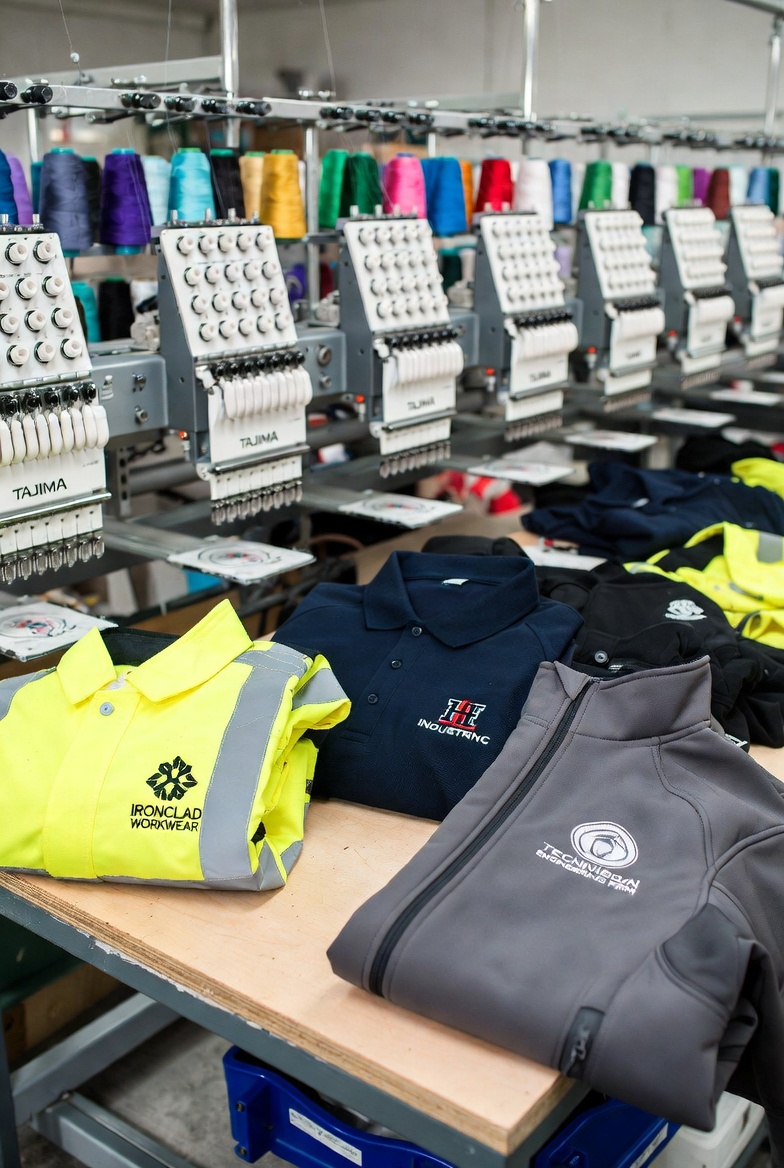
Ironclad Workwear supplies embroidered workwear to factories, manufacturing plants, engineering firms, and construction companies across South Yorkshire and the East Midlands. Founded in 2015 by Steve and Karen Moss, the business has grown from a spare-bedroom operation to a dedicated production unit in Sheffield with eight staff, four Tajima multi-head embroidery machines, and an annual turnover approaching £1.4 million. Their product range covers everything from heavy-duty hi-vis jackets and flame-retardant coveralls to standard polo shirts and softshell jackets — all carrying clients' embroidered company logos.
The industrial workwear market differs from corporate uniform supply in several important ways. Order volumes tend to be larger (factories and construction sites employ dozens or hundreds of workers), garment replacement cycles are shorter (industrial environments are hard on clothing), and the client base is less brand-conscious but more price-sensitive. A factory purchasing manager choosing a workwear supplier is primarily evaluating cost per garment, delivery speed, and the ability to handle ongoing repeat orders without hassle. The quality of the embroidery matters, but it needs to be good enough rather than perfect — clean, legible, durable logos that survive industrial laundering cycles.
The volume of new client logos is high and constant. Ironclad actively prospects new business through a field sales team, trade show attendance, and partnerships with safety equipment distributors. They onboard an average of 60 new clients per month, each bringing a unique company logo that requires digitizing. Additionally, approximately 15 existing clients per month update their logos, change branding, or add new subsidiary logos — generating a total digitizing demand of 75 or more unique designs per month, every month, throughout the year.
The Cost Burden
At Ironclad's volume, the cost of outsourced digitizing was enormous. Their primary digitizing supplier charged £20 per standard logo — reasonable on a per-unit basis but staggering in aggregate. At 75 new digitizations per month, the monthly spend was £1,500, totalling £18,000 per year. This single line item exceeded the annual salary of a junior staff member and represented a cost that added no perceived value to the finished product. Clients did not know or care how the stitch file was created — they cared about the logo looking correct on the garment and the order arriving on time.
The turnaround constraint compounded the cost problem. The digitizing bureau offered 24-hour standard turnaround with a £10 rush fee for same-day. Given that Ironclad's field sales team frequently closed deals by promising rapid delivery — walking into a factory, taking measurements, and promising embroidered workwear within a week — the same-day rush option was used frequently. Approximately 30 percent of new client logos went through as rush jobs, adding roughly £2,700 per year to the already substantial digitizing bill.
The sales impact of the turnaround delay was harder to quantify but clearly significant. Ironclad's field sales team reported that the most effective closing technique was showing a prospect a sample of their logo embroidered on a garment. But creating that sample required a digitized stitch file, which meant the sample could not be produced during the initial sales visit. The sales representative would leave, the logo would be sent to the digitizer, the stitch file would return 24-48 hours later, the sample would be stitched, and only then could the prospect see their logo on an actual garment. By that point, three or four days had passed, and the prospect's enthusiasm had cooled or a competing supplier had already made their pitch.
Implementing StitchFast
Steve Moss adopted StitchFast Unlimited after a brief evaluation period that focused almost entirely on throughput testing. Quality was important but secondary — industrial workwear embroidery does not require the fine detail precision of bridal or fashion embroidery. What mattered was whether StitchFast could reliably process 75 or more logos per month without producing files that caused machine problems or client complaints.
The evaluation involved running 100 client logos through StitchFast in a single week — deliberately exceeding normal monthly volume to stress-test the process. The logos represented the full range of industrial client branding: simple text-only company names in block fonts, engineering firm logos with technical diagrams, construction company logos with building motifs, and manufacturing brand marks with various levels of detail. Every file was test-stitched on the garment type most commonly ordered by that client — typically heavyweight polyester polo shirts or cotton-poly blend sweatshirts.
Results: 96 of 100 logos were immediately production-ready. The four requiring adjustment needed minor density changes for very small text elements or slight repositioning of colour stops. No files were unusable. No machine problems occurred during any test run. The DST files loaded cleanly into all four Tajima machines and ran at full production speed without thread breaks or registration issues. Steve approved the switch within a week of completing the evaluation.
Same-Day Client Onboarding
The most transformative change was the introduction of same-day client onboarding. Ironclad's field sales team now carries a tablet with access to StitchFast. When a sales representative visits a factory and secures a new order, they can photograph or receive the client's logo on the spot, upload it to StitchFast during the meeting, and show the client a stitch file preview before leaving the premises. In many cases, the sales representative returns to the production unit with the stitch file already downloaded and queued for sample stitching.
The production team can have a physical embroidered sample ready by end of day — meaning the sales representative can hand-deliver a tangible sample to the client the following morning. This same-day-to-next-day sample delivery has transformed Ironclad's close rate. The field sales team reports that prospects receiving a physical sample within 24 hours convert at approximately 72 percent, compared to 45 percent when samples took three to five days. The difference represents dozens of additional new clients per year.
Operational Scale
Over twelve months of StitchFast use, Ironclad has digitized over 900 unique client logos through the platform. Monthly digitizing volume has actually increased since adoption — from 75 to over 90 per month — because the sales team is closing more accounts and the absence of a digitizing bottleneck means no order is delayed by file availability. The Tajima machines run more consistently because production scheduling no longer includes buffer time for digitizing delays.
Machine utilisation has improved measurably. Before StitchFast, the four Tajima machines averaged 71 percent utilisation across working hours, with the gap attributable to waiting for stitch files, test-stitching new designs, and reworking files that failed quality checks. After StitchFast, utilisation averages 86 percent, with the remaining 14 percent accounted for by machine maintenance, garment loading and unloading, and legitimate production scheduling gaps. The 15-percentage-point improvement in utilisation translates directly to additional production capacity without any capital investment in new equipment.
Financial Impact
Direct digitizing cost reduction: from £18,000 per year to £360 per year (StitchFast Unlimited plan), a saving of £17,640 annually. Rush fee elimination: approximately £2,700 per year. Total direct saving: over £20,000 per year. Revenue impact from improved close rate and faster client onboarding: estimated £120,000 in additional annual revenue from new clients acquired through the same-day sample capability.
Steve and Karen have reinvested the combined savings and revenue growth into expanding their field sales team from two to four representatives, doubling the geographic coverage area and further accelerating client acquisition. A fifth Tajima machine is on order to handle the increased production volume, and the business is on track to exceed £2 million in annual revenue within the next twelve months.
For Ironclad Workwear, StitchFast did not just reduce a cost line — it removed the constraint that was preventing the business from growing at the rate its market opportunity supported. The machines, the operators, and the sales team were all capable of significantly higher output. The digitizing bottleneck was the limiter, and StitchFast eliminated it completely.
Grey bars show the figure before StitchFast; green bars show after.
Field Sales Team Integration
The integration of StitchFast into Ironclad's field sales process represents one of the most innovative applications of AI digitizing documented in these case studies. Each of the four field sales representatives carries a company tablet with the StitchFast web interface bookmarked and logged in. During client visits — which typically occur at the client's factory, warehouse, or office premises — the representative can upload the client's logo in real time, generate a stitch file, and show the client a preview of how their logo will look as embroidery.
The process works as follows: the representative asks the prospect to email or AirDrop their company logo (most businesses have their logo as a PNG or SVG file readily available). The representative uploads it to StitchFast on the tablet, downloads the DST file, and opens it in a free embroidery viewer app that shows a thread-simulation preview. The client sees their logo rendered in realistic thread colours on a simulated garment background — all within two or three minutes of providing the logo file. This visual immediacy creates a powerful sales moment that text descriptions and generic product photos cannot match.
Representatives report that the StitchFast demonstration has become their most effective closing tool. Prospects who see their own logo embroidered (even in digital simulation) on the specific garment they are considering purchase have an immediate emotional and visual connection to the product. The abstract concept of "embroidered workwear" becomes concrete and personal. Several representatives describe the moment of showing the preview as the point where the prospect's body language shifts from evaluative to committed — leaning forward, asking about quantities and colours rather than prices and alternatives.
Industrial Laundering Performance
Industrial workwear is subjected to punishing laundering cycles that would destroy consumer-grade embroidery. Factory workwear is typically laundered at 60-90°C using industrial detergents, tumble-dried at high heat, and occasionally treated with specialist chemicals for hygiene compliance in food manufacturing or pharmaceutical environments. Embroidered logos must maintain their appearance and structural integrity through hundreds of these industrial wash cycles without fading, fraying, distorting, or delaminating from the garment fabric.
Ironclad conducts standardised wash testing on all new stitch files, subjecting embroidered samples to 50 industrial wash cycles (equivalent to approximately one year of weekly laundering) before approving the file for production. StitchFast files have consistently passed this wash testing with results comparable to or better than the files from their previous outsourced digitizer. The key factors are correct underlay stitching (which anchors the visible stitches to the fabric and prevents them from lifting under wash stress), appropriate density (heavy enough for complete coverage but not so dense that the concentrated thread mass becomes rigid and cracks), and adequate pull compensation (which ensures the logo dimensions remain stable even as the fabric itself shrinks slightly over repeated wash cycles).
After twelve months of production with StitchFast files, Ironclad has received zero client complaints about embroidery degradation through washing — matching their best-ever performance and notably better than periods when the outsourced bureau's quality was inconsistent. Steve attributes this to the consistency of StitchFast's output: because the AI applies the same algorithms every time, there is no variation in underlay quality, density, or compensation between files, and therefore no variation in wash durability.
Growth Trajectory
Ironclad's growth since adopting StitchFast has been the most dramatic of any business in this collection of case studies, measured by revenue growth rate. Annual revenue has increased from approximately £1.4 million to a projected £2.1 million — a 50 percent increase driven almost entirely by the removal of the digitizing bottleneck and the resulting improvements in client acquisition speed and production throughput. The business has added three staff members (two sales representatives and one additional machine operator), invested in capital equipment, and expanded its geographic coverage from South Yorkshire alone to the entire East Midlands corridor.
Steve and Karen's strategic plan for the next twelve months targets £2.5 million in annual revenue, supported by the fifth Tajima machine currently on order and the continued expansion of the field sales team. The plan is predicated on the assumption that StitchFast will continue to provide unlimited, instant, production-quality digitizing at a fixed monthly cost — an assumption that Steve considers the lowest-risk element of the entire plan. The AI platform's reliability over twelve months of continuous high-volume use has demonstrated that the technology is production-grade, and Steve has full confidence in building the business's growth strategy around it.
Health and Safety Compliance
Industrial workwear embroidery must comply with specific health and safety requirements that do not apply to standard commercial embroidery. Hi-vis garments, for example, must maintain their reflective properties after embroidery — the embroidered area must not cover or damage the retro-reflective tape bands that are mandated by EN ISO 20471 for high-visibility clothing. Flame-retardant garments must retain their FR properties in the embroidered area, which means the thread used must be fire-retardant and the stitch density must not compromise the fabric's protective characteristics.
StitchFast files work within these constraints because the stitch parameters — density, underlay, and compensation — are generated within standard industry norms that are compatible with speciality thread types and regulated garments. Ironclad uses Madeira FR (flame-retardant) thread for all FR garment embroidery, and the stitch files generated by StitchFast run cleanly with this speciality thread without modification. The density levels are appropriate for maintaining the fabric's protective characteristics — heavy enough for a clean logo but not so dense that the concentrated thread mass could create a heat bridge in a fire exposure scenario.
Steve has verified compliance through independent testing. Embroidered hi-vis garments produced with StitchFast files have been submitted to a UKAS-accredited testing laboratory for EN ISO 20471 compliance verification. All submitted samples passed, confirming that the embroidery does not compromise the garment's high-visibility certification. Similarly, FR garments with StitchFast embroidery have passed vertical flame spread testing to EN ISO 11612 standards. These test certificates are maintained in Ironclad's quality management system and are available to clients upon request — an important differentiator when competing for contracts with safety-conscious manufacturing and construction firms.